EN

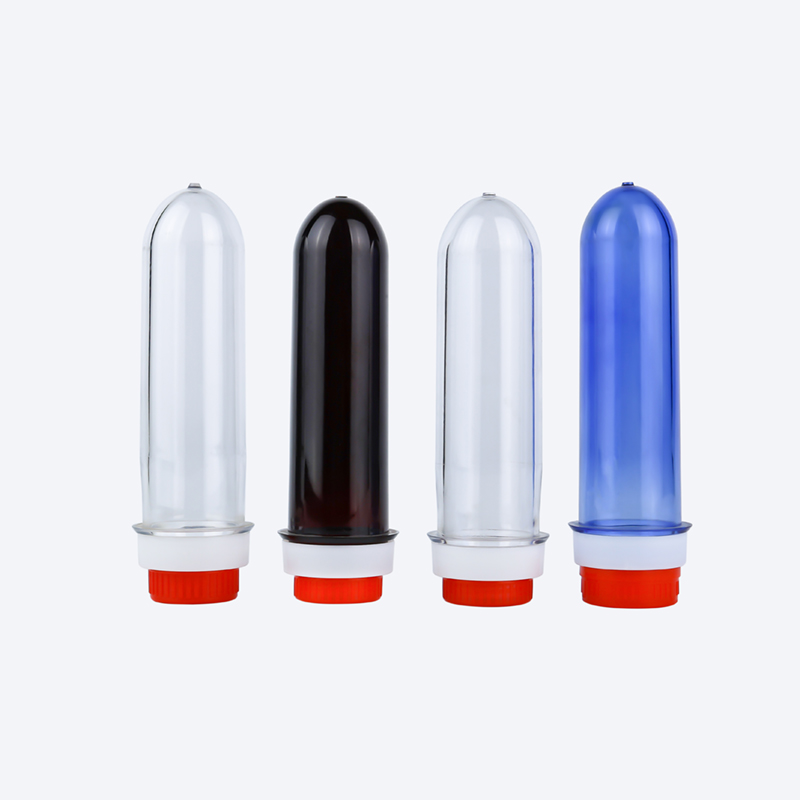
The most common mistake when selecting preforms is asking for a price based on a capacity number. A 500ml bottle can use a 12g preform or a 20g preform; it can use a 28mm neck or a 38mm neck. What truly determines preform specifications is not “how much it holds,” but “what it holds, how it is filled, and how it is blown.”

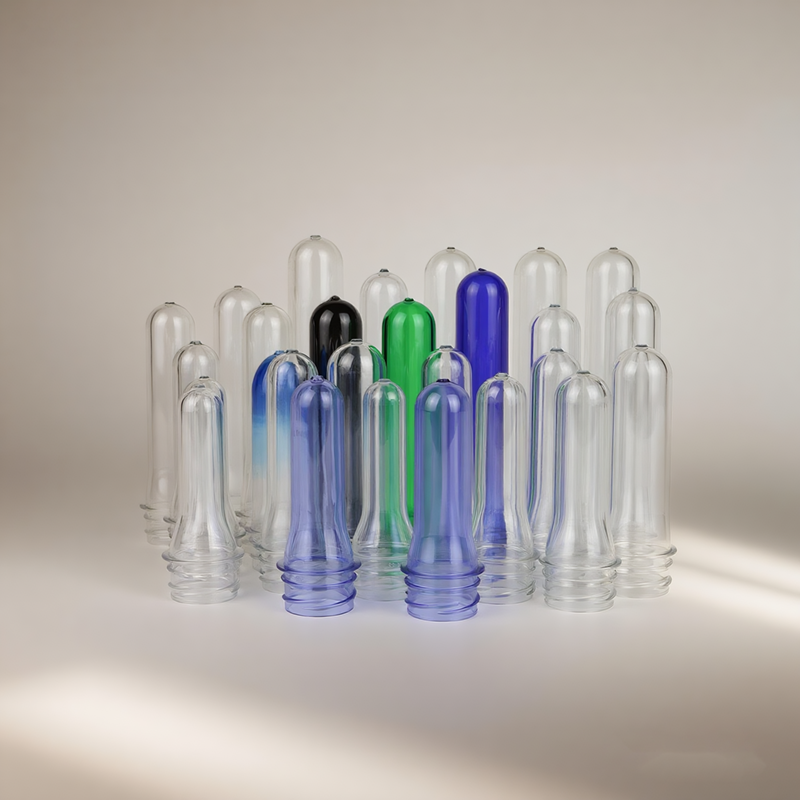
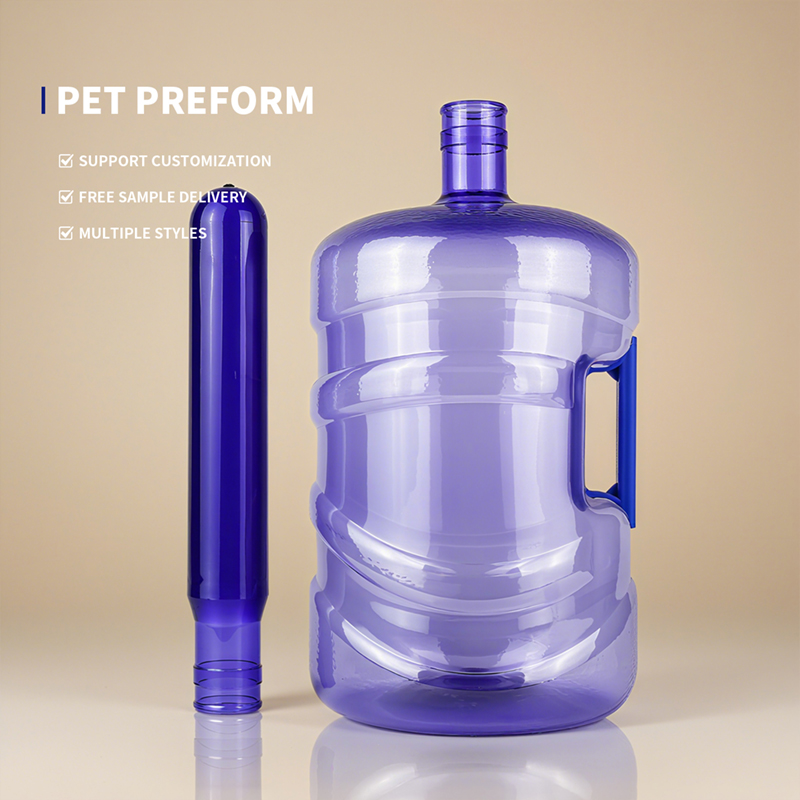
A PET bottle begins with the preform. The neck threads are already fixed during injection molding, while the body is only finalized during blow molding. This means the preform‘s raw material grade, neck finish, and gram weight must be matched to the blow molding requirements before the mold is even made. If the match is wrong, no amount of blow molding machine tuning will produce a qualified bottle, and no matter how fast the filling line runs, problems will surface at capping or pressure resistance.
Below, we break down the three variables – raw material, neck finish, and gram weight – one by one, then add key points on injection molding and blow molding process matching, and finally provide a practical selection logic.
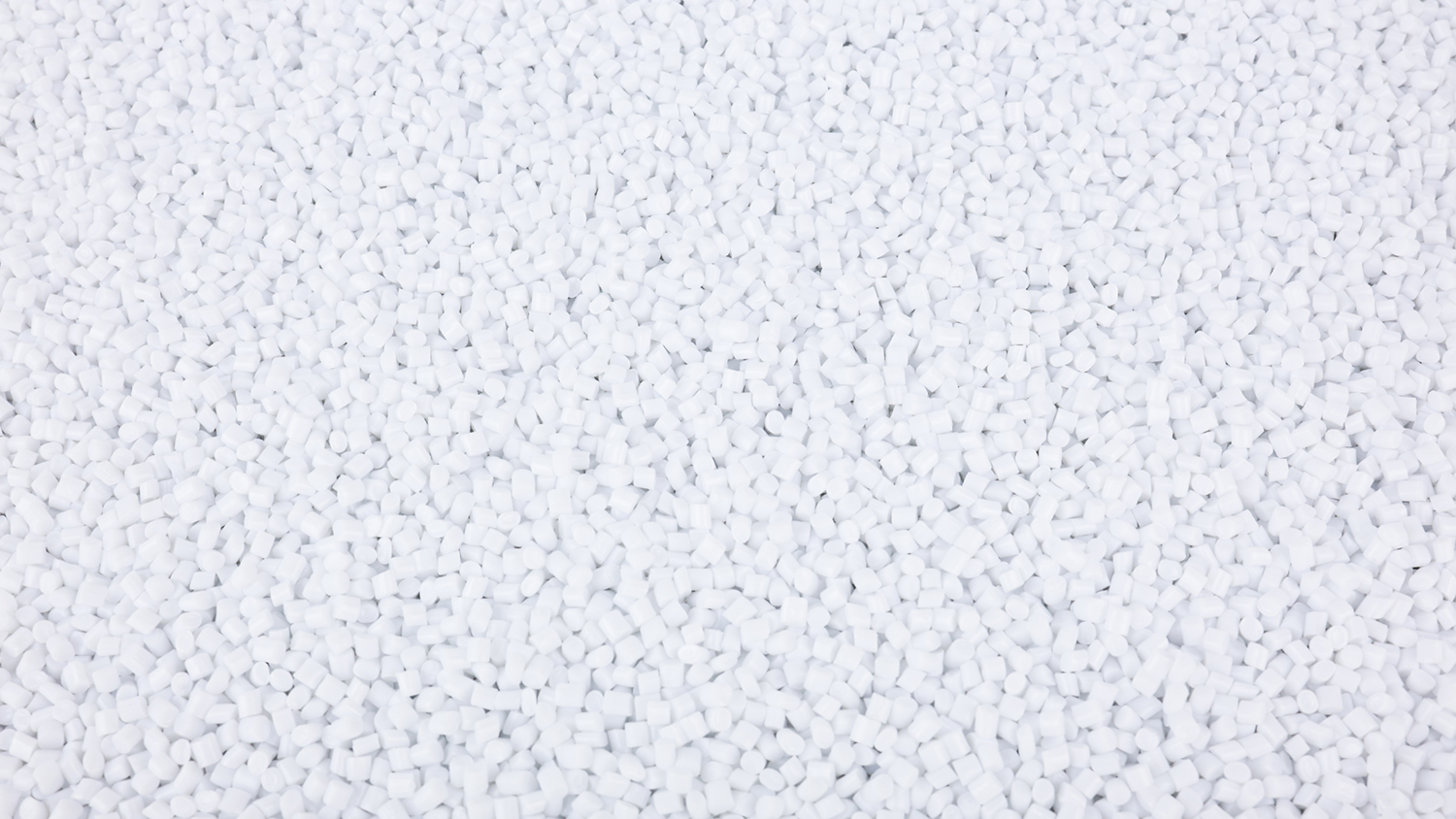
The core raw material indicator for PET preforms is intrinsic viscosity (IV value), which represents the length of PET molecular chains and directly affects the bottle’s strength, toughness, and pressure/heat resistance. Bottle-grade PET IV typically falls between 0.70 and 0.88 dL/g, though grade classifications vary slightly among sources and should be understood in the context of the application.
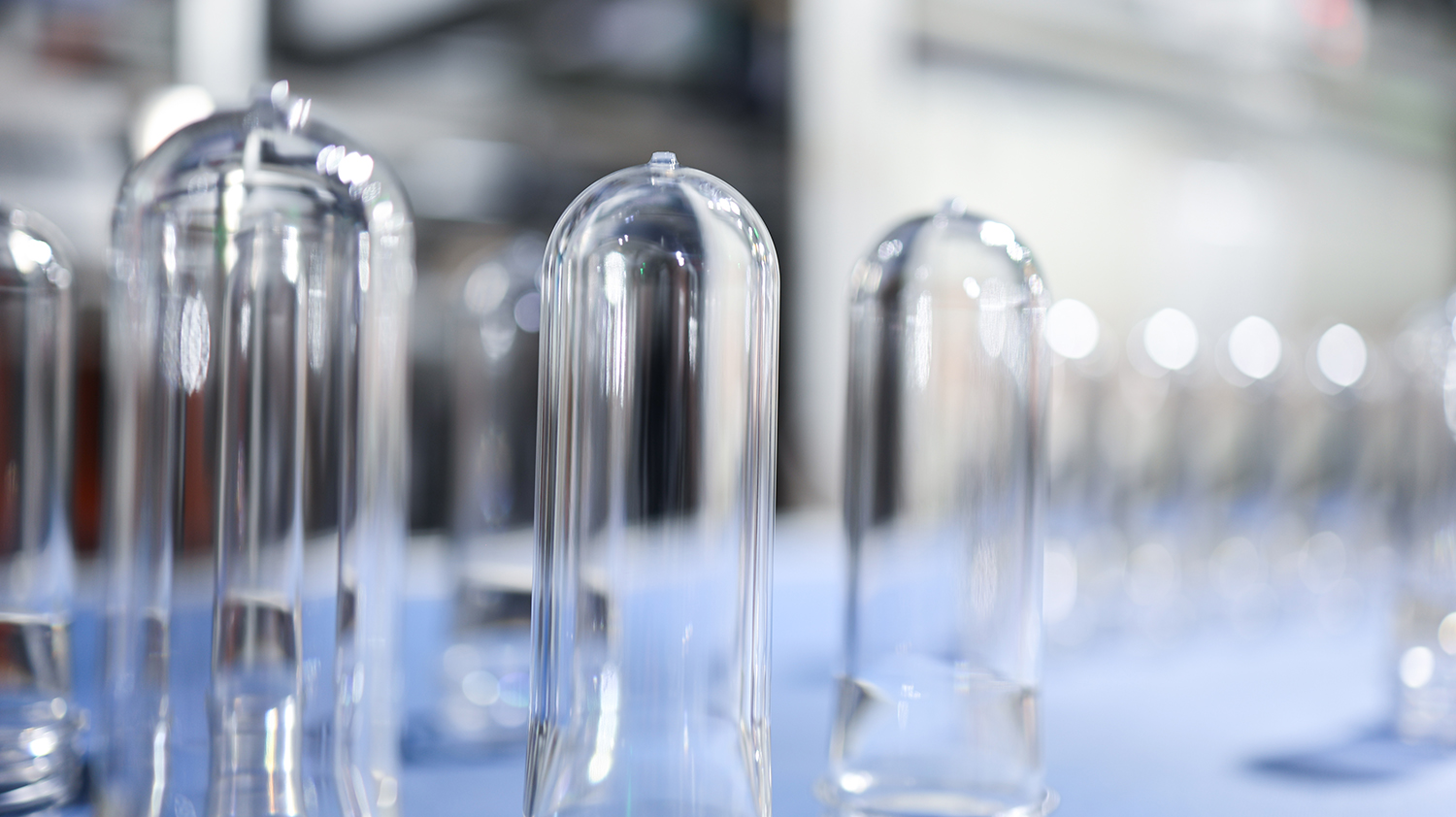
Based on data from multiple suppliers and industry sources, the IV ranges for various bottle types are approximately as follows:
| Bottle type | IV range (dL/g) | Core reason |
|---|---|---|
| Standard water bottles (mineral, purified) | 0.70–0.80 | No internal pressure or high temperature; balance of cost and clarity |
| Carbonated soft drink bottles (CSD) | 0.78–0.87 | Must withstand ~4 bar internal pressure; high IV provides creep and pressure resistance |
| Hot-fill bottles (tea, juice) | 0.78–0.88 | Must withstand 85–93°C filling; high IV maintains dimensional stability at high temperature |
| Oil bottles / large-capacity bottles | 0.80–0.84 | Long-term load bearing; requires high toughness and creep resistance |
At the grade level, water bottle grades commonly include IV 0.76 and 0.80; carbonated grades typically include IV 0.84; heat-resistant hot-fill grades include IV 0.76–0.78; and cooking oil bottles commonly use IV 0.84. Some sources extend the water grade range down to 0.70, carbonated grades up to 0.85, and hot-fill grades up to 0.88. These differences stem from different resin manufacturers’ grade designs and test conditions. When selecting, rely on the supplier‘s COA (Certificate of Analysis) rather than memorizing a “standard value.”

IV too low: Short molecular chains make the bottle brittle with poor creep resistance. If a water preform’s IV falls below 0.70, the blown bottle may collapse when squeezed and undergo irreversible deformation under long-term load. Each additional melt cycle reduces IV by approximately 0.03–0.05 dL/g; if the regrind ratio is too high without IV compensation, the finished preform‘s IV may be far below the raw material’s nominal value.
IV too high: The bottle is indeed “harder,” but the cost is poorer melt flowability, higher injection molding difficulty and energy consumption, and a narrower process window. More critically, the bottle itself does not need that much strength. Using carbonated-grade 0.85 IV material for a 500ml water bottle adds strength that contributes almost nothing to performance, while every ton of material costs more and the injection molding process loses tolerance. Some sources list 0.72–0.76 dL/g as the IV range for carbonated soft drinks, 0.80–0.84 dL/g for hot-fill, and around 0.74–0.78 dL/g for water and juice. Although specific values differ from the table above, the principle of “layering by function” is consistent.

Selection principle: first determine the bottle‘s “functional burden” – whether it bears pressure, withstands heat, or carries long-term load – then select the IV grade. Do not decide based on “higher IV is safer.” Strength redundancy in preforms is also a waste of cost.
The use of rPET is increasingly common. rPET contents of 25%–50% are achievable without sacrificing transparency and strength, but each batch must independently verify food-contact compliance. More critically, rPET suffers IV decay: each additional melt reduces IV by 0.03–0.05 dL/g. If the rPET ratio is high, either select raw material with a higher starting IV to compensate, or use chain extenders or solid-state polymerization (SSP) to bring IV back to the target range. Otherwise, the finished preform’s IV will be below the design value – something that cannot be seen on a quotation sheet.
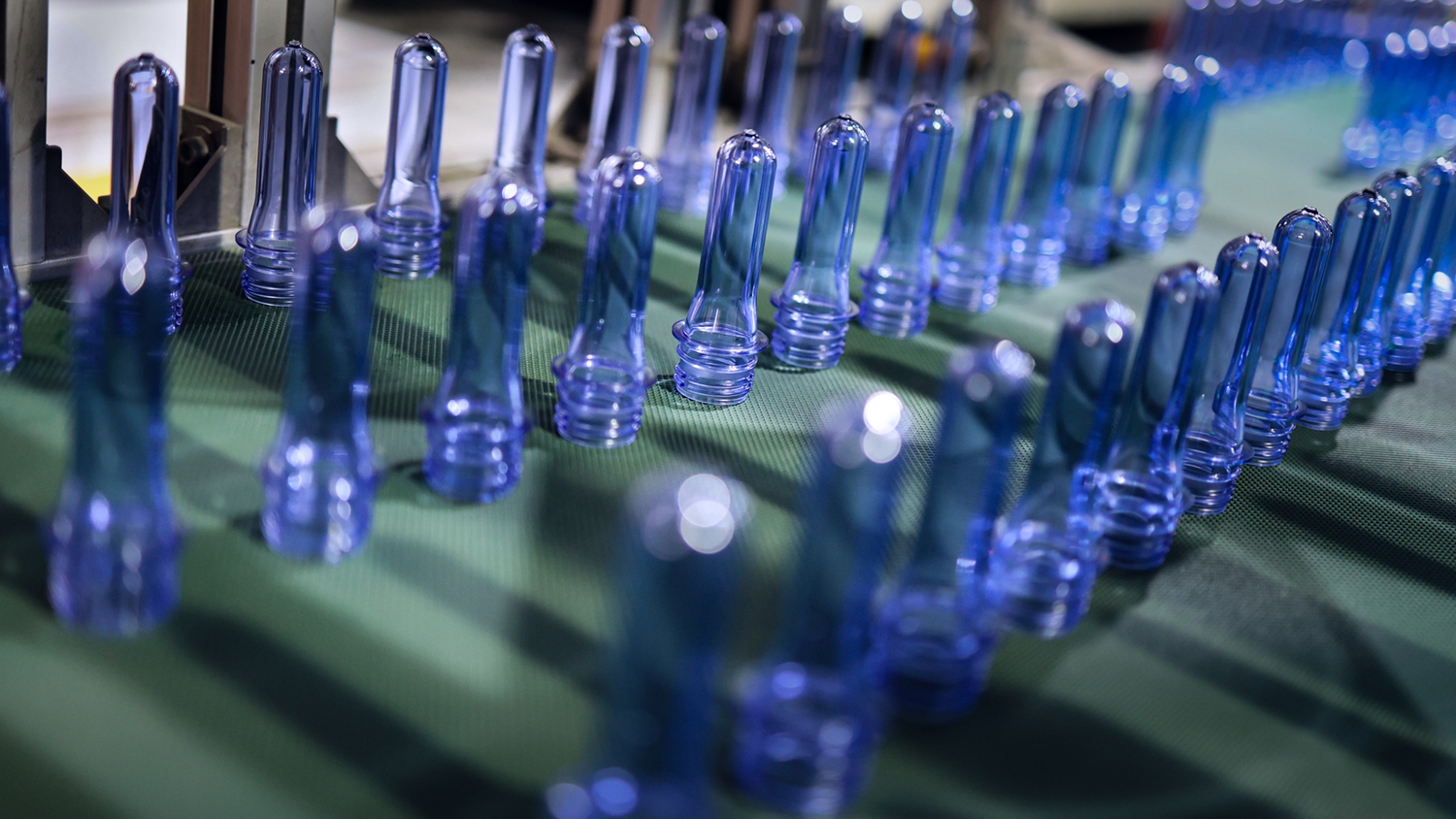
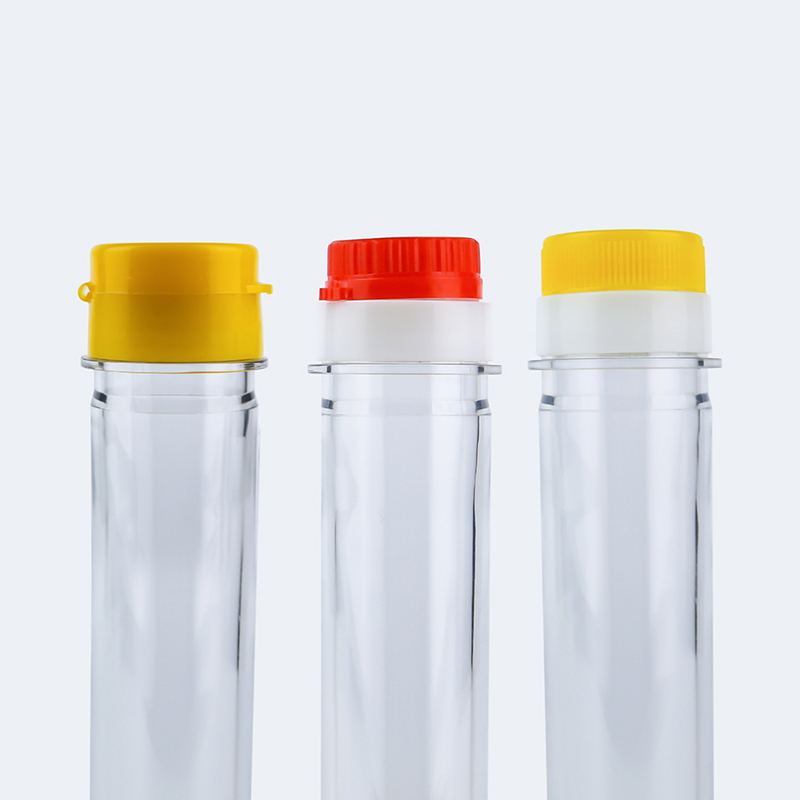
Neck finish is the variable most easily oversimplified in preform selection. Many people only ask “28mm or 38mm,” but within 28mm, PCO 1810 and PCO 1881 are two different thread specifications, and their caps are not interchangeable. A thread diameter difference of even 0.2mm can cause capping leakage or seal failure – and this dimension cannot be adjusted after blow molding.
28mm series: PCO 1881 and PCO 1810
PCO 1881 is the global standard short-neck specification for carbonated drinks and water bottles, designed for lightweighting – compared with PCO 1810, it reduces material usage by shortening thread height while maintaining good pressure resistance and sealing performance. It is the preferred choice for high-speed filling lines and lightweight design. PCO 1810 is an earlier long-neck specification still found in some existing lines and export markets, but new lines rarely adopt it.
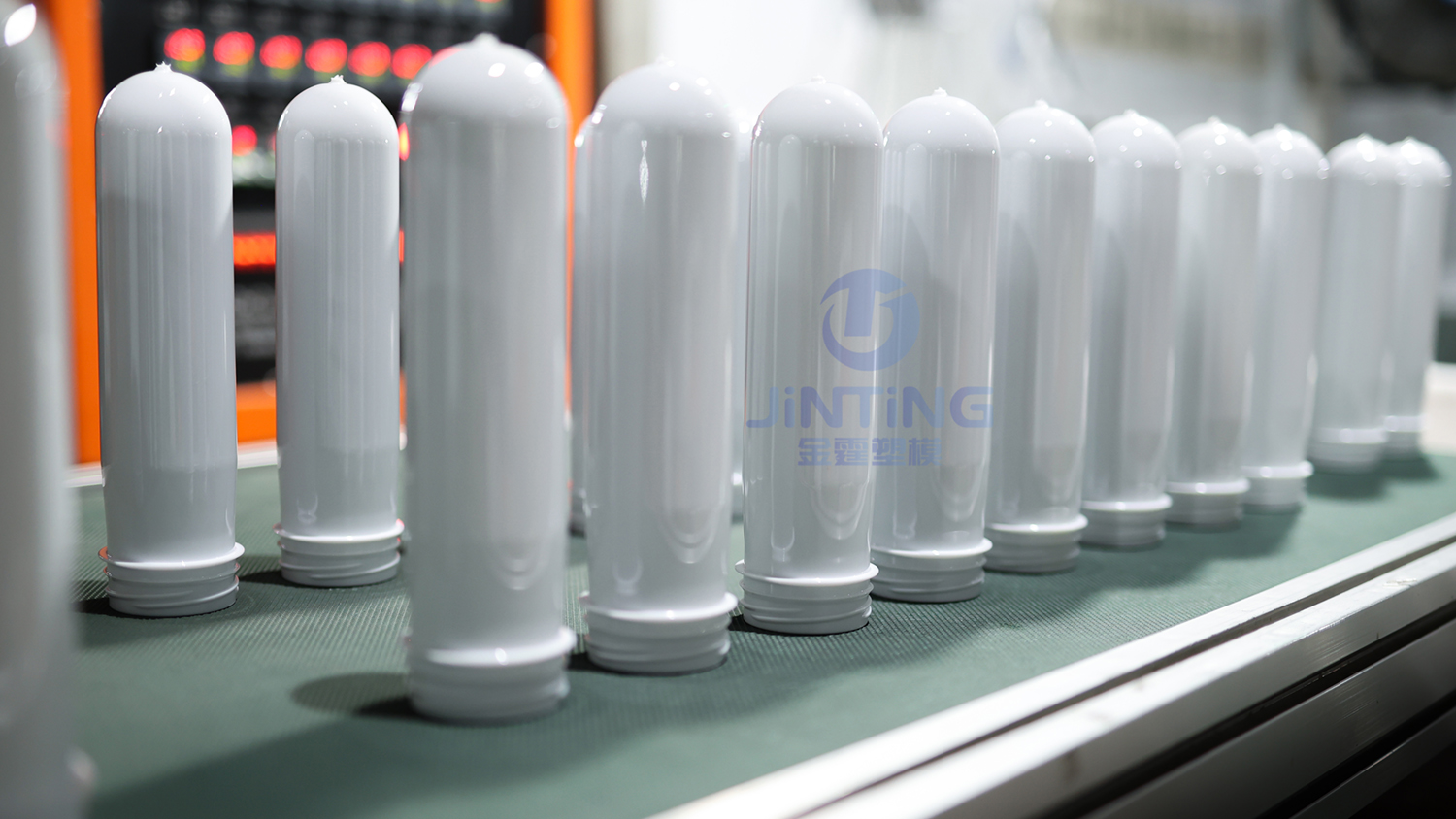
30/25 series
A lightweight water bottle neck finish with 30mm diameter and 25mm height, popular in certain markets (such as India) and also common in some water products below 500ml.
38mm series: DBJ and SP400
The 38mm neck finish suits juices, dairy products, functional beverages, and products requiring wide-mouth pouring or added fruit pulp particles. 38mm DBJ supports tamper-evident closures and a wider pour opening; 38mm SP400 is a multi-purpose specification for beverages, food, and household liquids. Hon Chuan International‘s 38mm hot-fill preforms are explicitly specified for juices, sports drinks, and other hot-fill products, with gram weights including 28.5g and 29.5g.
26/22 GME and other lightweight specifications
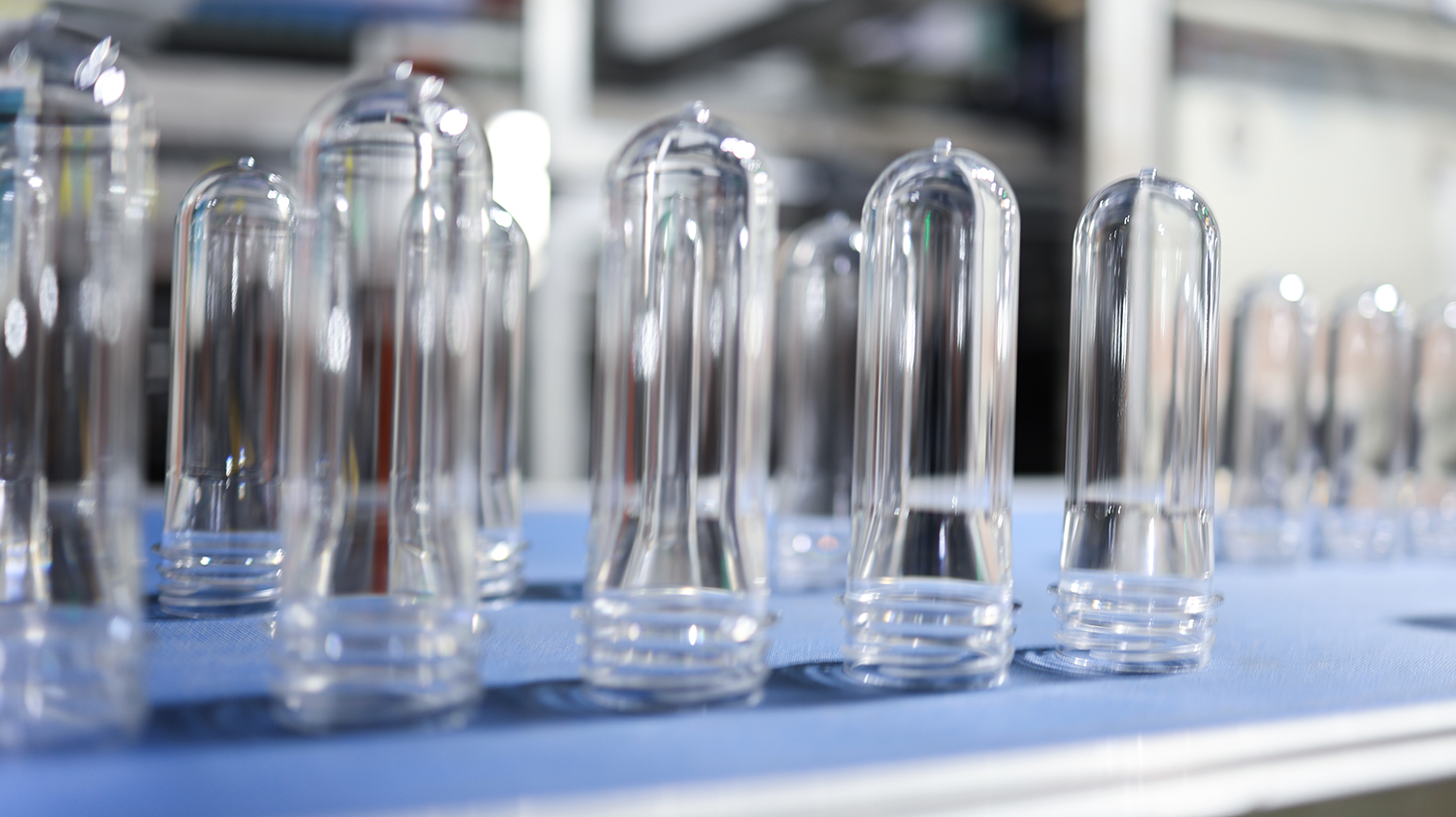
26/22 GME is designed specifically for water and carbonated drinks and is compatible with tethered closures – an emerging specification balancing lightweighting and circularity under the EU Single-Use Plastics Directive. 55mm necks are used for some water and large-mouth products, while BVS 30H60 targets spirits and wine.
First, the thread standard, not the diameter. “28mm” only states the diameter, not the thread. PCO 1810, PCO 1881, and BPF 28mm are three different neck finishes with non-interchangeable caps. Before ordering, obtain the specific neck specification code and confirm that existing cap inventory matches it.
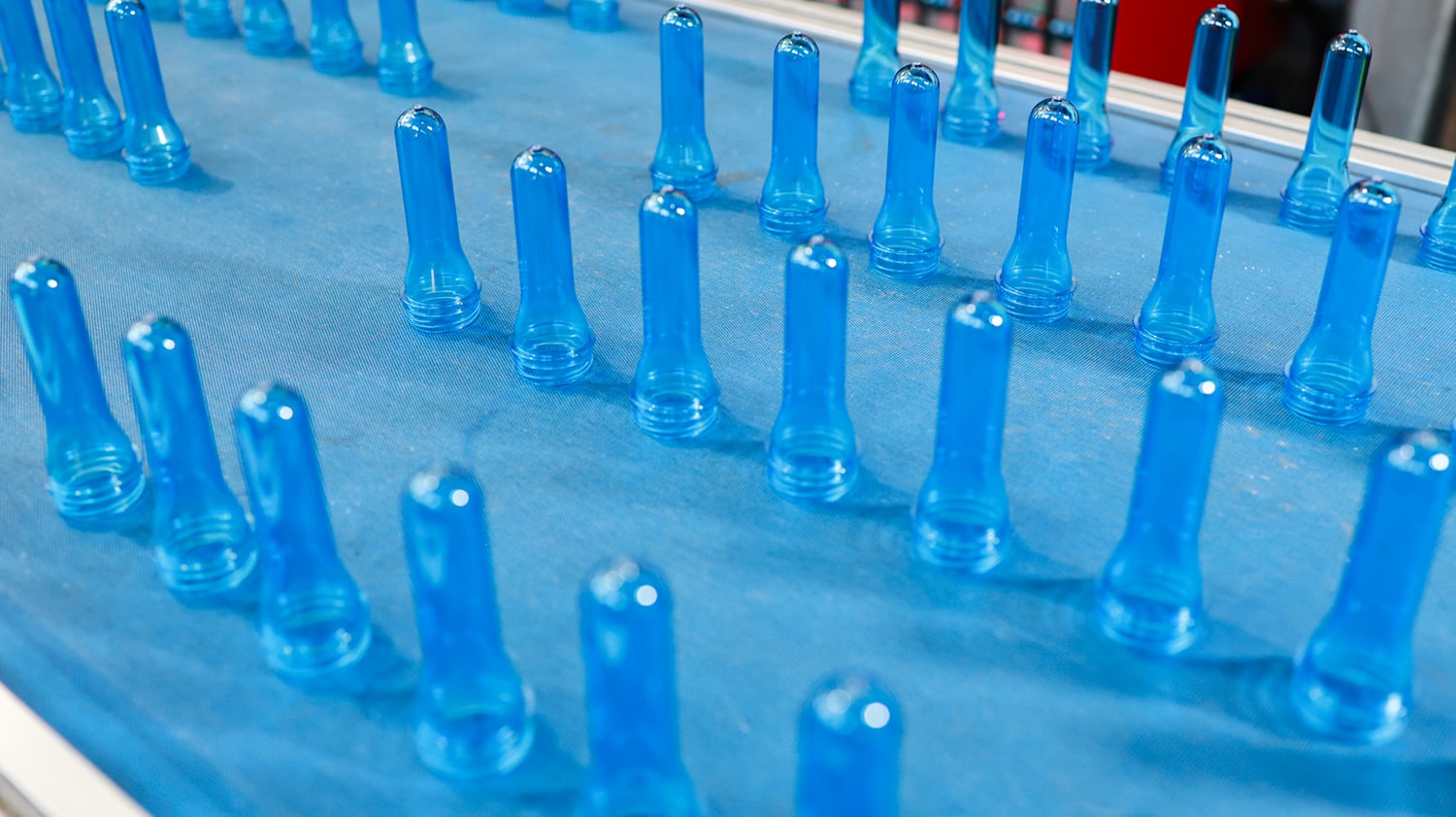
Second, the filling line’s capping system. High-speed filling line capping heads and cap feeders are designed for specific neck finishes and threads. Changing the neck finish means changing the capping module and infeed star wheel – not just swapping preform types. If the capper is designed for PCO 1881, running PCO 1810 preforms will not “make do” – it will cause frequent cap jams, unstable torque, and failed seal tests.
Third, the product and use scenario. Wide mouths facilitate pouring and dispensing, but the larger the neck, the higher the material usage and crystallization control difficulty in the neck area. Narrow necks offer advantages in lightweighting and high-speed lines but are inconvenient for viscous products. For hot-fill products using 38mm crystallized necks, also confirm that the neck crystallization process matches the cap‘s heat resistance requirements.
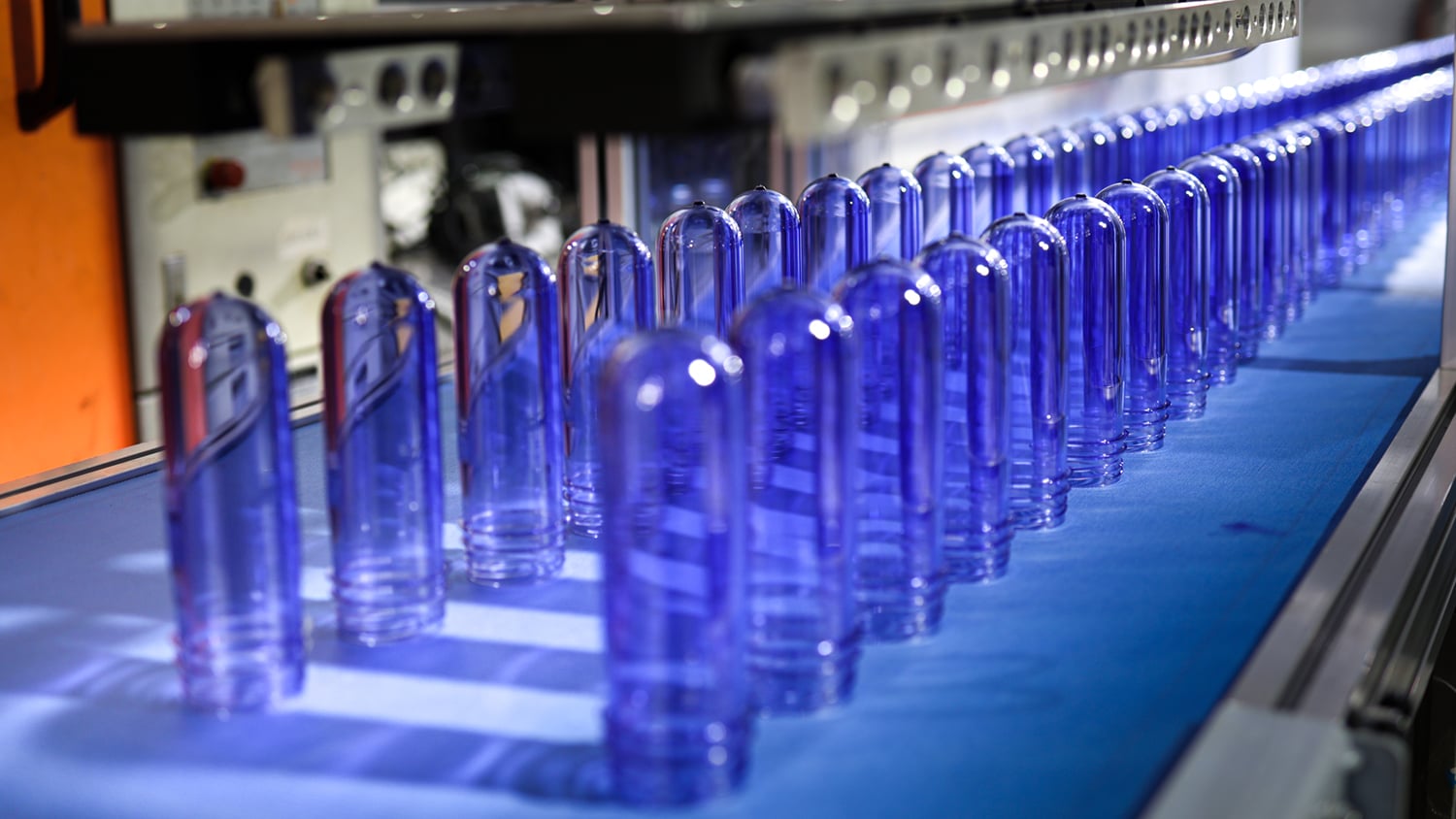
Gram weight is the most intuitive parameter and also the most misunderstood. There is no fixed answer to “how many grams for 500ml” because for the same capacity, differences in bottle design, target bottle weight, filling process, and pressure requirements can produce widely varying gram weights.
The following data comes from industry suppliers and procurement guides, as a starting reference rather than a hard standard:
| Bottle type / capacity | Typical gram weight range | Notes |
|---|---|---|
| 500ml still water bottle | 10–14g | Lightweight products can go as low as around 9g |
| 1.5L carbonated soft drink bottle | 38–42g | Must withstand internal pressure; significantly heavier than water bottles |
| Hot-fill bottle (same capacity) | 15%–20% higher than cold-fill | Shoulder requires extra thickness to resist high-temperature shrinkage |
The spread of gram weights for standard water bottles itself illustrates the point: for the same 500ml, both 10g and 14g are “normal,” with differences driven by target bottle weight, bottle design complexity, and filling line handling conditions. Carbonated and hot-fill bottles require higher gram weights because they need extra wall thickness to withstand internal pressure or high temperature.

Gram weight cannot be selected in isolation – it is hard-constrained by the stretch ratio.
During the preform-to-bottle process, material is stretched both axially and circumferentially. Circumferential stretch ratio equals the bottle’s maximum inner diameter divided by the preform‘s inner diameter; axial stretch ratio equals the finished section height divided by the corresponding preform height; multiplying the two gives the overall stretch ratio. According to typical container-grade PET designs in patent literature, the overall stretch ratio is usually between 12 and 16, with circumferential stretch ratio around 5.6–6.5 and axial around 2.4–2.7. Some designs control the overall stretch ratio at 8–12 for optimal clarity and mechanical performance. These ranges are not arbitrary numbers but the window in which PET molecular chains achieve sufficient orientation under biaxial stretching without excessive thinning or stress whitening.
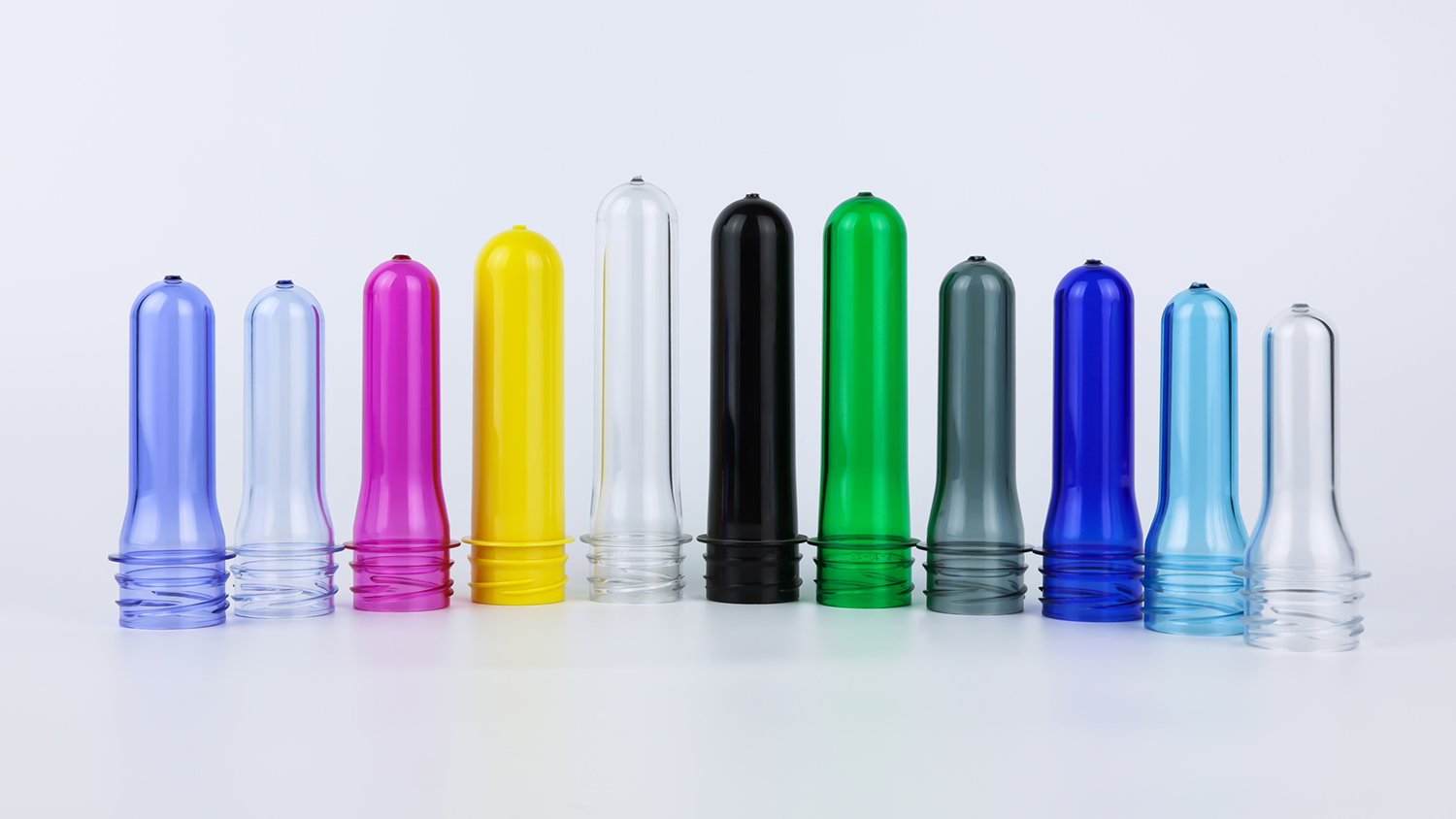
Preform too light: Overall stretch ratio is too high, wall thickness is stretched too thin, body strength is insufficient, and localized whitening, stress cracking, or pressure collapse may occur.
Preform too heavy: Stretch ratio is insufficient, molecular orientation is inadequate, the bottle is soft and hazy, the material is not effectively “straightened” to provide strength, and the extra gram weight does not translate into performance.
Gram weight is essentially the amount of material required to keep the stretch ratio within the effective window for a given bottle geometry. Capacity is only one input to this calculation – not the answer itself.
Increased gram weight does not mean the entire bottle gets uniformly thicker. The extra material must be strategically allocated to the shoulder, body reinforcement zones, and base transition zone – the locations where stress concentrates after blow molding. Hot-fill bottles are 15%–20% heavier than cold-fill bottles of the same capacity precisely because the shoulder needs extra material to resist post-fill thermal shrinkage. For bottles with handles or those bearing dynamic loads, the same logic is even more pronounced: added gram weight must land on the load-bearing points, otherwise it is simply waste.

The final performance of a preform is determined not only by the resin‘s IV but also by process control during injection molding, which changes the actual state of the material.
Drying is the first threshold. PET is highly hygroscopic and must be dried to a moisture content below 50ppm (0.005%) before injection molding. Otherwise, hydrolysis occurs during melting, molecular chains break, IV drops, and acetaldehyde generation increases. Typical drying conditions are 160–180°C, 4–6 hours, dew point ≤ -30°C to -50°C. If the dew point is not low enough or the time is not long enough, even the highest nominal IV raw material will be compromised after injection molding.

The injection temperature profile is equally critical. Too high a melt temperature accelerates thermal degradation; too low causes uneven plastication. A measured case showed that a mere ±3°C fluctuation in the injection temperature profile, combined with insufficient drying time, was enough to cause the blow molding neck-crack rate to jump from 0.5% to 3%. These parameters do not appear on a preform purchase contract, but they determine whether the preforms you receive can consistently blow into good bottles.
The correct order is to start from the finished bottle and filling process and work backward to preform specifications, rather than “guessing forward” from preform capacity or weight.
Step 1: Define function, select IV grade. Is it still water, carbonated drinks, hot-fill juice, or oil? Function determines the IV grade, whether neck crystallization is needed, and whether compensation space must be reserved for rPET IV decay.
Step 2: Define neck finish, lock thread standard. Based on cap specifications and the filling line capping system, lock in the specific neck finish (PCO 1810 / PCO 1881 / 30/25 / 38mm DBJ / SP400 / 26/22 GME, etc.) rather than only confirming the “28mm” diameter number. Simultaneously verify cap inventory and capping module compatibility.
Step 3: Define gram weight, verify stretch ratio. Based on target bottle weight, bottle geometry, and pressure/heat resistance requirements, first estimate a gram weight range, then back-calculate using circumferential and axial stretch ratios to confirm the overall stretch ratio falls within the effective window. If the stretch ratio is unreasonable, adjust the gram weight or bottle dimensions rather than forcing a capacity correspondence table.
Step 4: Verify injection molding and blow molding feasibility. Confirm whether the drying system can achieve the required dew point, whether the injection molding machine‘s temperature control accuracy is sufficient to consistently produce preforms at the target IV, and whether the blow molding machine’s heating capacity can match the selected gram weight‘s wall thickness. Then, before placing a bulk order, run on-machine tests with the actual blow molding machine, checking wall thickness distribution, base formation, neck fit, and drop/pressure performance. No matter how consistent the paper parameters are, the match is only complete after blow molding validation.

PET preform selection is essentially using three variables – raw material, neck finish, and gram weight – to match a bottle’s functional burden and a filling line‘s physical constraints.
Raw material determines whether the bottle “can take the load”; neck finish determines whether it “seals tight and pours conveniently”; gram weight determines whether it “is strong enough and not wasteful.” The three are interlinked: high-IV material with insufficient gram weight still lacks strength; a wide neck with the wrong thread means the cap simply will not screw on; and no matter how generous the gram weight, a wrong stretch ratio still leaves the bottle soft and floppy.
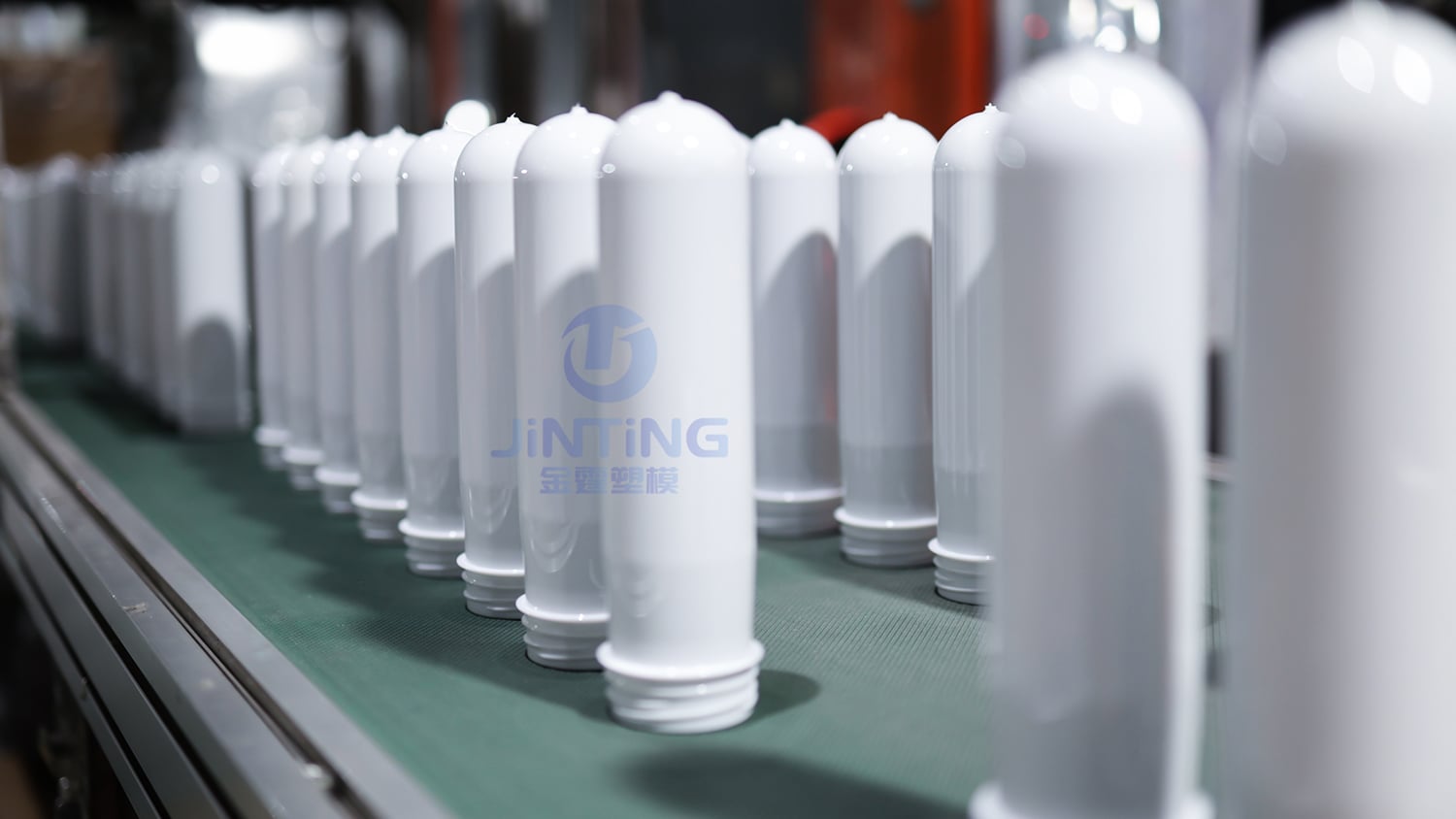
First think clearly about what the bottle will hold, which line it will be filled on, and how it will be handled – then come back and select the preform. This is the only unchanging logic behind all the parameter tables.
 Hot News
2026-09-13
2026-06-04
2026-05-05
2026-01-20
2025-11-12
2025-11-11

Taizhou Huangyan Jinting Plastic Mould.,LTD is a professional PET preform manufacturer with 25+ years’ expertise. ISO9001/ISO22000 certified, custom necks (28–55mm), colors, weights & molds for water/beverage brands. Contact us today.
Puhui Industrial Zone, Toutuo Town, Huangyan District, Taizhou City, Zhejiang Province, China
Copyright © 2026 Taizhou Huangyan Jinting Plastic Mould.,LTD.All rights reserved. Privacy Policy