EN
EN

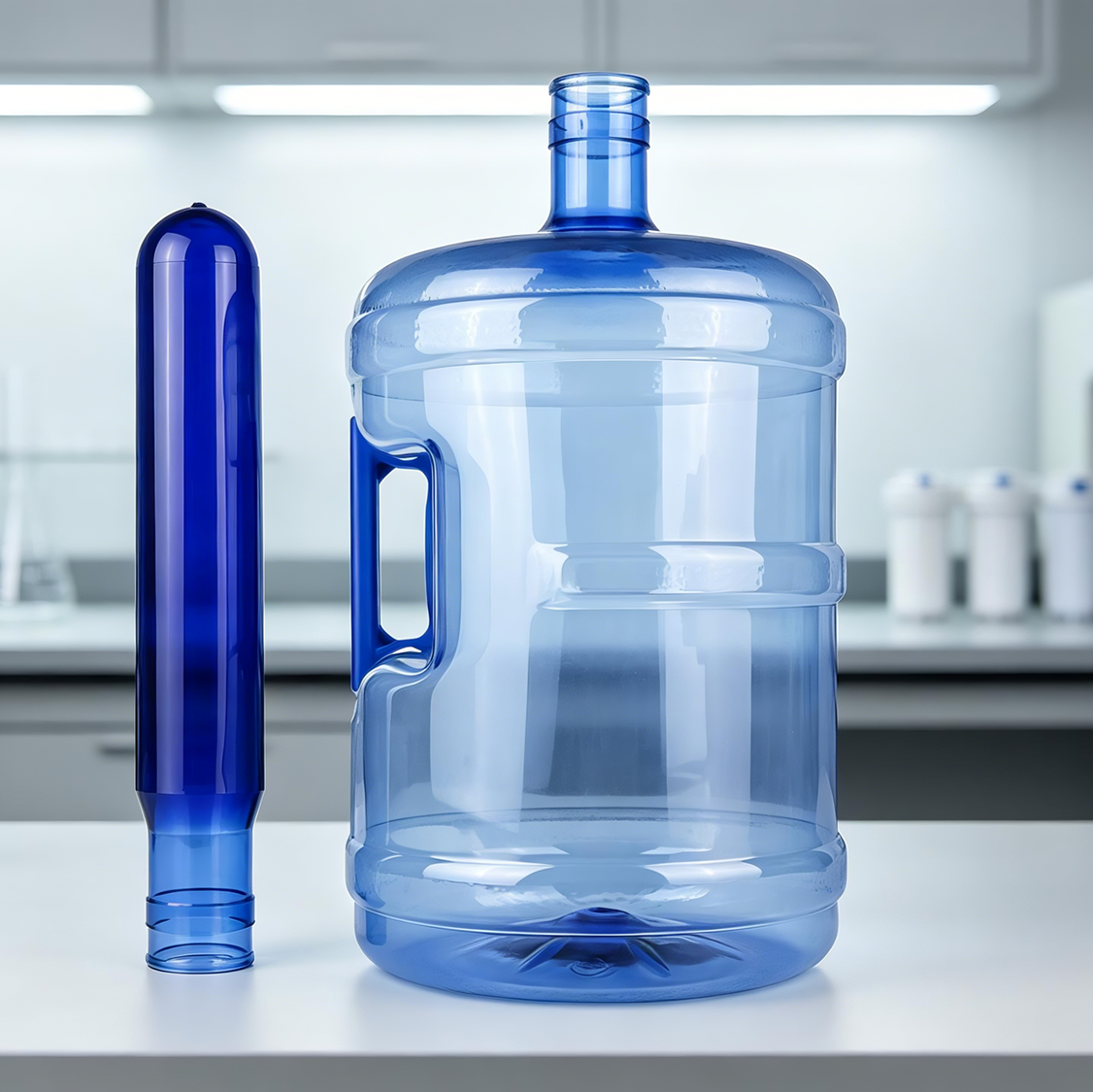
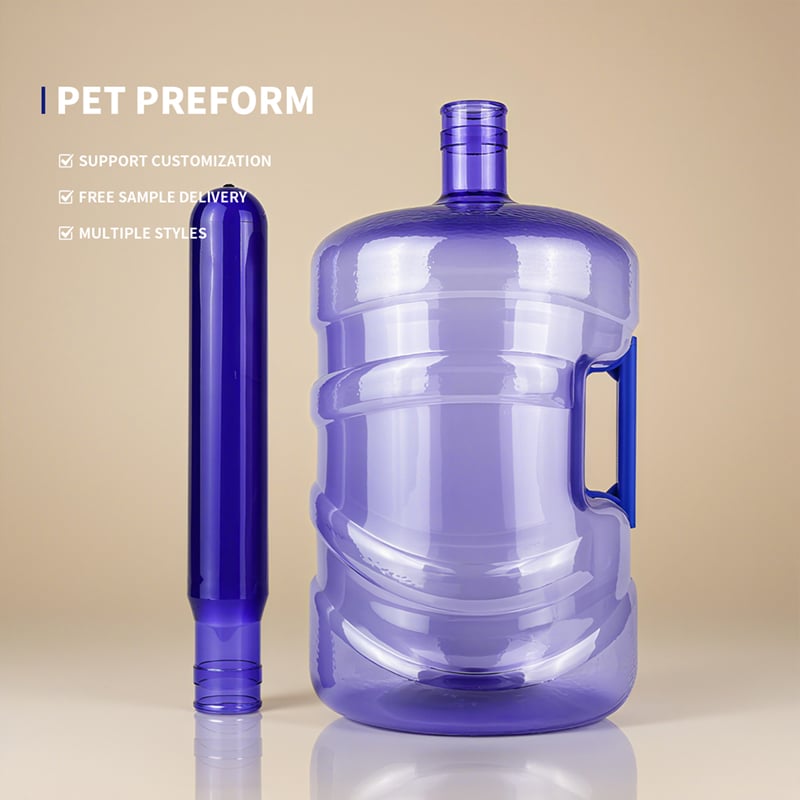
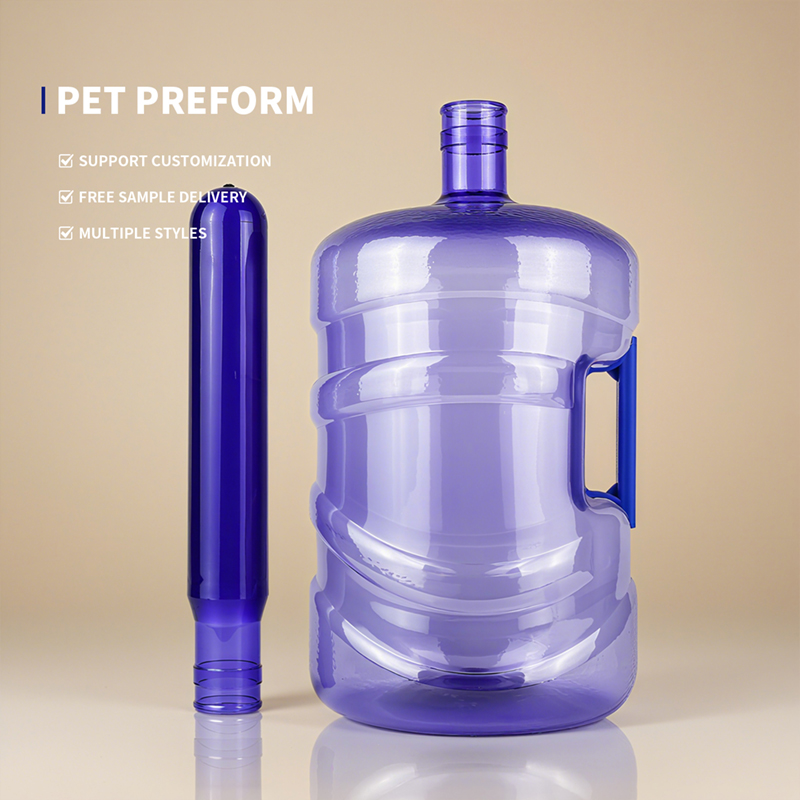
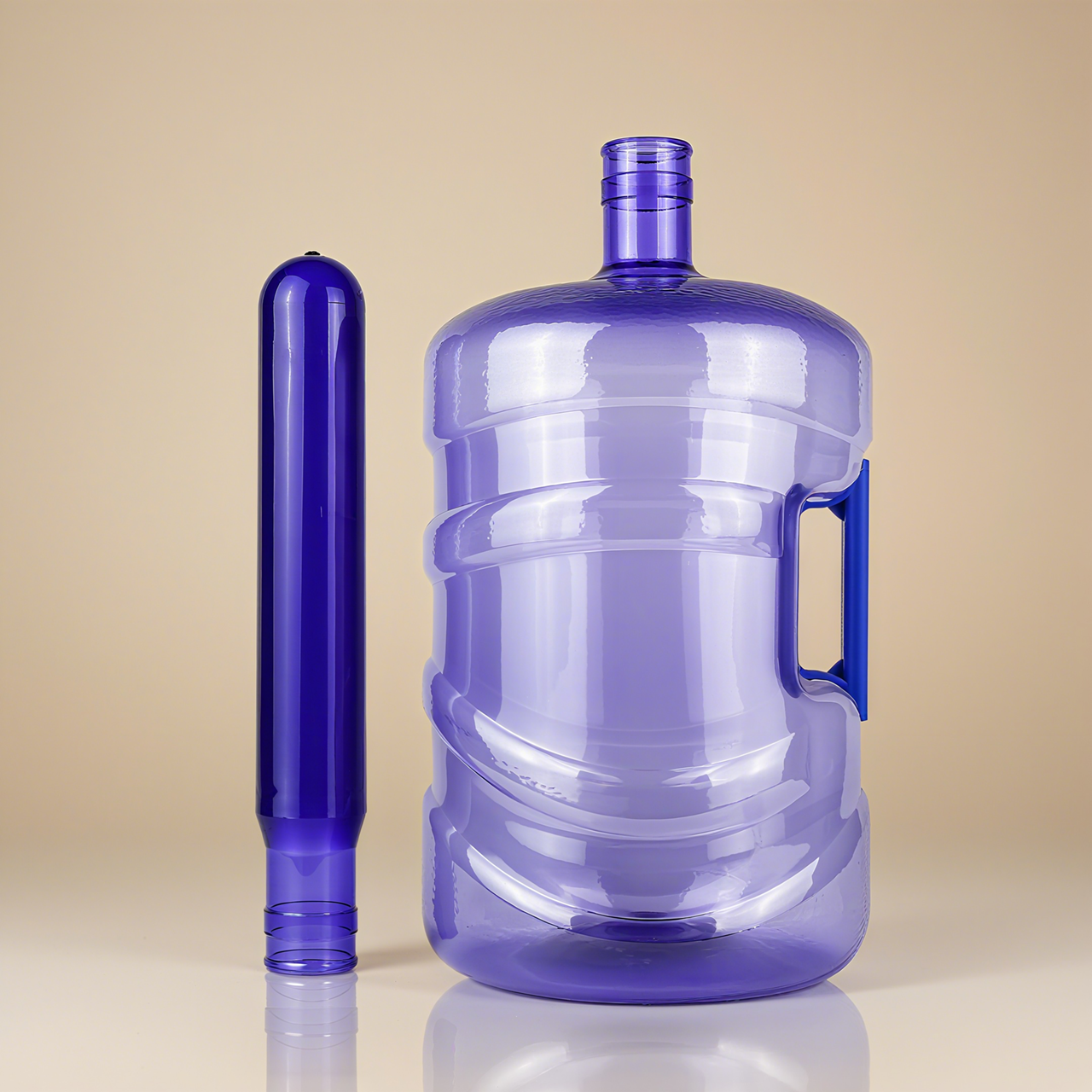
In the bottled water industry, the 5-gallon (approximately 18.9 liters) PET bucket is a special category. When filled with water, it weighs nearly 20 kilograms – far heavier than any conventional beverage bottle. Buckets without handles are carried with both arms or with a carrying ring; buckets with side handles can be lifted with one hand – convenient, yes, but the mechanical challenges on the bucket body have completely changed.
 |
|
Many people ask: going from a 700g preform to a 750g preform is only 50g more – is the difference really that big? The difference is not only significant; it directly determines whether the bucket will fail in the consumer’s hands. This article breaks down the technical necessity behind this “50g” from five dimensions: mechanical principles, structural design, material properties, blow molding process, and cost logic.
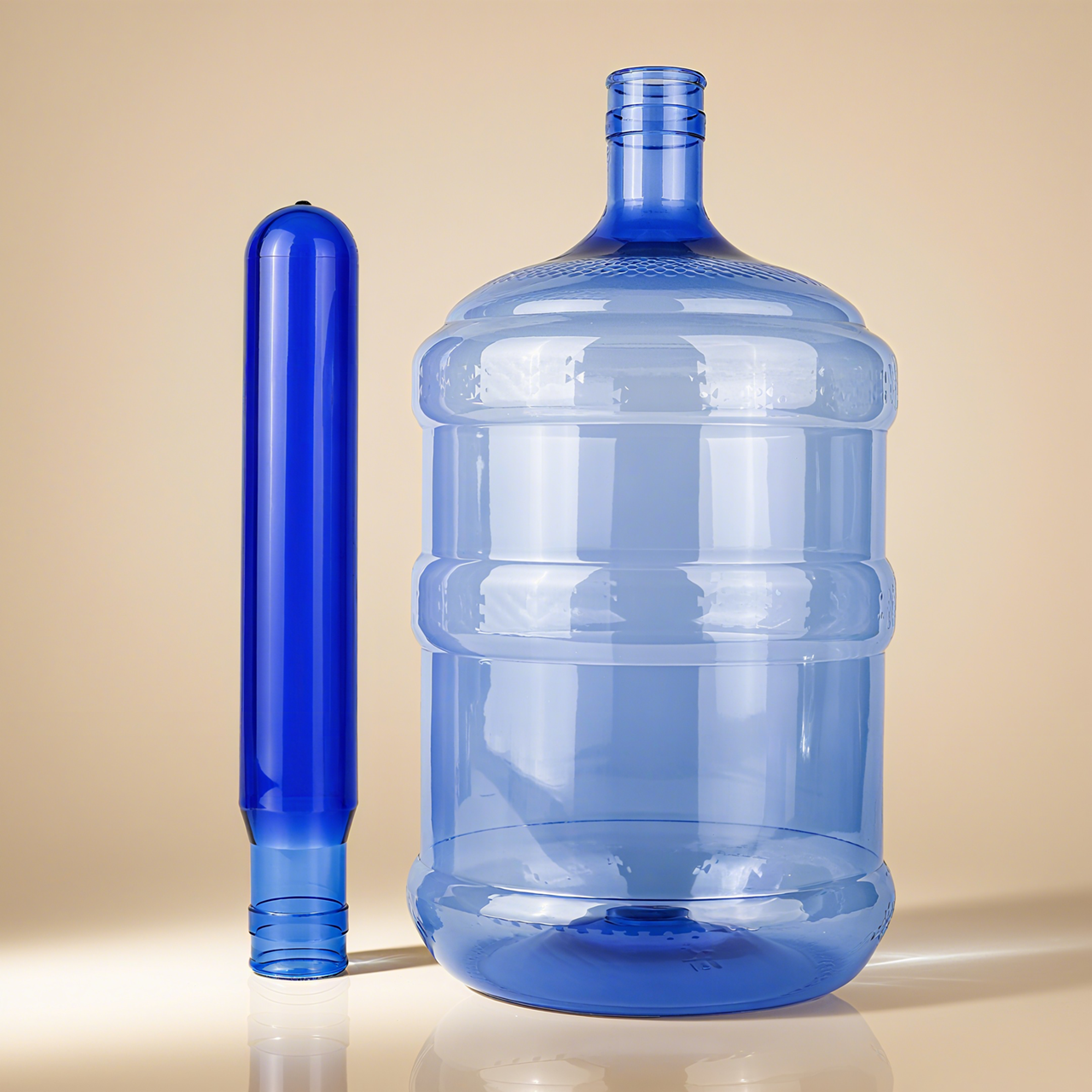
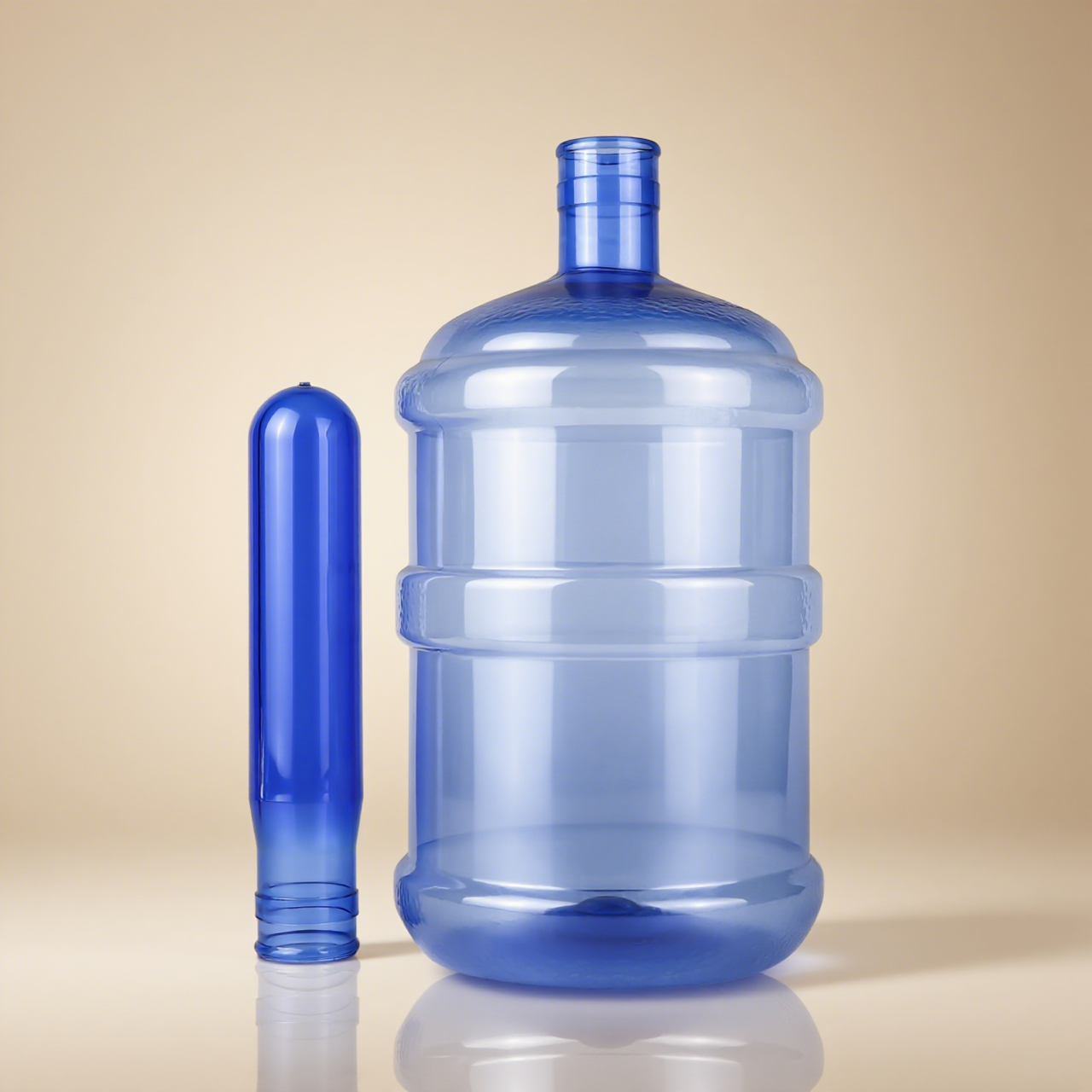
A 5-gallon bucket without a side handle is typically carried in two ways: holding the body with both arms, or using a carrying ring/handle clamped onto the neck. In both cases, the force is transmitted through the neck support ring or a large contact area on the body, the bucket body bears the load as a whole, and stress distribution is relatively uniform.
For such buckets, the wall thickness blown from a 700g preform is already sufficient to withstand the weight of the filled water and the acceleration during handling. Preforms of 560g, 600g, 650g, and 700g are all available in the industry; buckets without handles can definitely be produced with 700g or even lighter preforms.
 |
 |
Once a side handle is added, the situation is completely different.
When lifting a filled bucket, all the weight (nearly 20 kg) is transmitted through the handle to the handle attachment point on the bucket body. This is not a surface but a highly concentrated load-bearing area. More critically, when a person walks while carrying the bucket, the bucket naturally swings, and the dynamic load generated by swinging can be 1.5–2 times the static weight.
In other words, the handle attachment point must withstand not a 20 kg static load, but a 30–40 kg dynamic instantaneous load.
 |
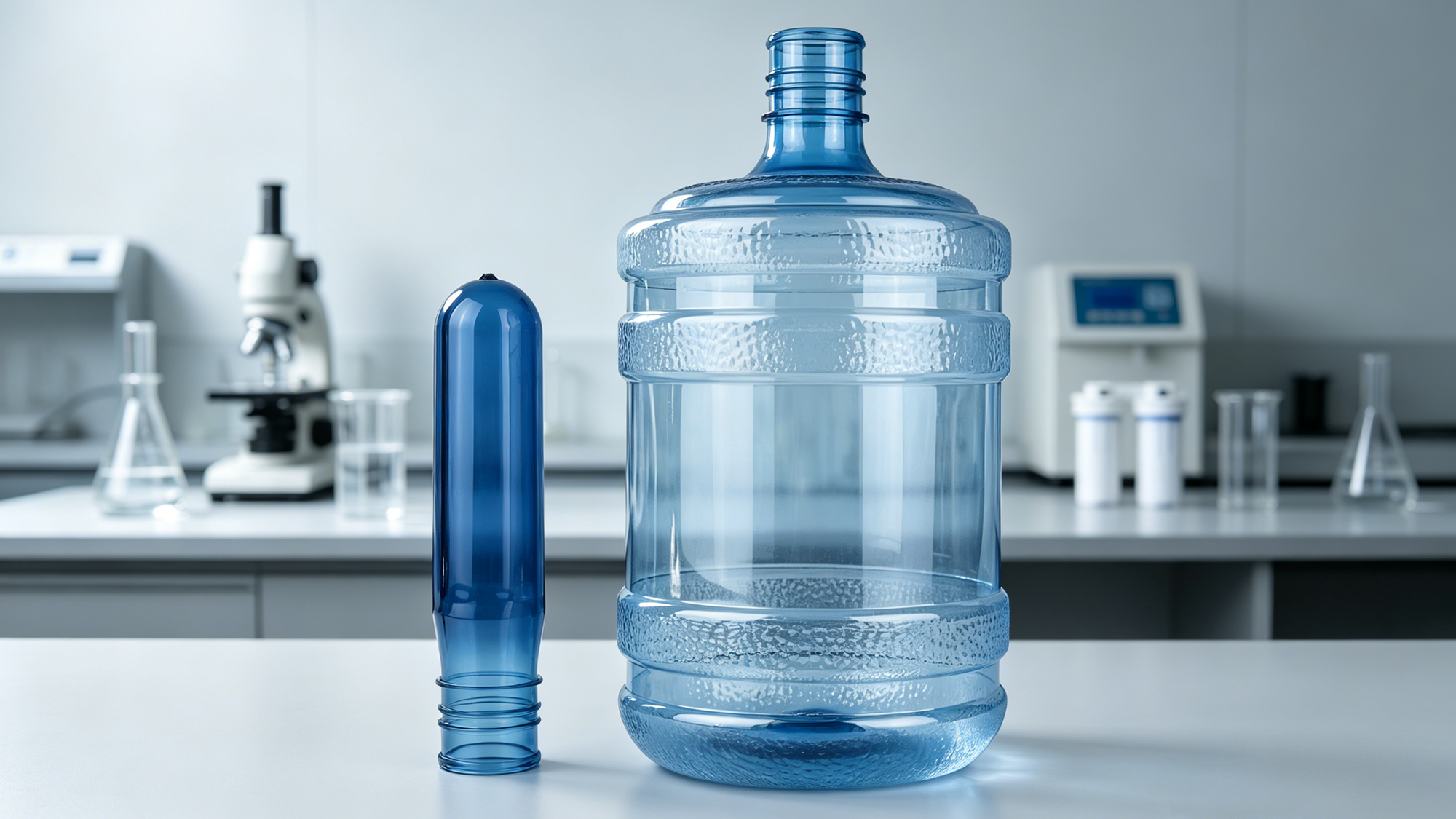 |
Finite element analysis studies on plastic containers with handles show that if the connection point between handle and body is poorly designed, it becomes the first location to fail. For 5-gallon buckets, the local stress at the handle attachment point can reach 5–10 times the average stress on the bucket body.
Stress concentration is a classic problem in engineering mechanics. When there is a sudden geometric change within a material (such as the connection between handle and body), the force flow changes abruptly, and local stress is much higher than average stress.
Traditional handle-to-body connections often use a right-angle transition, where stress concentration easily occurs due to abrupt force flow changes. Finite element analysis shows that the stress peak of a right-angle connection can be 3–5 times that of a fillet connection. If the wall thickness at this location is insufficient, the plastic will creep under high stress, gradually being “stretched” or “torn.”
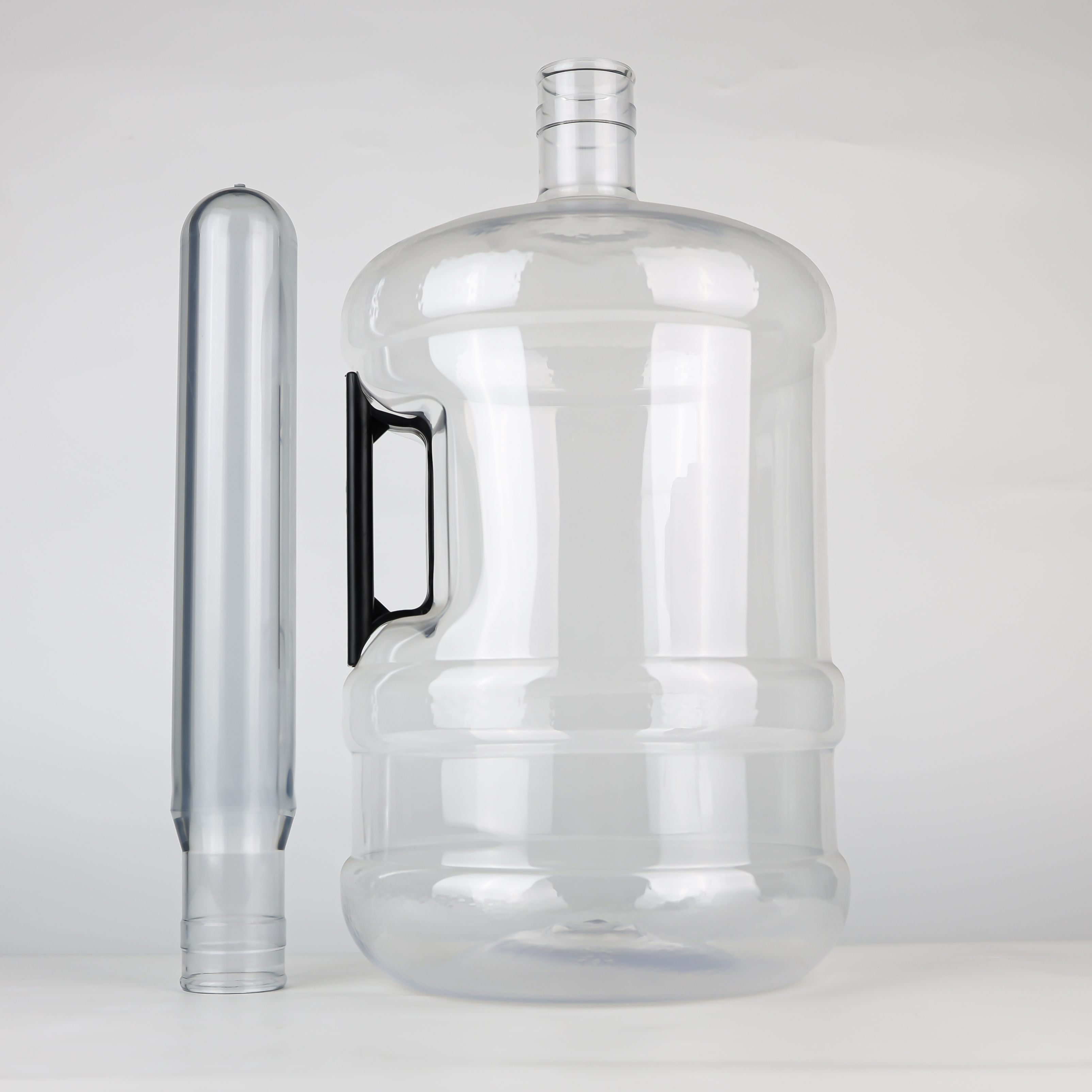
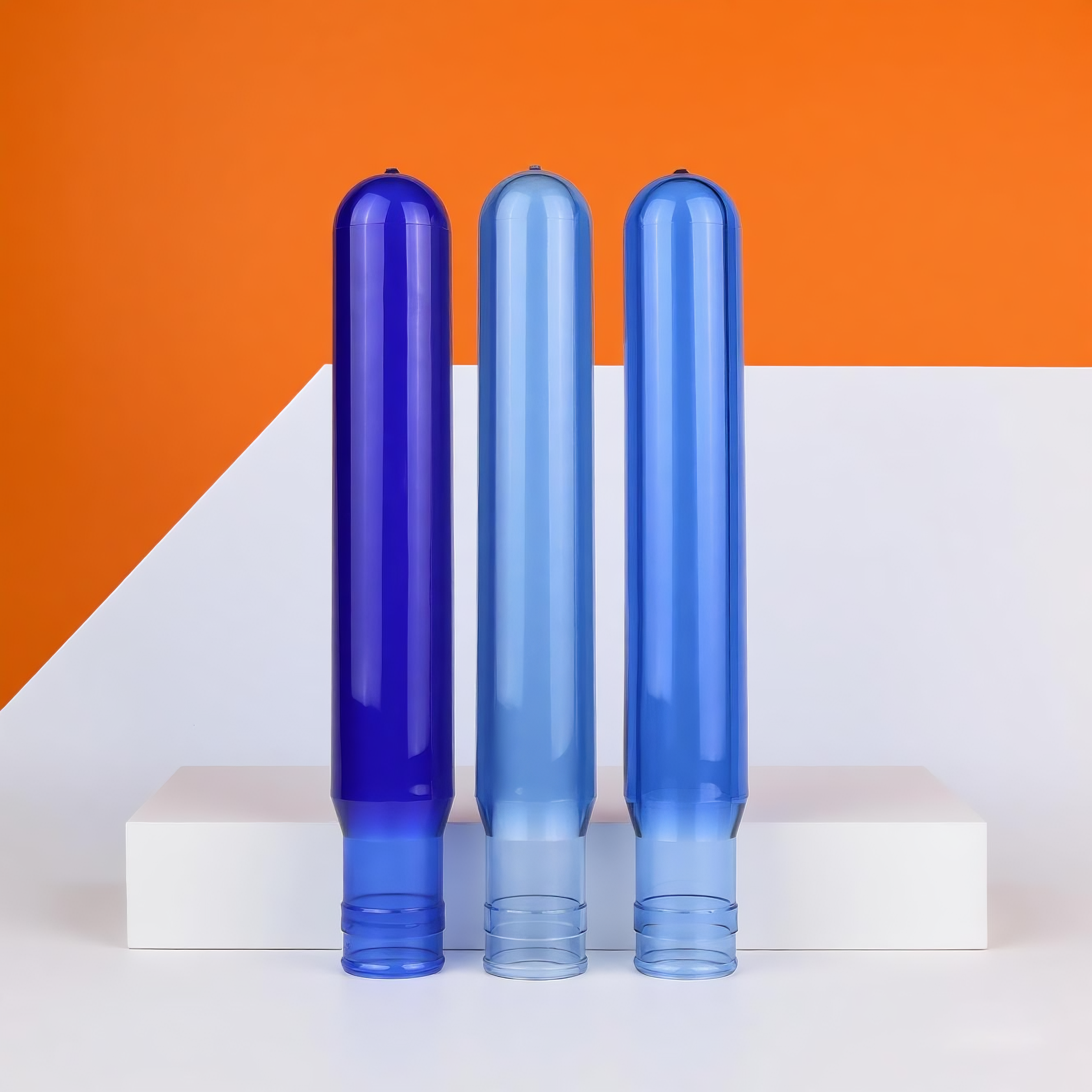
Preform gram weight determines the wall thickness after blowing. The higher the gram weight, the thicker the preform wall, and the thicker the blown bucket wall.
A 5-gallon bucket blown from a 700g preform has an average body wall thickness of approximately 0.4–0.6 mm. This wall thickness is sufficient for a bucket without a handle – because the force is evenly distributed, and the stress per square centimeter is not large.
However, with a side handle, the handle attachment point must withstand localized stress several times the average. A wall thickness of 0.4–0.6 mm is too thin at this “load point.” The direct consequence of insufficient wall thickness: the bucket body deforms locally when lifted, stress whitening appears after repeated use, and ultimately cracking or tearing occurs at the handle attachment point.
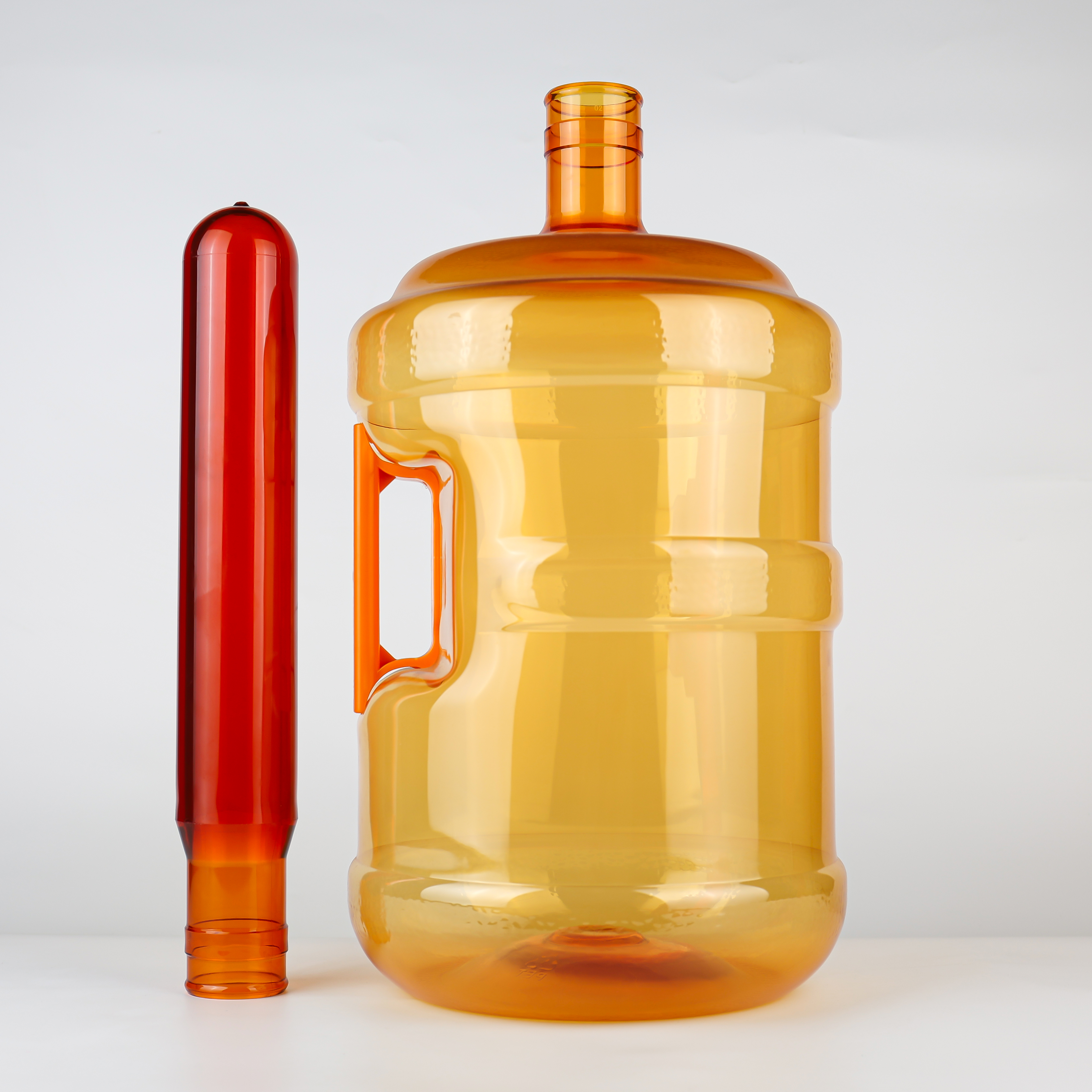
One might think: can we just locally thicken the handle attachment area?
Theoretically yes, but in PET blow molding, the wall thickness distribution of the bucket is determined by the wall thickness distribution of the preform. During injection molding, the wall thickness at different positions of the preform is already fixed; during blowing, the preform is stretched and expanded, and wall thickness decreases proportionally according to the stretch ratio.
To ensure sufficient thickness at the handle attachment point after blowing, more material must be reserved at the corresponding position in the preform. Locally thickening the preform is difficult and costly; directly increasing the overall gram weight is more economical and reliable.
Compared with 700g, the extra 50g of material in a 750g preform is not evenly distributed over the entire bucket but is strategically allocated to the shoulder, body reinforcement zones, and handle attachment area – precisely where stress is most concentrated.
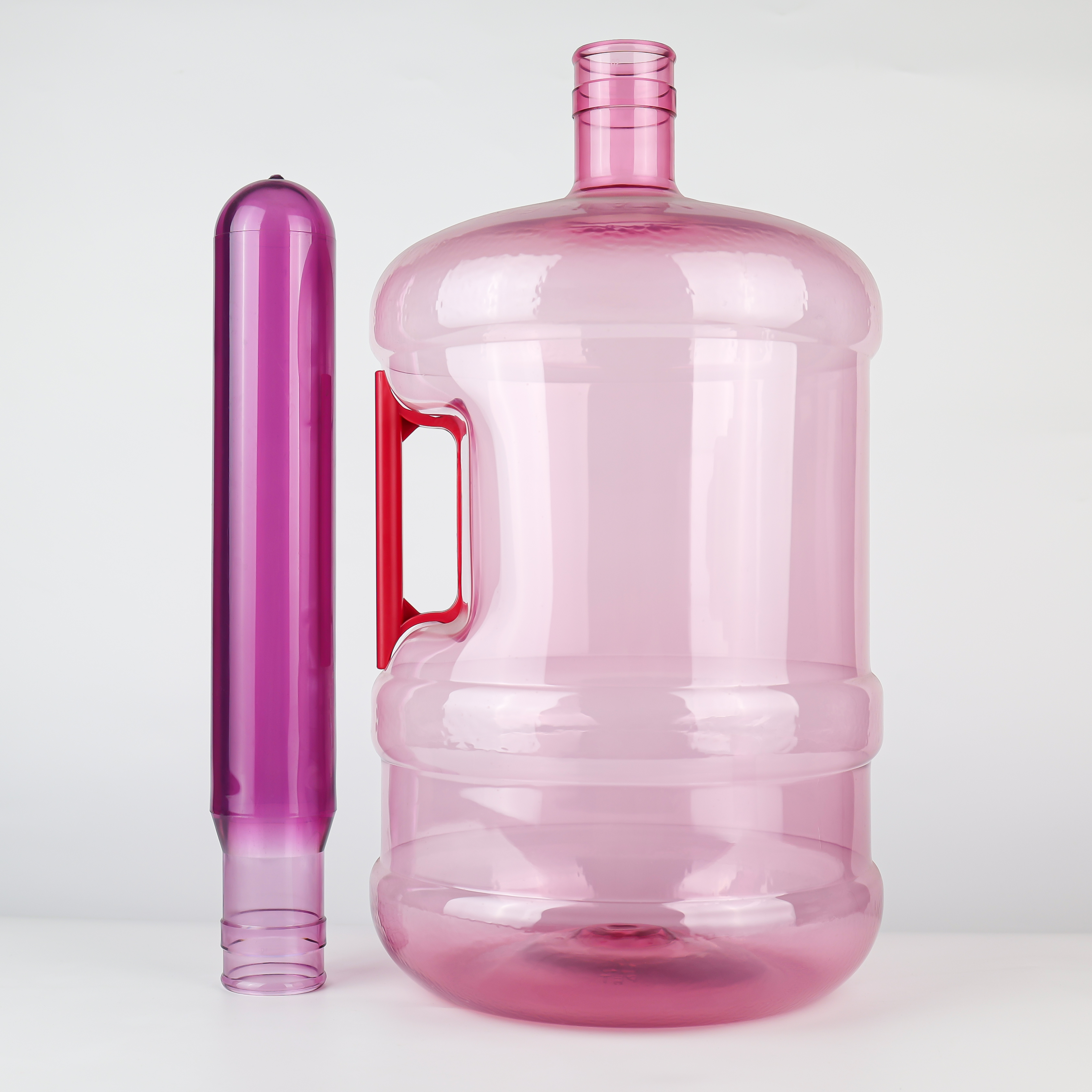
From actual industry product data, 5-gallon preform gram weights are concentrated at 650g, 680g, 700g, 730g, 750g, 780g, and 800g. 700g preforms are mainly for applications without handles or with light loads, while 5-gallon buckets with side handles have standard gram weights concentrated at 730g and 750g.
A patent document on large container preforms clearly states: conventional 5-gallon container preforms, considering wall thickness, only increase to a maximum of about 650g; the new design can increase preform weight to above 700g, up to about 800g, thereby enhancing container rigidity (buckling resistance) while ensuring satisfactory transparency. This patent explains from first principles why heavy-duty buckets with handles require higher gram weights – rigidity is not made up for by “design tricks” but supported by real material volume.
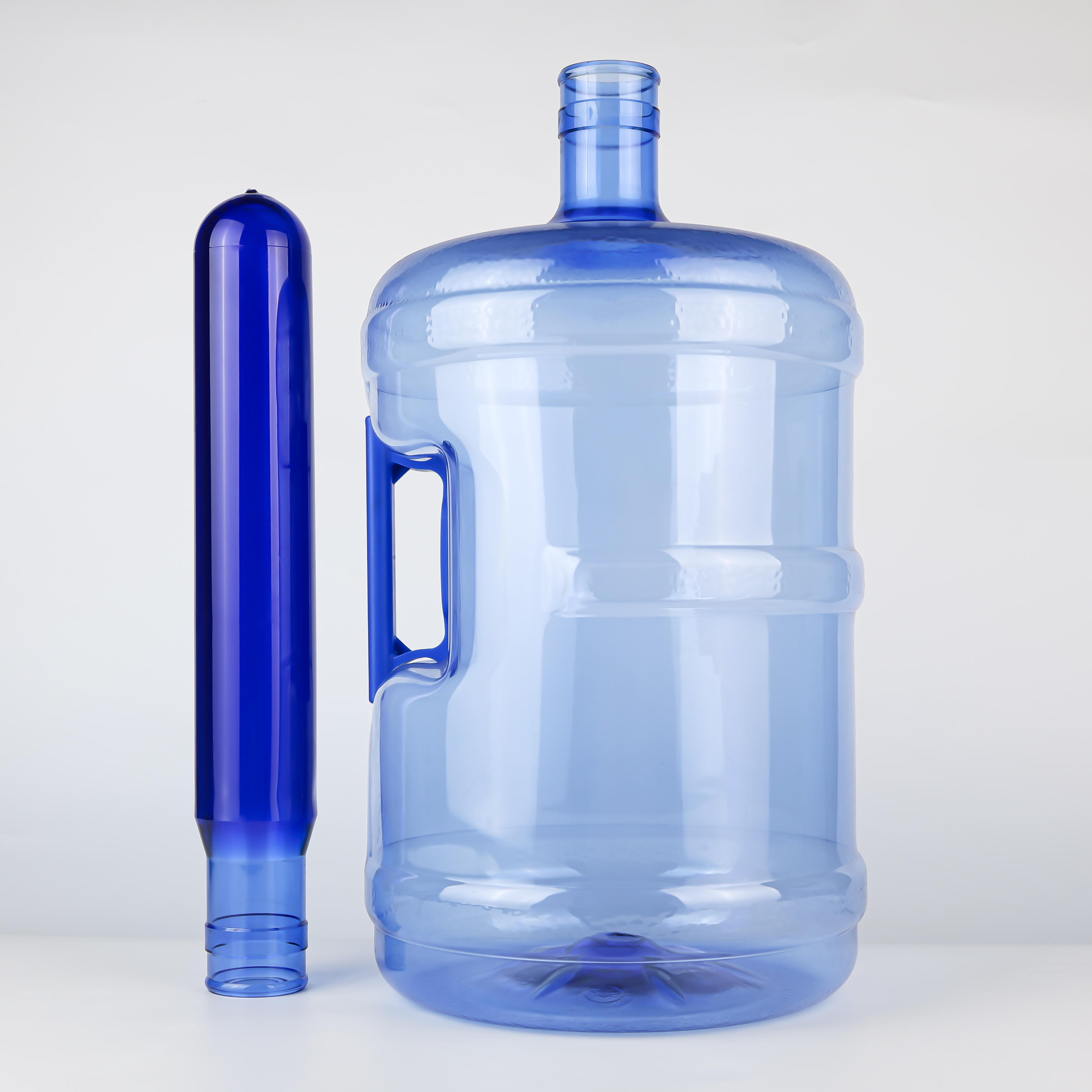
Along with increased gram weight, 750g preforms typically require PET raw material with higher IV values.
Industry data shows that preforms for reusable 5-gallon buckets typically have IV values in the range of 0.84–0.87 dL/g, while disposable lightweight buckets can have IV values as low as 0.76–0.80. Because 750g preforms must withstand the concentrated loads from side handles, they must use high-IV raw material – longer, more entangled molecular chains, significantly improving toughness and creep resistance.
For containers subjected to internal pressure, customer specifications typically require preform IV values of at least 0.83 dL/g. This means 750g preforms are not only “heavier” but also “stronger” – every gram of material has been upgraded.
Simply put: a 700g preform made with low-IV material may feel floppy when lifted; a 750g preform paired with high-IV material feels like it “has bones.”
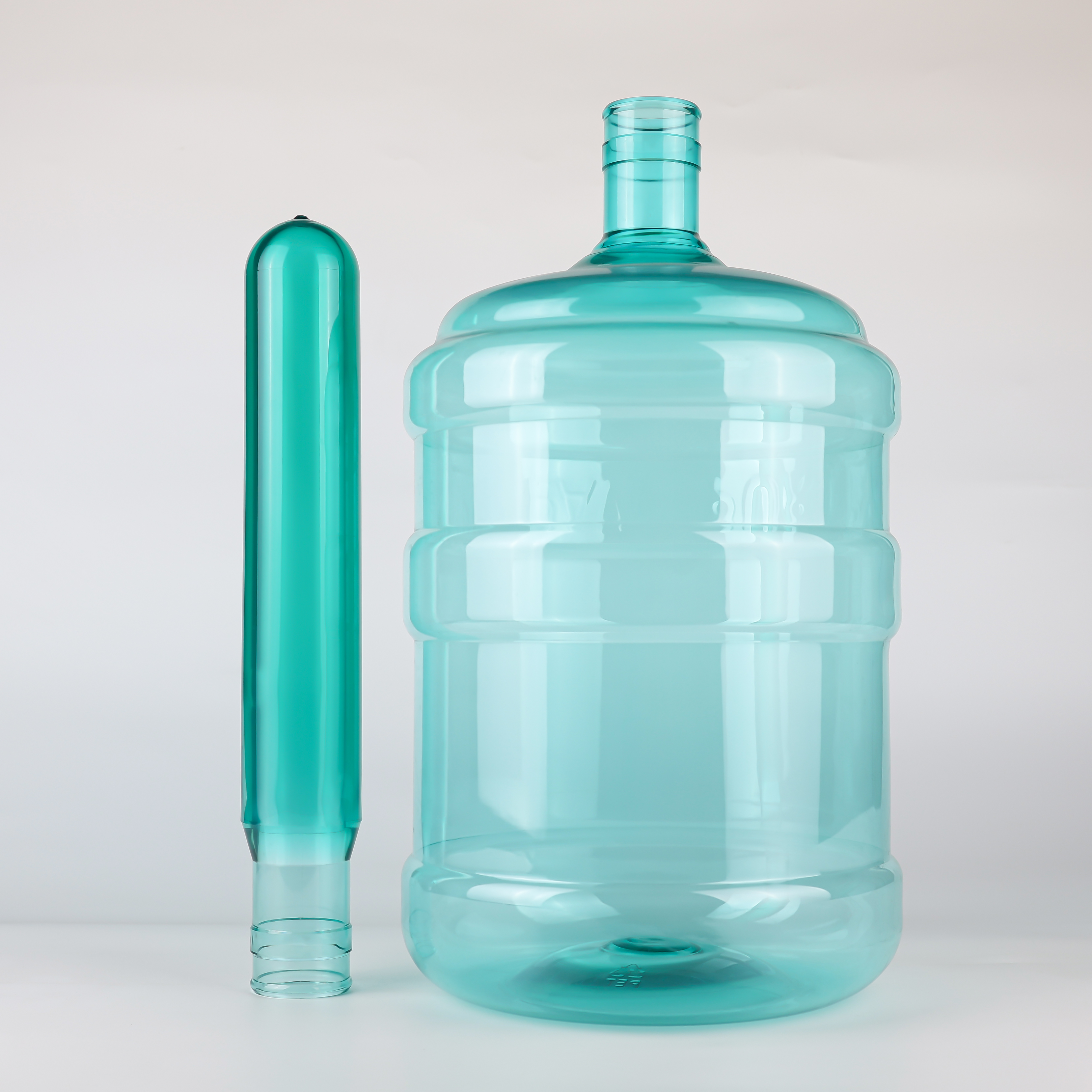
The extra 50g of material in a 750g preform compared with 700g is mainly distributed in three areas:
Shoulder transition zone: the handle attachment point is usually located below the shoulder. The shoulder is the area with the most intense stretching during blowing and the most prone to wall thinning. 750g preforms reserve more material at the shoulder to ensure sufficient structural strength after blowing.
Body reinforcement zone: buckets with handles usually require longitudinal reinforcing ribs or annular reinforcement bands on the body. Thicker preform walls allow these reinforcing structures to form more fully and effectively after blowing.
Base transition zone: the transition between base and body is also a stress concentration area. Material reserved at the base of 750g preforms improves drop and impact resistance.
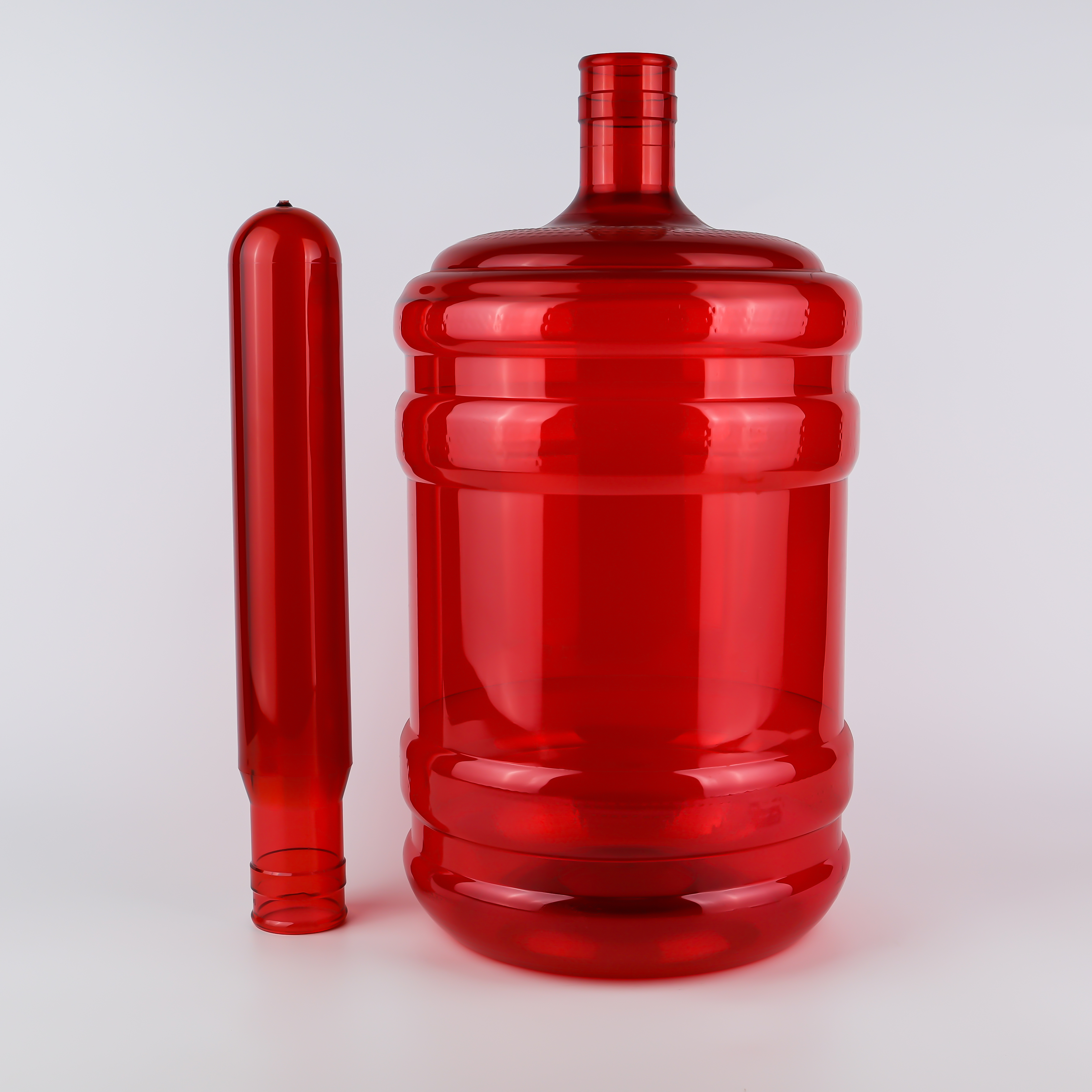
5-gallon bottled water is not consumed and discarded immediately – many households use a bucket for one to two weeks, and reusable buckets in commercial settings undergo dozens of cycles. This means the bucket operates under long-term continuous load.
PET material undergoes creep under sustained stress – slow, permanent deformation. If wall thickness is insufficient and IV value is low, after a few days filled with water, the handle attachment point may gradually “stretch” or “dent,” eventually causing bucket deformation and leakage.
The combination of high gram weight and high IV value in 750g preforms greatly reduces the creep rate. Industry standards require IV values of 0.84 or higher for reusable 5-gallon bucket preforms, precisely to meet this long-term load-bearing requirement. Reusable 5-gallon buckets must also withstand repeated cleaning cycles at 55–70°C, and the material’s thermal stability also depends on sufficient gram weight and IV value support.
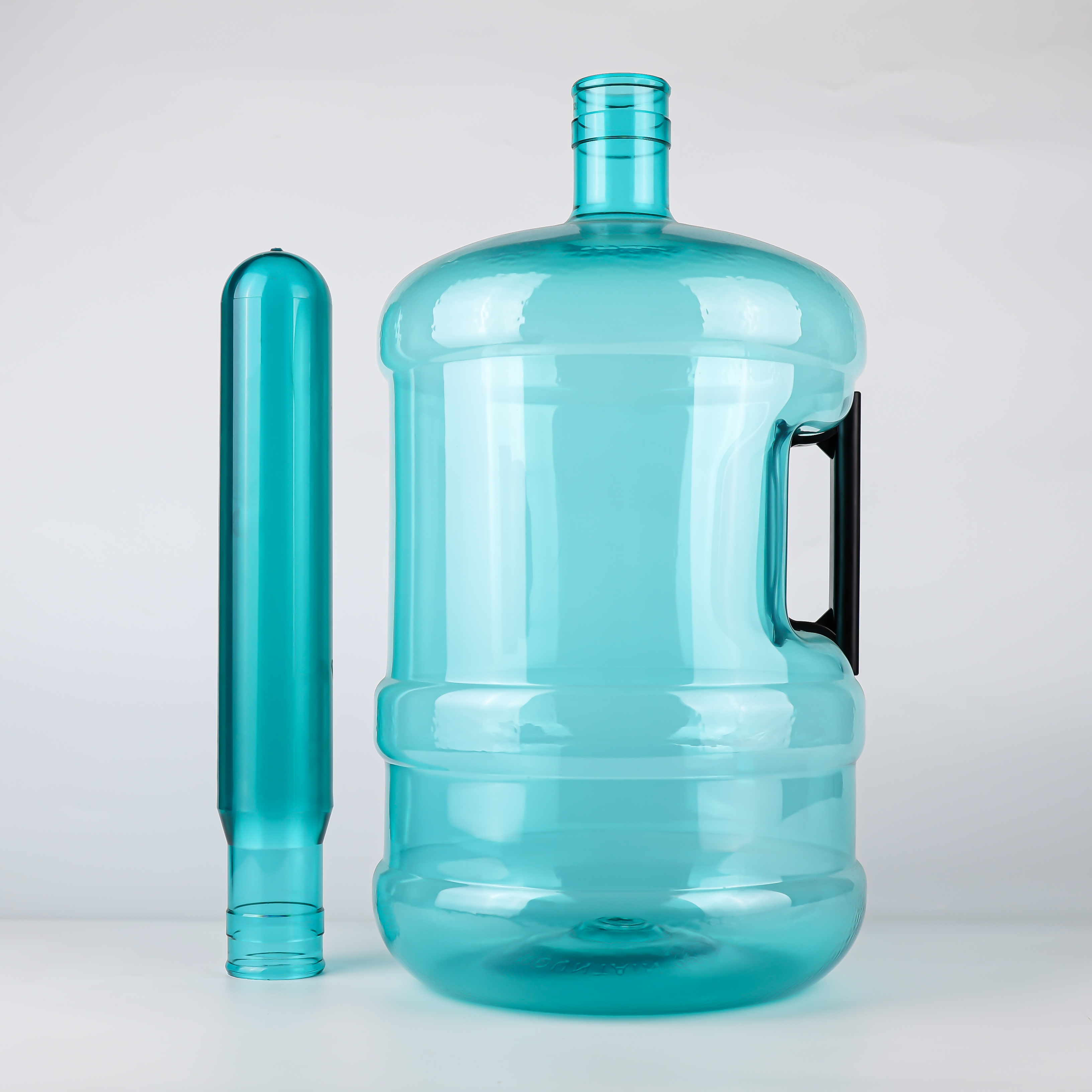
The wall thickness of 750g preforms is greater than that of 700g, making heating more difficult. Ordinary heating systems cannot achieve ideal preform heating; infrared heaters must be used – infrared radiation can penetrate both inside and outside the preform and provides sustained, uniform heating.
专业的5加仑桶吹瓶机(如ZQ22-V)专门配置了特殊的再加热装置,以保证对730g厚壁瓶胚的理想加热效果。这意味着:不是所有吹瓶机都能“吃得下”750g瓶胚。选750g瓶胚,也意味着对吹瓶设备提出了更高的配套要求。
Professional 5-gallon bucket blow molding machines (such as ZQ22-V) are specially equipped with dedicated reheating devices to ensure ideal heating of 730g thick-wall preforms. This means not all blow molding machines can “handle” 750g preforms. Choosing 750g preforms also imposes higher equipment matching requirements.
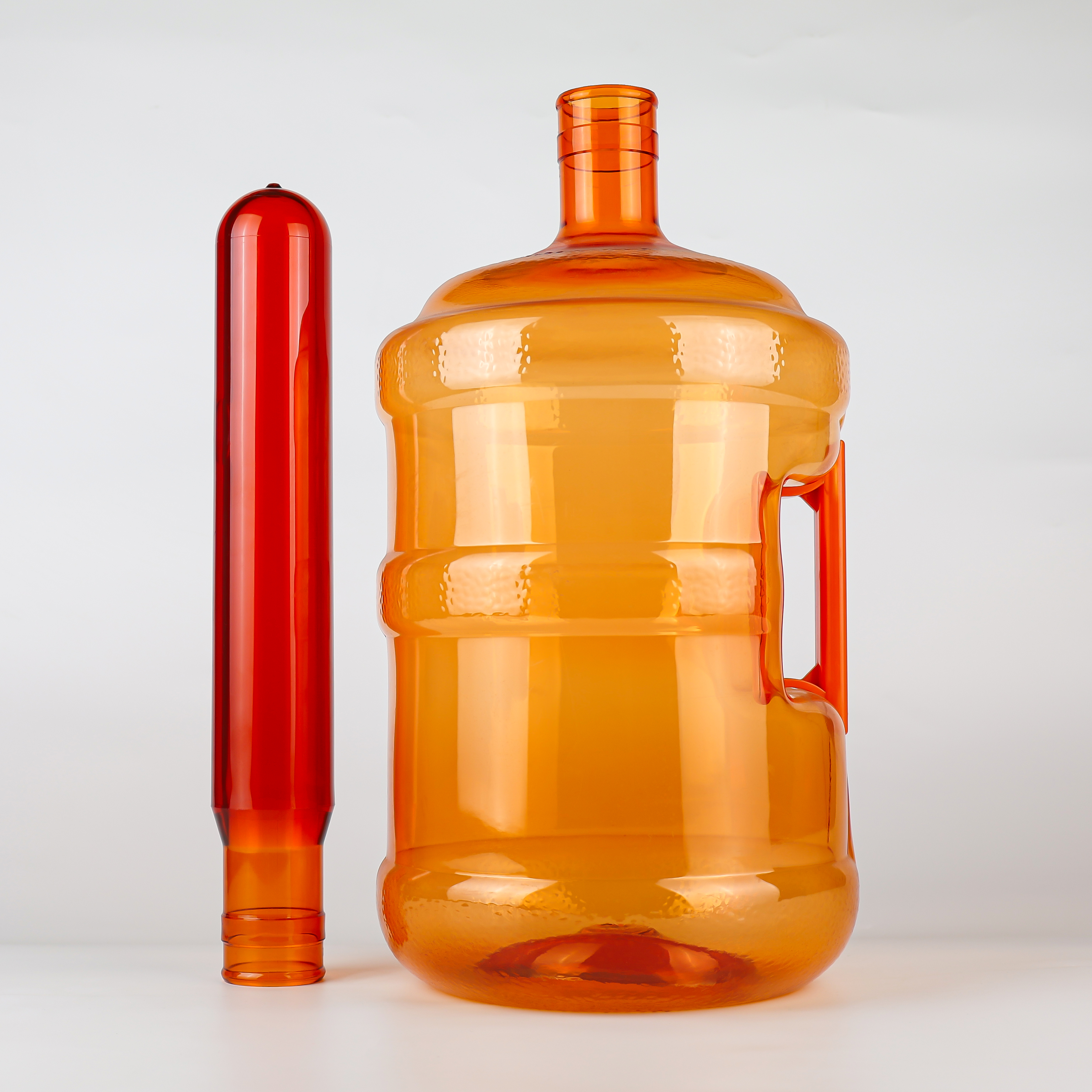
In recent years, blow molding processes for large reusable containers with handles have made significant progress. The PSB (Preform Stretch Booster) pre-blow system developed by SIAPI introduces a controlled pre-blow stage, creating an intermediate preform shape before final blowing, splitting the stretching process into two stages.
This process brings substantial improvements to 5-gallon buckets with handles:
Top load resistance increased by approximately 20%
Handle pull-off strength increased by approximately 24%
Reduced whitening or stress cracking defects in transition zones
After 5 hours of high-temperature exposure, volume shrinkage reduced by up to 35%
Why is this process related to 750g preforms? Because traditional preform design and stretching parameters are largely limited by container geometry and target weight. For large reusable bottles, this can cause radial stretch ratios to exceed optimal limits, resulting in insufficient handle wrap and inadequate mechanical properties. Higher preform gram weight provides greater material “margin” for the PSB process, allowing sufficient material for controlled distribution during pre-blow, ultimately ensuring handle attachment strength.
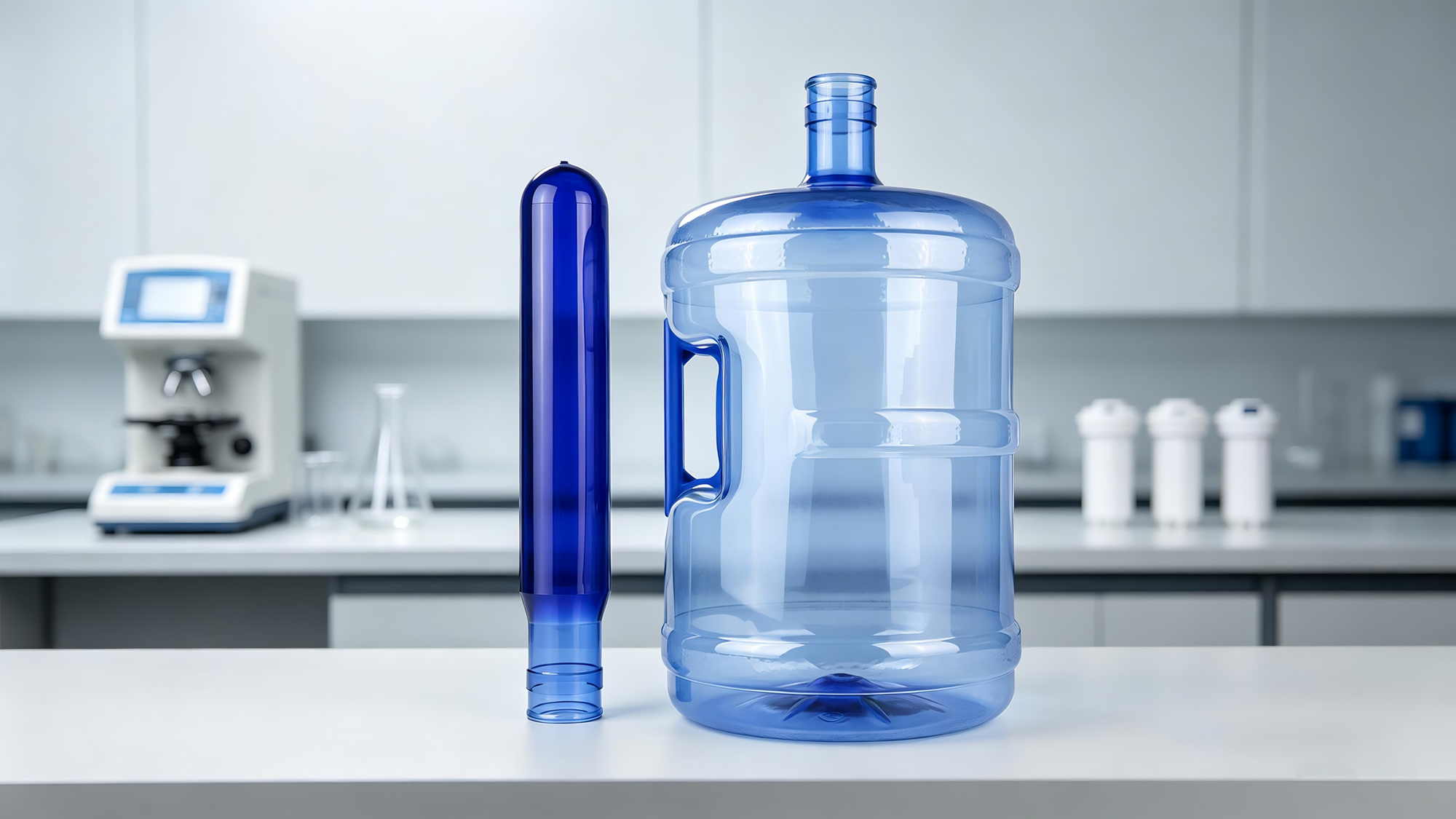
There are two common side handle attachment methods, each with different preform requirements:
Snap-on type: the handle snaps onto the neck support ring. This method places extremely high demands on neck strength – because all weight is ultimately transmitted through the snap to the neck. The thicker neck area of 750g preforms can withstand the concentrated load from the snap.
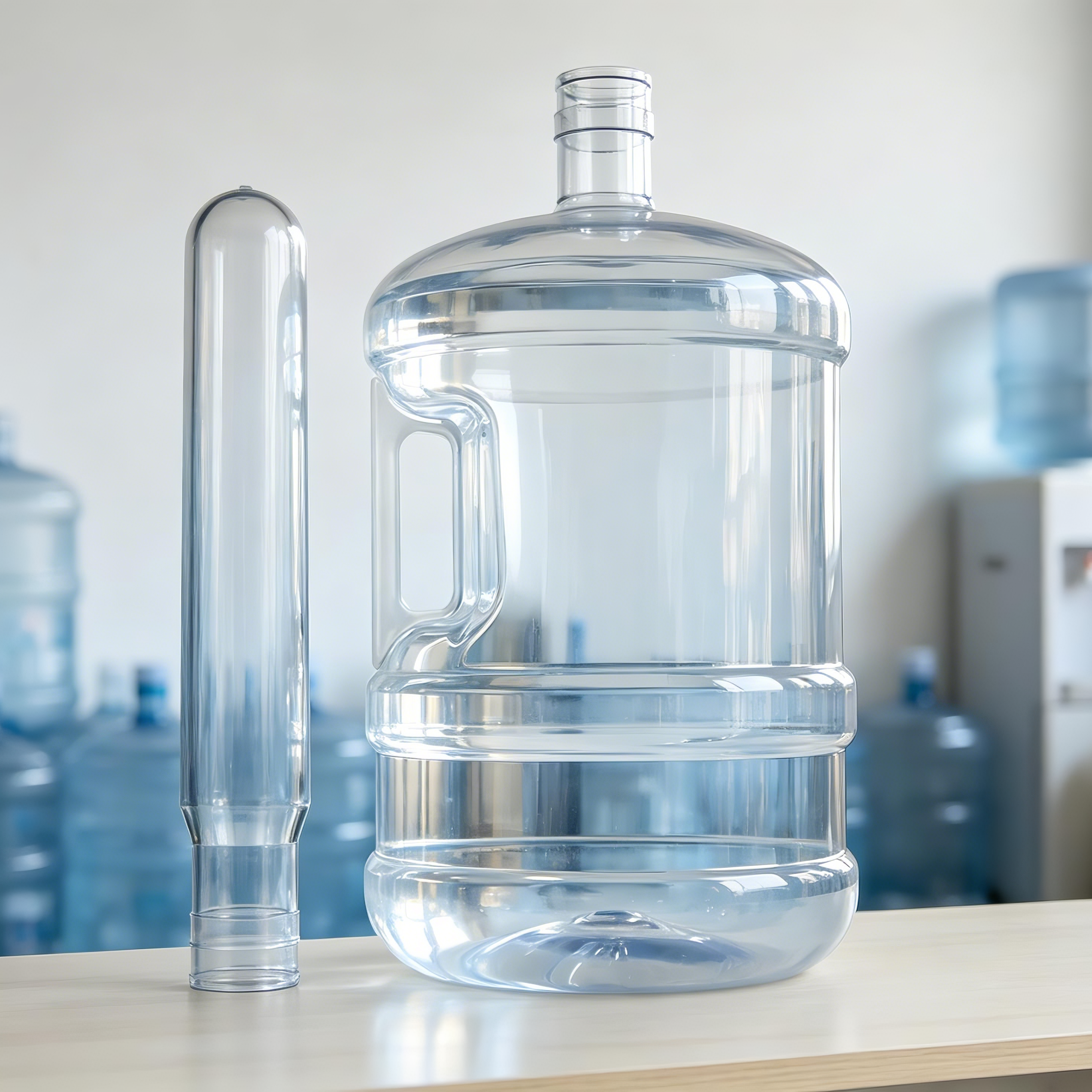
Welded/bonded type: the handle is directly fixed to the bucket body. This method places higher demands on local body strength. The wall thickness redundancy provided by 750g preforms ensures sufficient material thickness in the welded area to withstand peeling forces.
Regardless of the method, the wall thickness redundancy provided by 750g preforms is the fundamental guarantee. A patent on containers with handles points out that the connection area between the bottom of the handle and the body is a critical stress concentration location and must be strengthened in design; otherwise, compressive loads will cause body deformation.
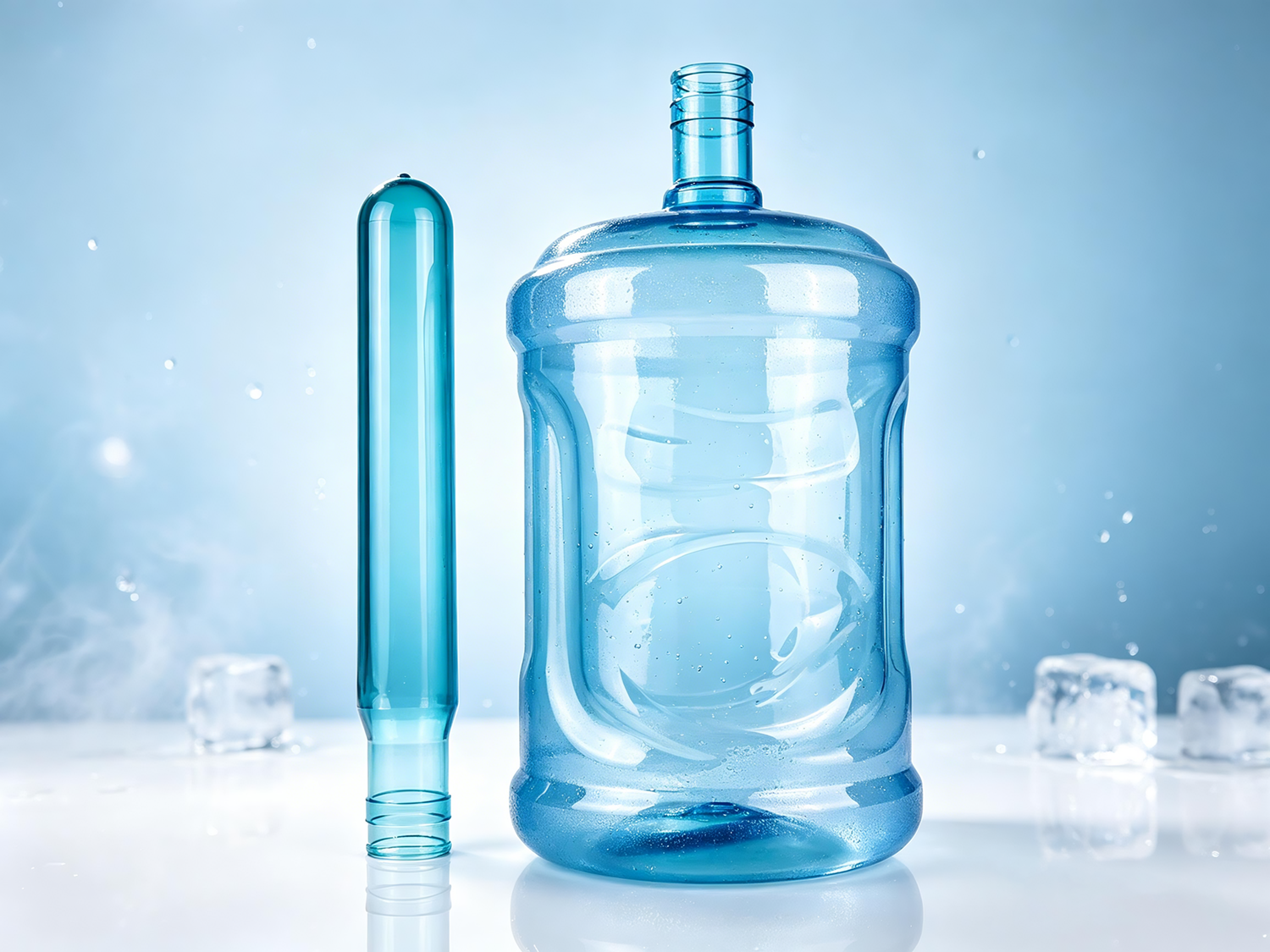
There are indeed 800g 5-gallon preforms on the market. But the higher the gram weight, the higher the cost. Every additional 50g increases the raw material cost per bucket by several tenths of a yuan. For a bottled water company producing hundreds of thousands of buckets annually, this is a significant expense.
Moreover, higher preform gram weight is not always better. An overly heavy preform means excessive wall thickness, which can easily cause whitening (opacity caused by spherulite formation) during blowing due to stretching and crystallization. The positioning of 750g is clear: under the premise of ensuring structural safety of side-handle buckets, control gram weight within a range that is cost-acceptable and process-stable.
 |
 |
| Comparison dimension | 700g preform | 750g preform |
|---|---|---|
| Application scenario | 5-gallon bucket without handle | 5-gallon bucket with side handle |
| Average body wall thickness | Approx. 0.4–0.6 mm | Approx. 0.5–0.7 mm |
| Handle attachment wall thickness | Thin, prone to deformation | Sufficient, resists concentrated load |
| Recommended IV value | 0.76–0.80 dL/g | 0.84–0.87 dL/g |
| Dynamic load capacity | Fair | Strong |
| Long-term creep performance | Fair | Excellent |
| Thermal stability after repeated cleaning | Fair | Excellent (volume shrinkage reduced by 35%) |
| Matching blow molding equipment | Conventional heating system sufficient | Requires infrared heating + dedicated reheating device |
| Raw material cost | Lower | Higher |
At current PET raw material prices of approximately ¥8,000–10,000 per ton, every additional 50g increases the raw material cost per bucket by about ¥0.4–0.5. For a company producing 100,000 handle buckets annually, the additional annual cost is about ¥40,000–50,000.
 |
 |
That sounds like a lot. But compare: if a handle bucket leaks due to cracking at the handle attachment point, the loss is not just the bucket itself – but also the water inside (about 20 liters), transportation costs, customer complaint handling costs, and brand reputation damage. A single batch quality incident could cost more than the raw material price difference of hundreds of thousands of yuan.
More importantly, 5-gallon buckets with handles are typically reusable, designed for dozens of cycles. The structural redundancy provided by 750g preforms is precisely the foundation for the bucket to safely “serve” multiple times. Saving 50g of raw material may reduce the bucket’s cycle life from 30 to 15 – the cost per use actually becomes higher.
Choosing preforms is never about “the lighter the cheaper,” but “just right is the most economical.” The 50g saved may become a cracked bucket, a leaking bucket, or a complained-about bucket in the consumer’s hands – that is the real cost.
750g is the gram weight threshold, but not the only condition. The same 750g preform can still cause problems if the process or usage method is wrong.
The wall thickness of 750g preforms is greater than 700g, requiring higher heating temperatures and longer heating times during blowing to ensure heat penetrates into the preform interior. Insufficient heating leads to uneven wall thickness in the blown bucket, making the handle attachment point more fragile. If preform temperature is too low and softening is insufficient, it is difficult to blow into the desired shape; if temperature is too high, molecular chain orientation is insufficient, and the bucket body whitens.
The geometric design of the handle attachment point directly affects stress distribution. The stress peak of a fillet transition is 3–5 times lower than that of a right-angle transition. 750g preforms provide thicker walls, but without a matching fillet transition design, stress will still concentrate. Gram weight is the foundation, design is the key – both are indispensable.
For 5-gallon buckets with handles, if users habitually lift and swing with one hand, the dynamic load far exceeds the design value. 750g preforms can withstand normal use, but there is still risk under extreme abusive use. This is why the industry recommends regular inspection of handle buckets and avoiding service beyond their design life.
Why choose preforms of 750g or more for 5-gallon buckets with side handles?
Because the side handle turns “distributed load” into “concentrated load,” “static load” into “dynamic load,” “short-term use” into “long-term creep,” and “single filling” into “repeated cleaning.” Any one of these four changes demands a thicker wall, higher IV value, and greater structural redundancy.
A 700g preform can blow a qualified bucket without a handle, but it cannot withstand the mechanical challenges brought by a side handle. The extra 50g of material in a 750g preform is not waste but a necessary investment in safety margin – allocated to the shoulder, handle attachment area, and base transition zone, it withstands dynamic loads, resists long-term creep, and endures repeated cleaning, allowing the bucket to safely serve dozens of cycles in consumers’ hands.
Industry standard data confirms this: for 5-gallon buckets with handles, preform gram weights are concentrated at 730g and 750g, with IV values required above 0.84. This is not “manufacturers trying to sell more material” but the optimal solution given by mechanics and materials science.
If you have further questions regarding the selection criteria for 5-gallon bottle preforms, IV value testing methods or bottle blowing process parameters, please feel free to contact us.
 Hot News
2026-09-13
2026-06-04
2026-05-05
2026-01-20
2025-11-12
2025-11-11

Taizhou Huangyan Jinting Plastic Mould.,LTD is a professional PET preform manufacturer with 25+ years’ expertise. ISO9001/ISO22000 certified, custom necks (28–55mm), colors, weights & molds for water/beverage brands. Contact us today.
Puhui Industrial Zone, Toutuo Town, Huangyan District, Taizhou City, Zhejiang Province, China
Copyright © 2026 Taizhou Huangyan Jinting Plastic Mould.,LTD.All rights reserved. Privacy Policy