 EN

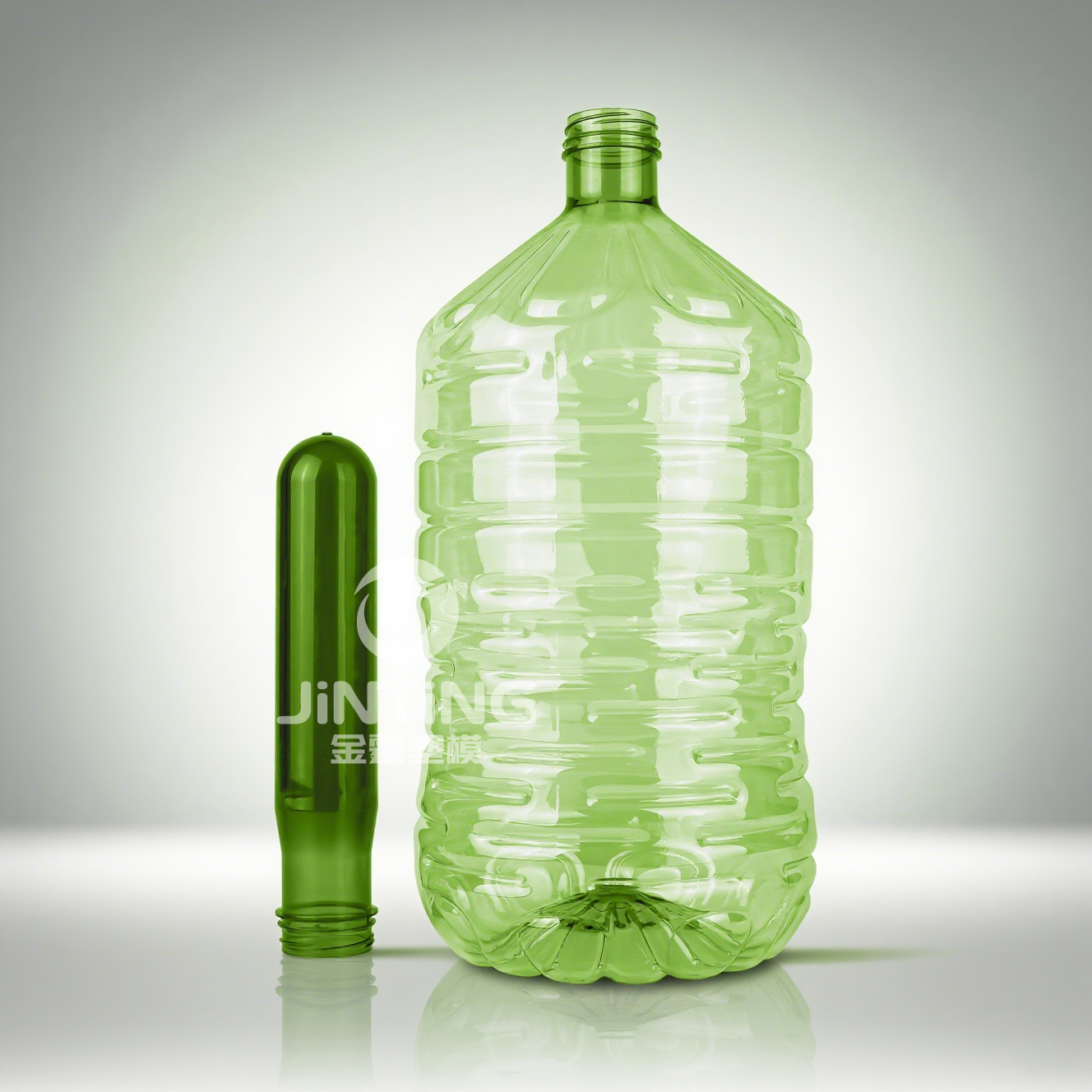
Industrial water bottling facilities rely on tightly defined 5-gallon PET preform specifications to stabilize blow-molding output, guarantee bucket structural strength and control overall operational costs. Every technical parameter shapes how smoothly your line runs and how reliable finished water buckets remain in large-volume distribution. Mastering these specs helps plant managers select the right blanks and reduce downtime, rejects and field leakage issues.
The full specification set of 5 gallon PET preforms covers dimensional tolerances, weight layout, neck geometry and resin grade. All parameters must match your blow machine, output target and quality rules for commercial water delivery networks.
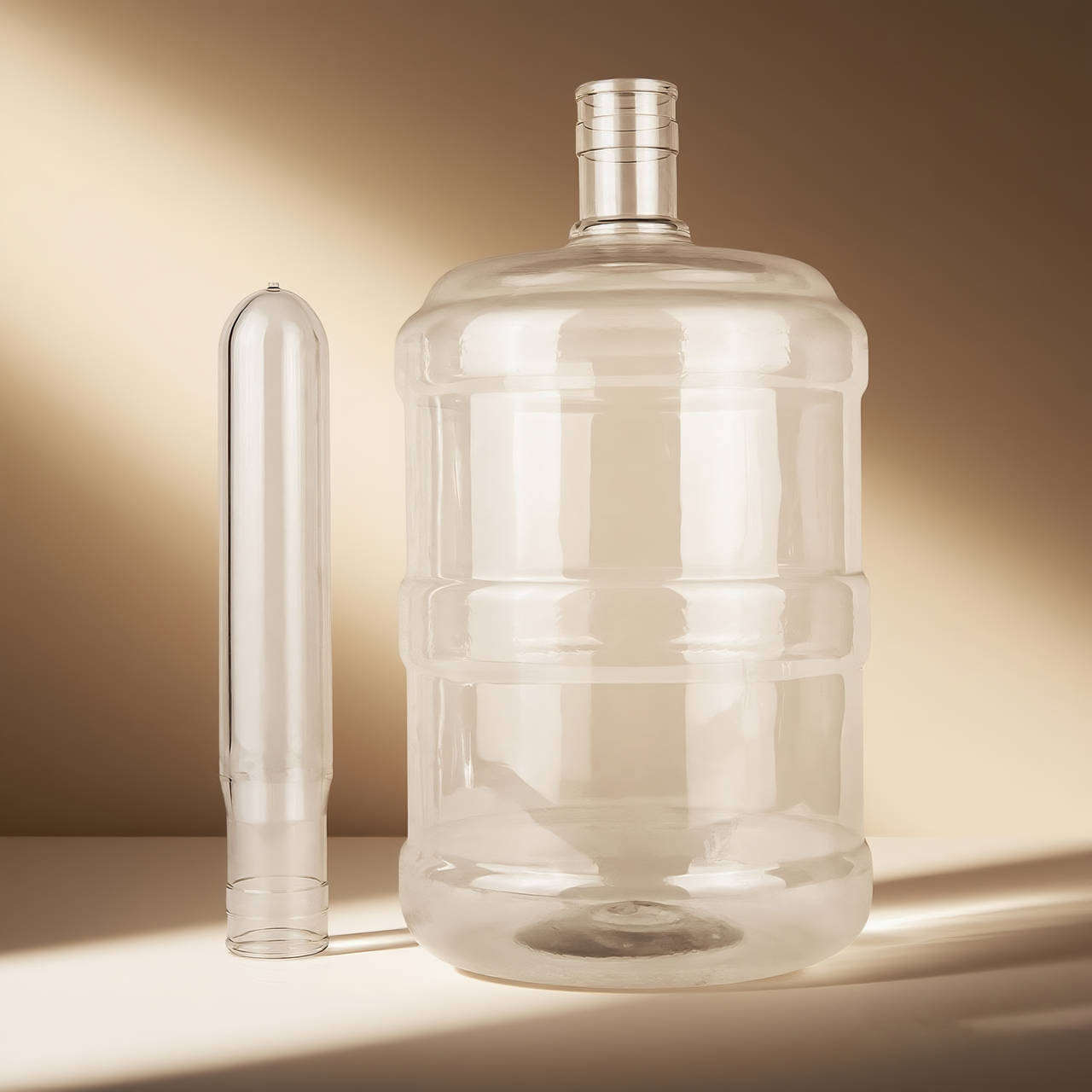
Physical Dimensions and Weight Specifications
Overall Length and Diameter Requirements
Standard 5-gallon PET preform length falls from 190 mm to 210 mm. Body outer diameter normally ranges 22 mm–25 mm. Precise sizing delivers even material stretching and uniform bucket wall thickness after blowing.
Industrial lines enforce strict tolerances: ±0.2 mm for total length and ±0.1 mm for body diameter. This precision avoids uneven walls, inaccurate volume filling and jams on automated preform feeding systems.
Weight Distribution and Material Allocation
Industrial 5-gallon preform weight is 650–750 g. Around 15–20% of total mass sits in the neck section, and the rest is allocated to the body. This layout reserves enough PET for high-stress zones on the final bucket base and side walls.
Batch-to-batch weight stability is critical. Typical weight tolerance is ±5 g. Excessive weight variation causes inconsistent bucket strength, fill deviation and higher reject rates during online QC.
Neck Finish and Threading Specifications
Standard Neck Configurations
The dominant industrial standard is the 55 mm neck finish. Its thread pitch, thread depth and sealing face dimensions are standardized to fit mainstream dispenser caps. Neck quality directly controls tightening torque and sealing reliability during transit and storage.
Common thread pitch = 4.233 mm, thread depth = 1.0–1.2 mm. The smooth sealing surface ensures good gasket compression and leak resistance for repeated refilling cycles.
Tamper Evidence and Safety Features
Neck grooves are engineered to cooperate with tamper-evident caps, letting distributors and end users spot opened buckets easily. This protects water safety across the supply chain.
Neck edges are rounded and transition zones smooth. This lowers stress concentration points that trigger cracking and also makes automated cap feeding and handling safer on high-speed lines.
Material Grade and Performance Standards
PET Resin Specifications
Industrial water plants require virgin food-grade PET with intrinsic viscosity (IV) 0.80–0.84 dl/g. This IV window balances injection molding flow and biaxial stretch behavior for stable blow-molding cycles.
Resin must satisfy FDA direct food-contact rules, with full documentation for additives, colorants and processing aids. Many buyers also specify UV resistance and stable long-term storage performance for outdoor or warehouse stock.
Mechanical Property Requirements
Qualified preforms deliver tensile strength above 55 MPa and elongation at break over 100%. These properties support uniform stretching without premature tearing during blowing.
Good impact resistance protects preforms during automatic conveying and loading. It also translates into buckets that survive stacking, dropping and repeated handling in water delivery networks.
Quality Control and Testing Parameters
Dimensional Inspection Requirements
QC covers length, diameter, wall thickness and neck profile. Factories use automated gauging and vision systems to catch out-of-tolerance blanks continuously.
Wall thickness variation across the preform body should stay within ±10% of nominal value. Uniform material distribution is the foundation of predictable blow quality.
Performance Testing Standards
Mandatory validation tests include burst pressure, environmental stress crack resistance (ESCR) and thermal stability. These verify that finished buckets survive filling, capping, transport and storage stress.
Finished bucket burst pressure target: above 150 psi. ESCR testing checks long-term resistance against cleaning chemicals. Thermal testing confirms stable performance across wide temperature swings in storage.
Production Compatibility and Processing Requirements
Blow Molding Machine Compatibility
Preform geometry must match your blow machine’s loading system, heating curve and stretch rod dimensions. Mismatched specs cause unstable heating, uneven stretching and frequent bad bottles.
Heating duration, stretch timing and blow pressure windows are all tied to preform wall thickness, resin grade and shape. Industrial production needs preforms designed for wide, forgiving process windows at high speed.
Automation and Handling Considerations
High-volume bottling lines depend on consistent surface finish and geometry for automatic sorting, orientation and feeding. Poor consistency causes jams, misfeeding and production stops.
Stable optical properties also support online vision inspection, so defect detection and automatic rejection work reliably during continuous production.
FAQ
What is the standard weight range for a 5 gallon PET preform used in industrial applications?
Industrial 5-gallon PET preforms normally weigh 650–750 g, controlled within ±5 g tolerance. This range balances mechanical strength after blowing and raw material cost for mass production.
How do neck finish specifications impact closure compatibility in industrial water bottling?
The standard 55 mm neck with 4.233 mm thread pitch works with mainstream dispenser caps. Accurate thread geometry and flat sealing faces control cap torque and prevent leakage in transit and storage.
What material grade requirements must 5 gallon PET preforms meet for industrial water applications?
Industrial water plants specify virgin PET resin with IV 0.80–0.84 dl/g and FDA food-contact compliance. Target mechanical benchmarks: tensile strength ≥55 MPa, elongation at break ≥100% for stable stretch blow molding.
How do dimensional tolerances affect production efficiency in industrial water plants?
Tolerances of ±0.2 mm for length and ±0.1 mm for diameter keep blow results repeatable and avoid automation jams. This reduces rejects, stabilizes filling volume and keeps high-speed bottling lines running smoothly.
Table of Contents
- Physical Dimensions and Weight Specifications
- Neck Finish and Threading Specifications
- Material Grade and Performance Standards
- Quality Control and Testing Parameters
- Production Compatibility and Processing Requirements
-
FAQ
- What is the standard weight range for a 5 gallon PET preform used in industrial applications?
- How do neck finish specifications impact closure compatibility in industrial water bottling?
- What material grade requirements must 5 gallon PET preforms meet for industrial water applications?
- How do dimensional tolerances affect production efficiency in industrial water plants?
