 EN


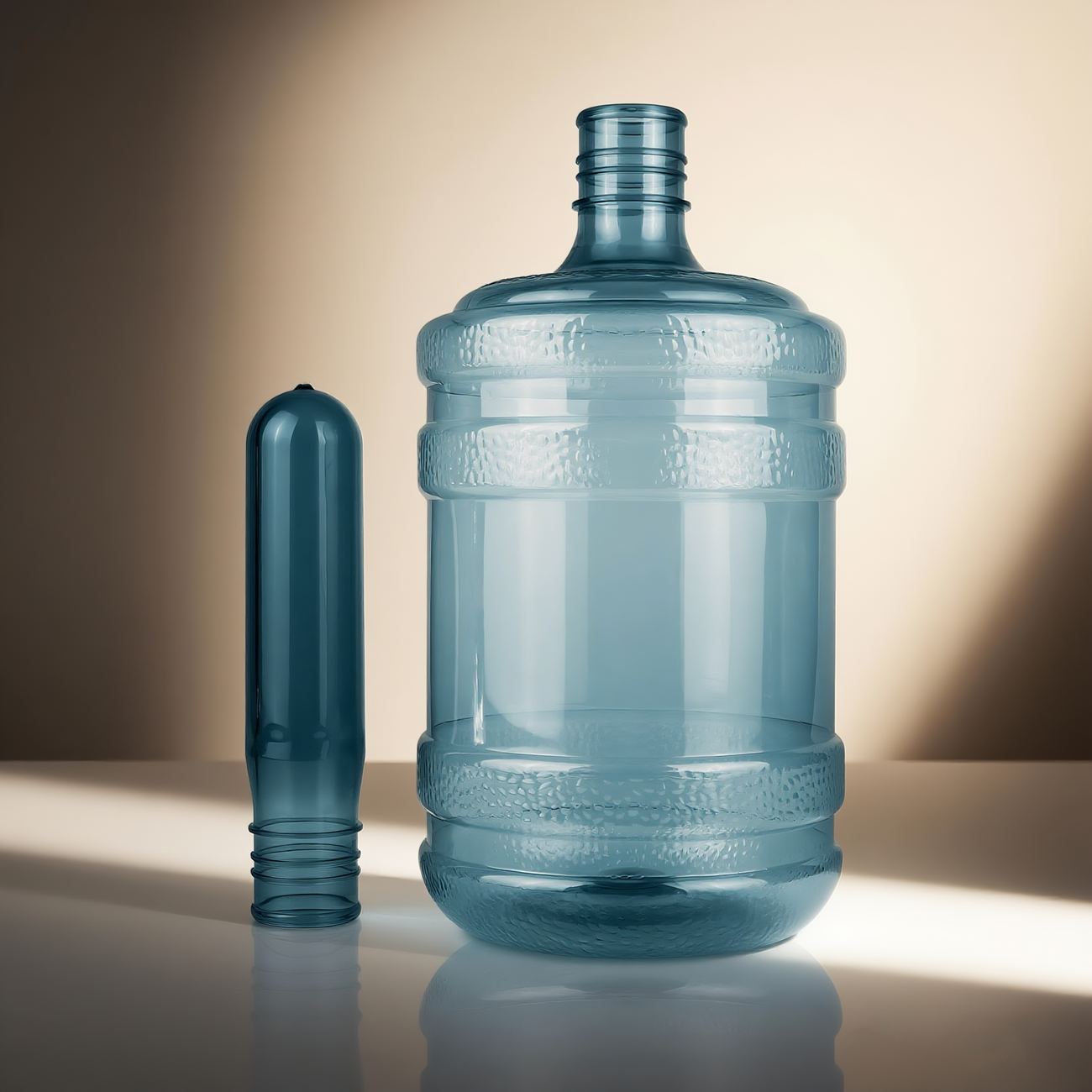
When water bottling plants and water service providers select raw materials for dispenser water buckets, 5 gallon PET preforms stand out as the dominant choice, thanks to a carefully balanced combination of reliable material chemistry, precision-engineered geometry and mature manufacturing workflows. Unlike other plastic alternatives, these preforms are purpose-built for the unique working conditions of water dispenser systems, covering repeated filling, storage, transport, lifting and seating on dispenser bases. For plant managers and procurement teams, recognizing the core attributes behind this compatibility helps avoid common production pitfalls such as leakage, premature cracking, off-taste complaints and high reject rates during blow molding. It also supports consistent product quality for both residential home delivery programs and large commercial clients including offices, schools and factories.
The strong fit between 5 gallon PET preforms and water dispenser hardware is not accidental. Every design detail is calibrated around three core priorities: safe storage of potable water, stable mechanical performance after blow molding and ease of integration with standard dispenser caps, dispenser seats and automated bottling lines. These considerations cover long-term chemical safety, temperature fluctuation resistance and real-world logistics of bulk water distribution.
Material Properties and Chemical Safety
Food-Grade PET Composition
All qualified dispenser-grade 5 gallon PET preforms are manufactured from virgin food-grade PET resin that meets global direct food contact standards. This resin formulation is tightly controlled to limit unwanted additives and ensure no harmful substances migrate into drinking water, even when the filled bucket sits for weeks in storage or at the end user’s site. PET’s stable polymer structure creates a dependable barrier that keeps external dust, volatile contaminants and airborne pollutants away from the water inside, preserving original water purity over the service cycle. This feature is especially critical for refillable bucket models that circulate repeatedly through water filling stations.
Another foundational benefit is the excellent chemical inertness of PET. It does not react with naturally occurring minerals in spring water, chlorine-based disinfectants or other common water treatment agents used in industrial water plants. Many cheaper plastic alternatives tend to absorb odors or slowly leach compounds that alter water flavor, but PET avoids this issue. It will not introduce strange taste, discoloration or unwanted odor changes, which is one of the most important quality indicators for bottled drinking water brands.
Oxygen Barrier Performance
PET delivers a balanced oxygen barrier that fits dispenser bucket use perfectly. While high-barrier plastics block nearly all gas exchange, PET slows oxygen ingress enough to delay oxidation that degrades water taste and shortens shelf life. At the same time, it permits mild, controlled gas permeation. This prevents dangerous pressure buildup inside sealed buckets when ambient temperatures rise during summer transport or indoor storage, a common failure point for fully hermetic rigid containers. This balanced permeability makes it adaptable to variable storage environments faced by water delivery businesses.
Many premium dispenser 5 gallon PET preforms also include UV-resistant formulations. Continuous exposure to indoor LED lighting or indirect sunlight can trigger unwanted photochemical reactions inside plastic water containers. The UV protection built into these preforms suppresses such reactions, reducing the risk of water quality decay even for buckets stored for longer periods in offices and retail spaces.
Structural Design and Mechanical Properties
Wall Thickness Distribution
Preform designers map out wall thickness distribution carefully to achieve an optimized strength-to-weight ratio, which is the backbone of reliable dispenser bucket performance. The preform is shaped so that material stretches evenly across the base, side walls and shoulder area during biaxial blow molding. Critical stress zones such as the bucket bottom and shoulder receive enough material, while non-critical areas avoid excess plastic that only adds unnecessary weight and cost. This engineered layout eliminates concentrated stress hotspots that often lead to cracking after repeated lifting, stacking and loading onto dispensers.
The neck section is designed around the widely adopted 55 mm industry standard for water dispensers. Thread geometry, sealing land and neck height are standardized to match mainstream dispenser caps and dispenser seating fixtures. When the finished bucket is inverted and placed on a water dispenser, the flat sealing surface forms a tight gasket seal. This native compatibility removes the need for custom adapters, special fittings or modified caps, which greatly simplifies inventory management for water service companies.
Impact Resistance and Durability
Water dispenser buckets go through rough handling in daily operation. Delivery staff lift them, stack them on trucks, carry them upstairs and push them into dispenser seats. Good inherent impact toughness of PET ensures the finished bucket resists cracking or chipping under these routine mechanical shocks. Better impact performance directly lowers breakage rates during logistics and on-site installation, cutting replacement costs and reducing customer complaints for water brands.
Environmental stress crack resistance, often shortened as ESCR, is a non-negotiable mechanical property for reusable dispenser buckets. When plastic stays under sustained load while contacting cleaning detergents or residual disinfectants, microcracks can slowly spread and eventually cause sudden leakage. High-quality 5 gallon PET preforms maintain strong ESCR performance, resisting this slow crack growth and supporting long-term, repeated use in commercial water delivery networks.
Manufacturing Precision and Quality Control
Dimensional Accuracy
Consistent dimensional control during injection molding is the prerequisite for stable blow molding output. Strict tolerances on preform length, body diameter and neck profile guarantee that every blank stretches predictably inside the blow mold. Uniform material stretching produces buckets with even wall thickness and no localized weak spots that might burst under filling pressure or leak after repeated use. Stable dimensions also support automated preform feeding, orientation and loading systems that high-volume water plants rely on to keep production running without frequent jams.
Formal QC workflows run through every production batch. Operators and automated gauging systems verify core dimensions, total weight, neck thread profile and surface condition. Material sample testing is also scheduled regularly to check intrinsic viscosity and mechanical performance. Batch consistency reduces unexpected quality drift and keeps reject rates steady for industrial bottling lines.
Contamination Prevention
Since these preforms are used for potable water, contamination control throughout the injection molding workshop is critical. Reputable preform suppliers maintain controlled production environments to block dust, fibers and foreign particulate matter that could become embedded into the plastic. Even tiny particles trapped inside the preform will remain visible after blowing and may raise hygiene concerns for drinking water customers.
Complete raw material traceability is another core requirement. Every resin batch, colorant additive and processing aid is recorded, so suppliers can quickly trace root causes if quality or safety issues emerge. This documentation is also required to pass food safety audits and meet regulatory obligations for drinking water contact materials, giving water plant operators reliable compliance proof.
Thermal Performance and Processing Characteristics
Temperature Stability
Indoor spaces, warehouses and delivery vehicles see wide temperature swings across seasons. PET retains its shape, stiffness and sealing performance across the normal operating temperature range of dispenser buckets. It will not soften, warp or shrink enough to break the seal between bucket neck and dispenser seat, which is a common failure mode for low-temperature-resistant plastics. This thermal stability protects against slow leakage caused by temperature cycling.
For returnable bucket programs, buckets must go through hot washing and sanitization cycles between refills. Dispenser-grade PET can withstand standard hot sanitizing processes without rapid degradation, surface crazing or loss of clarity. This thermal resilience is what makes multi-cycle reuse feasible and supports the circular refill model widely used by bulk water suppliers.
Blow Molding Optimization
PET’s rheological behavior when reheated and stretched is well suited for two-stage stretch blow molding, the standard process for large 5-gallon water buckets. With properly tuned infrared heating, the preform softens uniformly, stretches smoothly and develops balanced biaxial orientation. This controlled orientation builds the strength and clarity the final bucket needs, while keeping cycle times efficient for high-volume factory lines.
Blow molders can fine-tune the reheat profile to adjust final bucket properties based on market needs. Adjustments to heating time and temperature distribution can enhance surface clarity, redistribute internal stress or slightly tune barrier performance. This processing flexibility lets manufacturers adapt the bucket for different use cases, whether for office dispenser rental, home delivery or heavy-duty commercial circulation.
Economic and Environmental Considerations
Cost Effectiveness
PET strikes a good balance between performance and total cost of ownership. Compared with heavier rigid plastic alternatives, its low density keeps both preform shipments and finished bucket transport costs lower. Its predictable molding window also reduces scrap and energy waste during blow molding, helping bottling plants stabilize production expenses at scale.
Long service life further improves the economics for water service businesses. Buckets made from qualified dispenser preforms survive many refill-sanitize-deliver cycles before retirement. Lower breakage rates and fewer field leak incidents reduce after-sales labor, replacement inventory and customer complaints, creating steady operational savings over time.
Sustainability Profile
PET is one of the most widely recycled plastic resins globally. Used 5-gallon buckets can be collected, cleaned, shredded and reprocessed into new plastic raw materials. This recyclability fits the circular economy targets many water brands now adopt for ESG marketing and customer sustainability requirements. Many B2B buyers prioritize recyclable packaging when selecting their bucket supply partners.
The lightweight nature of PET also cuts down transportation-related carbon emissions across the supply chain. Combined with energy-efficient stretch blow molding, the whole lifecycle carbon footprint is competitive versus heavier packaging options. This environmental advantage does not force tradeoffs on safety or mechanical performance, making it a practical sustainable choice for dispenser water programs.
FAQ
What certifications are required for 5 gallon PET preform used in water dispensers?
FDA food-contact certification for direct potable water contact is the baseline requirement for export-oriented suppliers. NSF certification for drinking water materials is highly preferred for the North American market, while regional food safety standards apply for other target markets. These documents verify the resin and finished preform do not release hazardous substances into drinking water under normal use conditions.
How does wall thickness affect the suitability of 5 gallon PET preform for water dispensers?
Optimized wall thickness distribution is a core design factor. Sufficient material must be allocated to high-stress areas such as the bucket base and shoulder to resist impact and internal pressure. Too thin walls create fragile buckets that crack easily, while excessive wall thickness just adds extra weight, higher resin cost and longer heating cycles on blow molding lines. A balanced design delivers reliable durability without wasting raw materials.
Can 5 gallon PET preform bottles be reused in water dispenser systems?
Yes, high-quality PET buckets are widely used in refillable dispenser programs around the world. Provided the water plant follows standardized hot washing, sanitization and visual inspection protocols between cycles, these buckets can safely go through many refill and delivery cycles. Operators still need to retire buckets once scratches, stress cracks or cloudiness appear, to protect water safety.
What quality control measures ensure 5 gallon PET preform reliability in water dispensers?
A complete QC system combines automated dimensional scanning, weight checking, visual defect inspection and material lab testing. Pressure burst testing and ESCR testing on blown sample buckets validate long-term mechanical reliability. These layered checks catch defective preforms before they enter blow molding, preventing leakage, breakage and water contamination risks in dispenser applications.
Table of Contents
- Material Properties and Chemical Safety
- Structural Design and Mechanical Properties
- Manufacturing Precision and Quality Control
- Thermal Performance and Processing Characteristics
- Economic and Environmental Considerations
-
FAQ
- What certifications are required for 5 gallon PET preform used in water dispensers?
- How does wall thickness affect the suitability of 5 gallon PET preform for water dispensers?
- Can 5 gallon PET preform bottles be reused in water dispenser systems?
- What quality control measures ensure 5 gallon PET preform reliability in water dispensers?
