EN

Introduction
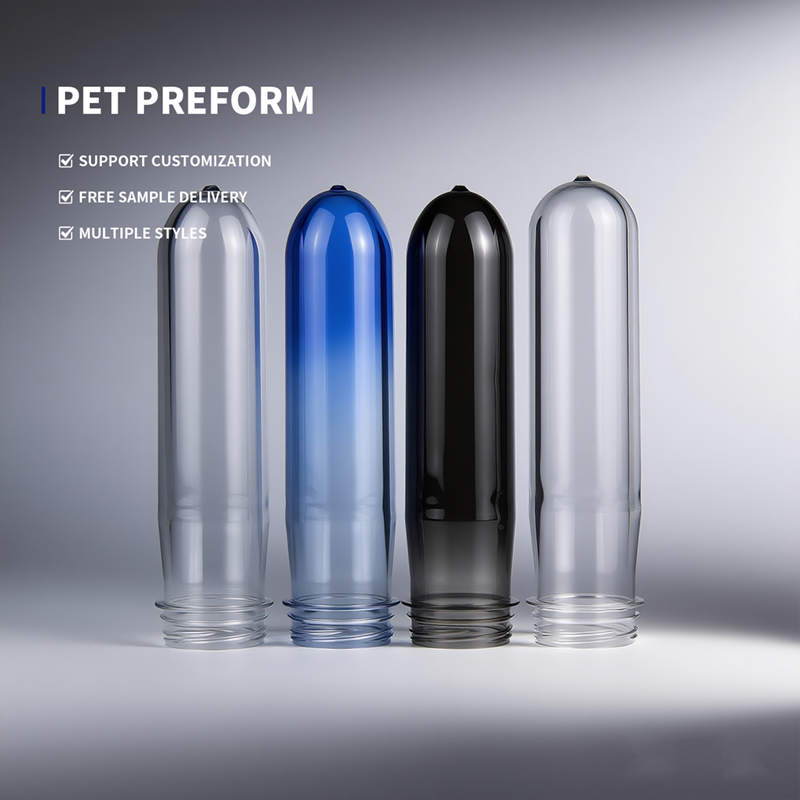
When selecting PET preforms, there is an easily overlooked characteristic: any one of the three key indicators may appear "compliant" in isolation, yet the combination may still fail to produce a good bottle. No matter how well acetaldehyde is controlled in the raw material, an out-of-tolerance finish will still cause leakage; no matter how precise the finish, excessive IV drop will still lead to base cracking after blow molding. A truly high-quality preform is one where all three dimensions are simultaneously under control within the same batch—not one where each merely scrapes past the limit on separate test reports.

1. Raw Material: The Safety Baseline Lies in the Gap Between "Compliant" and "High-Quality"
Raw material is the starting point of preform quality. Food-grade bottle-grade PET chips must comply with GB/T 17931 Polyethylene Terephthalate (PET) Resin for Bottles and GB 4806.7 food-contact material standards. However, "compliant" only means the product has crossed the entry threshold—there remains a discernible distance from "high-quality."

Acetaldehyde is a volatile by-product generated during esterification/polycondensation and thermal processing in injection molding. Its odor threshold is extremely low, and trace migration can give drinking water an abnormal fruity off-odor. Sensory studies offer noteworthy data: the sensory detection threshold of acetaldehyde in water fluctuates across a wide range of 7.9–120 μg/L, and experienced sensory panelists can identify it at 10–20 μg/L. This means even a very small acetaldehyde residue in the preform may be detected by sensitive consumers after filling.
In terms of standard limits, GB/T 17931-2018 requires acetaldehyde content in food-packaging grade, premium bottle-grade PET resin to be ≤1.0 μg/g (ppm)—the strictest level in the current national standard—and the acetaldehyde indicator is a mandatory clause, not a recommended parameter. BB/T 0060-2025 sets the acetaldehyde limit for finished preforms at ≤15 μg/g. The two target different objects (resin raw material vs. injection-molded preform), but both point to one fact: acetaldehyde is a non-negotiable safety indicator on the raw material side.
What truly warrants vigilance in procurement is not a supplier "exceeding the limit," but committing only to "meets the national standard" while being unable to provide batch-specific measured values. A qualified supplier's COA should explicitly state the measured acetaldehyde value and test method (headspace gas chromatography, HS-GC), rather than merely ticking "pass." The process root causes of acetaldehyde typically point to two places: insufficient chip drying leading to hydrolysis, or excessive melt temperature and prolonged material residence time leading to thermal degradation—both of which also drive up IV drop. Therefore, reading acetaldehyde data together with IV drop data is more diagnostically useful than looking at either in isolation.

PET chips are hygroscopic and absorb moisture from the air at ambient temperature. If drying is insufficient, residual moisture triggers hydrolytic degradation in the high-temperature melt within the injection barrel—ester bonds break, molecular chains shorten, directly manifesting as IV decrease and increased acetaldehyde generation. The industry-standard drying target is to reduce chip moisture content to below 50 ppm, ideally 10–40 ppm. Patent literature provides a comparable benchmark: when chip moisture is controlled at approximately 50 ppm, the IV drop from chip to preform is about 0.04 dL/g (roughly 5%); with excessive moisture, IV drop can reach over 30%. The enormous gap between these two figures shows that loss of control in drying is not "slight deterioration" but a process failure capable of changing molecular weight by orders of magnitude.
Therefore, if a supplier's COA reports only preform IV and acetaldehyde without disclosing drying dew point or chip moisture records, the buyer has effectively lost the key basis for judging whether IV drop is under effective control.

The use of recycled material (rPET) is the area on the raw material side most easily blurred by marketing language. The 2025 group standard T/CCFA 01081-2025 Polyethylene Terephthalate (rPET) Resin for Bottles does specify acetaldehyde content for food-packaging rPET (premium grade ≤1.0 μg/g) and hygiene requirements (compliance with GB 4806.7). But it must be clearly understood that the existence of a group standard does not mean food-contact recycled material has obtained unconditional market authorization. Food-contact recycled plastics in China remain under a strict regulatory framework, with only recycled materials meeting specific requirements permitted for use, and the relevant national standard system is still being improved.
A pragmatic procurement approach is to make "whether recycled content is present, recycled content ratio, recycled material source, and compliance basis" an explicit contractual term, requiring suppliers to provide batch traceability documents and migration test reports (per GB 4806.7 and the GB 31604 series), rather than judging on verbal commitments or a "food-grade rPET" label. For domestic food packaging applications, if a supplier cannot clearly explain its rPET compliance pathway, a cautious stance is itself a form of quality screening.

2. Finish: The Problem Is Often Not "Dimensions" but "Interface Definition"
The finish is the interface where the preform directly interacts with the cap and the filling line. Its particularity lies in this: the preform manufacturer controls the finish geometry, but whether sealing is reliable depends on the fit between the finish, the cap, and the filling-line grippers. Verifying only the preform's standalone dimensions without verifying the mated condition is the most common validation blind spot in the finish area.
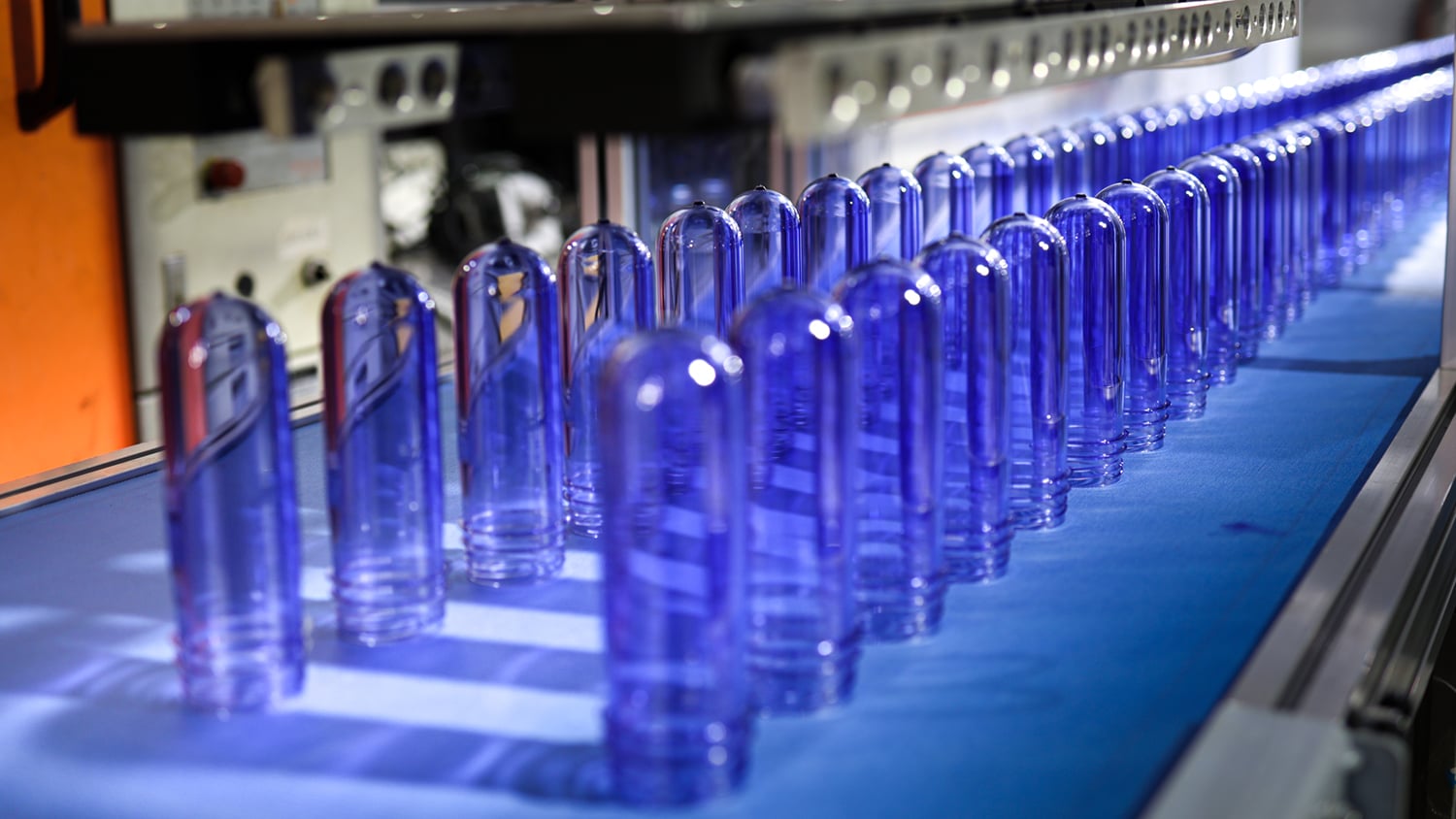
BB/T 0060-2025 has an easily skipped detail in its finish tolerance provisions: tolerance requirements are specified separately for crystalline and non-crystalline finishes. Taking finish inner diameter as an example, the deviation requirement for non-crystalline finishes is ±0.13 mm, while for crystalline finishes it is ±0.20 mm; for finish outer diameter, non-crystalline is ±0.15 mm and crystalline is ±0.20 mm. The crystalline finish tolerances may appear "looser," but this is not a reduction in precision requirements—rather, crystallization treatment itself introduces dimensional changes, and the tolerance design must leave a reasonable window for the crystallization process.
This distinction points to a hard match with the application scenario: the finish of hot-fill products (such as juice and tea beverages) must undergo crystallization treatment to maintain dimensional stability at filling temperatures and prevent mouth softening/deformation that would cause seal failure. Insufficient crystallinity or excessive batch variation directly weakens the sealing reliability of the finish after hot filling; sources indicate that finish crystallinity typically needs to reach 25%–35% or above to meet the basic heat resistance requirements of hot filling. Conversely, if ambient-fill water or carbonated beverages mistakenly use crystalline finish specifications, unnecessary crystallization process variation and cost may be introduced. The first step in finish selection is not comparing tolerance numbers, but confirming whether the finish type matches the filling temperature.

Beyond inner/outer diameter tolerances, finish roundness deviation should be ≤0.05 mm. The consequence of poor roundness is not as abstract as "out-of-tolerance dimensions"—it means uneven contact stress distribution between the sealing surface and the cap, with locally under-compressed areas becoming leakage initiation points during filling and transport. Thread profile, pitch, and start position must also be included in drawing control, rather than merely checking nominal diameter.
More critically, the method of seal validation matters. A pressure test on the standalone preform cannot detect the true sealing state after cap mating. Meaningful validation should be conducted after actual cap application, using methods such as vacuum decay (ASTM F2338) or pressure decay; the former can detect micro-leakage with sensitivity down to micron-scale channels. Once the finish specification is selected, any supplier change on either end (preform or cap) should trigger re-validation of the interface—not the assumption that "dimensions unchanged means sealing unchanged."
3. IV Value: Selection Depends on Application; Quality Depends on "How Much It Dropped"
IV (intrinsic viscosity) is a measure of the average PET molecular chain length, directly linked to preform mechanical strength, blow-molding behavior, and finished bottle pressure resistance. However, judging IV requires splitting it into two independent questions: is the selection correct, and has the molecular weight been preserved through processing.
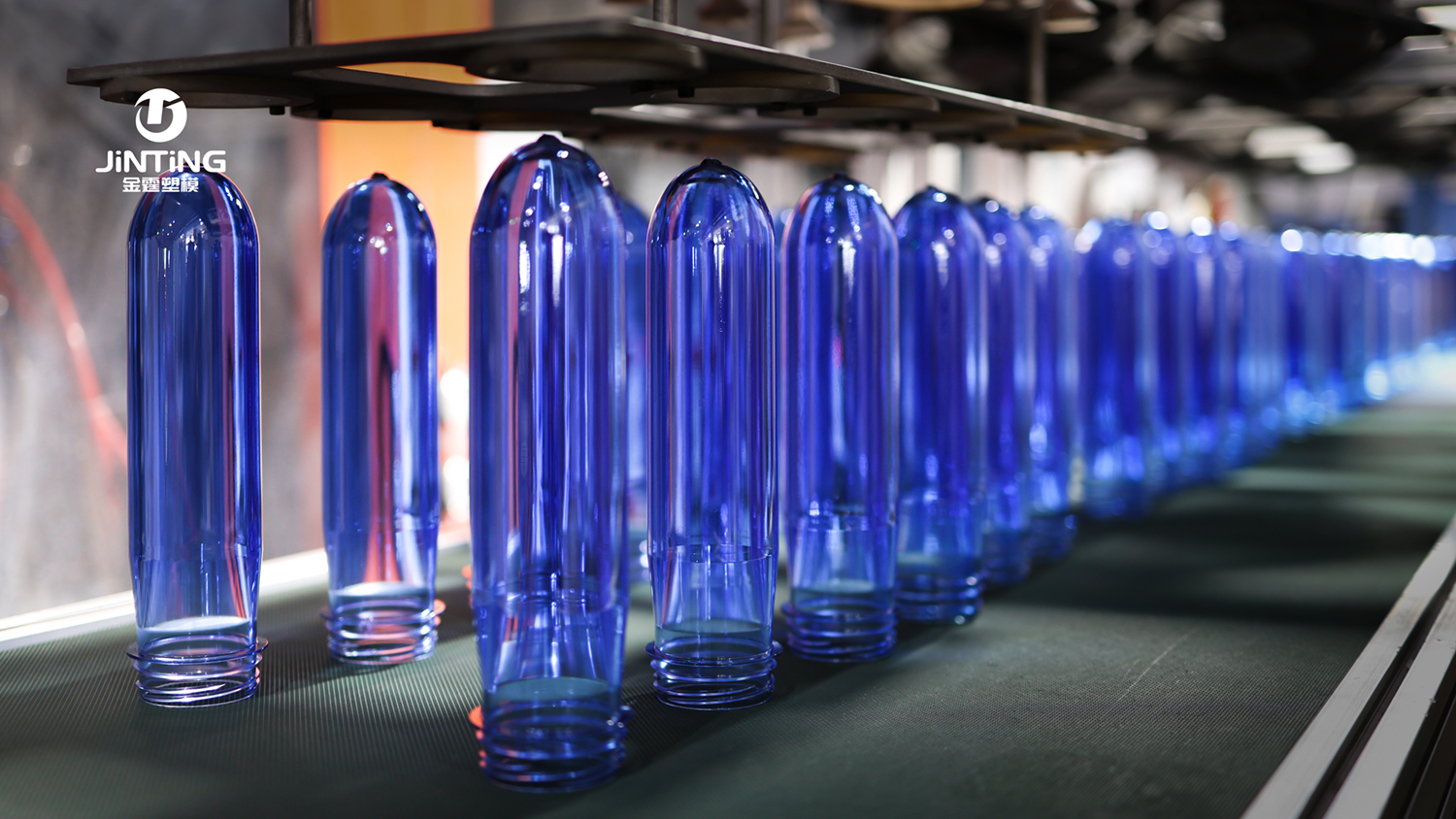
Bottle-grade PET IV typically falls within 0.70–0.85 dL/g. The core of selection is not "taking the higher value" but matching the load the product must bear. Water bottles pursue lightweighting and blow-molding extensibility, where excessively high IV actually increases forming difficulty; carbonated soft drink (CSD) bottles must resist internal pressure and long-term creep, requiring higher IV; hot-fill bottles must balance heat-resistant dimensional stability with formability. Common industry reference ranges are: mineral water/general beverage bottles 0.72–0.78 dL/g, CSD bottles 0.78–0.85 dL/g, with some carbonated applications favoring 0.84–0.85 dL/g for a fuller molecular strength reserve.
The impact of IV differences on final performance can be intuitively compared via burst pressure: for a 500 mL bottle, a preform with IV around 0.72 dL/g corresponds to a burst pressure of about 1.2 MPa, while IV around 0.82 dL/g can raise this to about 1.8 MPa. CSD bottle working pressure is typically 0.3–0.6 MPa, with a design safety factor generally of 2–3×. This means IV selection cannot use "not bursting during filling" as the lower bound, but should be based on pressure reliability throughout the shelf life. Yet the other side must also be recognized: each 0.01 increase in IV raises raw material cost accordingly, and higher IV reduces melt flowability, increasing injection energy consumption and cycle time. The essence of selection is finding the match point between strength demand and processing economics—not simply pursuing higher IV.
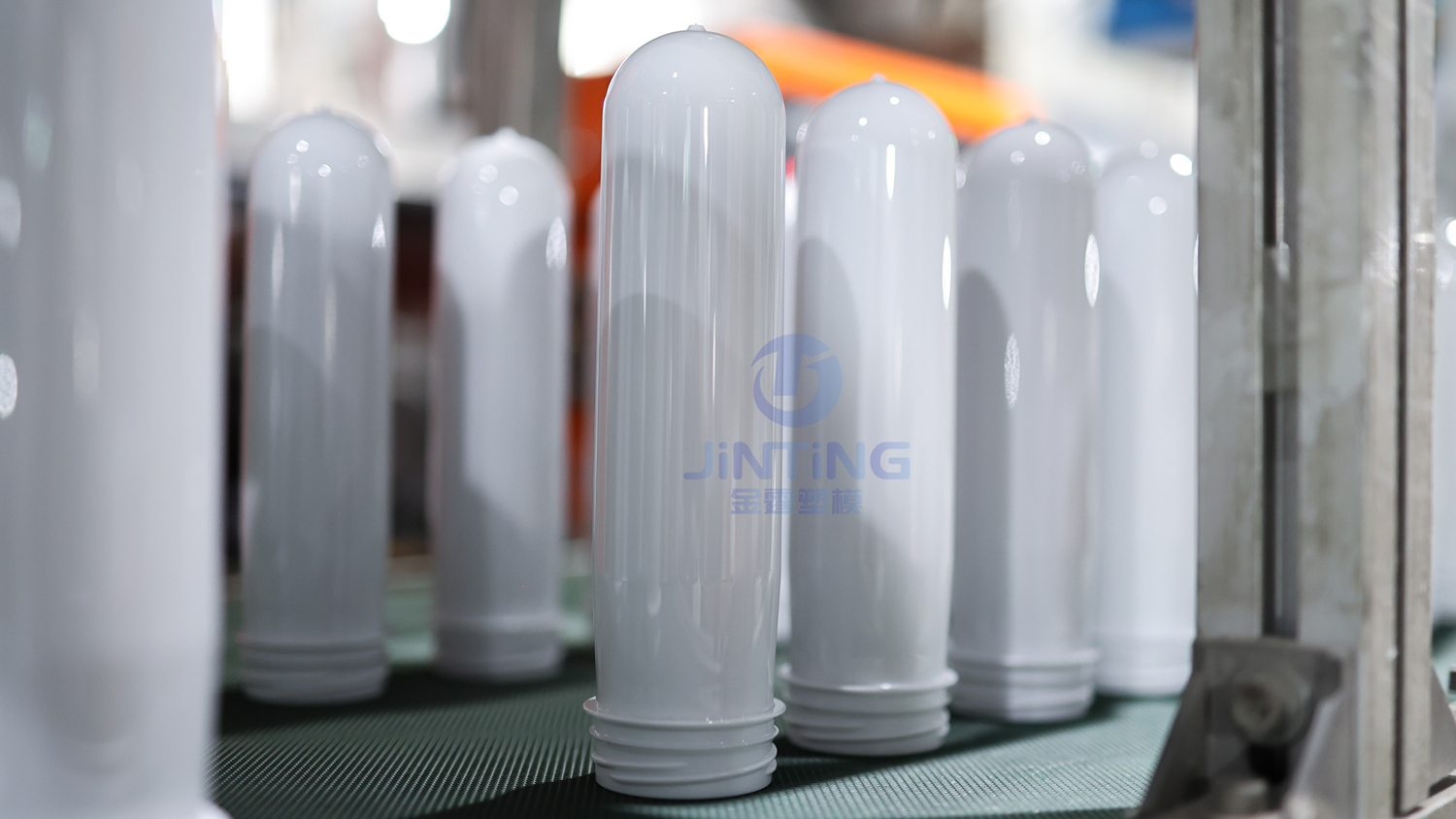
The IV of the raw material chip is the "starting point" given by the supplier; the IV of the molded preform is the "answer sheet" submitted by the injection molding process. The difference between them—IV drop—reflects the cumulative extent of hydrolytic and thermal degradation. Insufficient drying, excessive melt temperature, and prolonged material residence time in the barrel all drive up IV drop. The irreversibility of IV drop lies in this: once molecular chains break, subsequent blow molding cannot "reconnect" them, and the bottle's pressure resistance and drop impact performance decline in tandem.
An operational benchmark: under good drying with moisture controlled below 50 ppm, an IV drop from chip to preform of about 0.04 dL/g is within the acceptable range. If IV drop significantly exceeds this, even if the preform's absolute IV remains within the "compliant range," the molecular chains have already suffered undue damage. Additionally, IV batch variation for the same preform model should not exceed ±0.02 dL/g, otherwise the blow molding machine's heating profile and stretch ratio parameters become difficult to set stably.
Therefore, procurement should require the COA to list both raw material chip IV and molded preform IV, and independently verify the difference. A COA reporting only a single preform IV value cannot answer the question of "whether the material was excessively degraded during injection molding."
4. Cross-Validation: Judge All Three Dimensions on the Same Batch
The linkages among raw material, finish, and IV are not theoretical—they can be directly observed in inspection data and on-machine trials:
Insufficient drying simultaneously drives up acetaldehyde content and IV drop, manifesting as two COA data points "deteriorating together";
Finish dimensional deviation cannot be compensated by IV value—the finish will not "self-heal" after blow molding;
Preforms with excessive IV drop may still develop base cracking and uncontrolled wall thickness distribution after blow molding even with compliant finish dimensions—defects that are often invisible when the preforms are received.

Practical validation can proceed in the following order:
Step 1: Verify COA data completeness. A batch report with diagnostic value should cover: measured acetaldehyde value and test method; raw material chip IV and preform IV (for calculating IV drop); key finish dimensions (distinguishing crystalline/non-crystalline finish); and drying dew point or moisture records. Missing data items are themselves a screening signal.
Step 2: Incoming inspection should target "irreversible items." Acetaldehyde content (headspace GC) and finish roundness/inner diameter are two indicators that, once deviated, cannot be corrected by subsequent processes. Simultaneously verify the difference between preform IV and raw material IV to assess whether IV drop is within the controlled range. For the declared finish type (crystalline/non-crystalline), confirm its consistency with the product's filling temperature.
Step 3: On-machine trials use "actual mating" for the final judgment. Test small batches on your own blow molding machine, focusing on: whether stretching is uniform, whether the base cracks, and whether the bottle body shows stress whitening or silver streaks. Common causes of stress whitening include low preform reheat surface temperature (e.g., below about 80°C) or localized over-stretching, while silver streaks/hazing may be related to excessive raw material moisture or melt decomposition. Cap application and seal validation must use actual production caps in the mated condition—not universal test caps or standalone preform tests.
Conclusion
The "excellence" of a high-quality PET preform does not lie in each of the three indicators achieving a handsome isolated number, but in raw material safety control, finish interface precision, and IV value with its degradation extent forming a mutually corroborating controlled state within the same batch. For acetaldehyde, look at measured values and process root causes; for the finish, look at the match between finish type and application scenario, and at sealing under actual mating; for IV, look at selection logic and the irreversible damage of IV drop. Only by placing these three threads into the same COA verification, the same incoming inspection, and the same on-machine trial for cross-validation can preforms that are "compliant on paper but exposed on the machine" be kept out of procurement decisions. Specific limits should be governed by the technical agreement confirmed between buyer and supplier, currently effective standards, and actual validation results of one's own equipment and cap system.

 Hot News
2026-09-13
2026-06-04
2026-05-05
2026-01-20
2025-11-12
2025-11-11

Taizhou Huangyan Jinting Plastic Mould.,LTD is a professional PET preform manufacturer with 25+ years’ expertise. ISO9001/ISO22000 certified, custom necks (28–55mm), colors, weights & molds for water/beverage brands. Contact us today.
Puhui Industrial Zone, Toutuo Town, Huangyan District, Taizhou City, Zhejiang Province, China
Copyright © 2026 Taizhou Huangyan Jinting Plastic Mould.,LTD.All rights reserved. Privacy Policy