 EN
EN

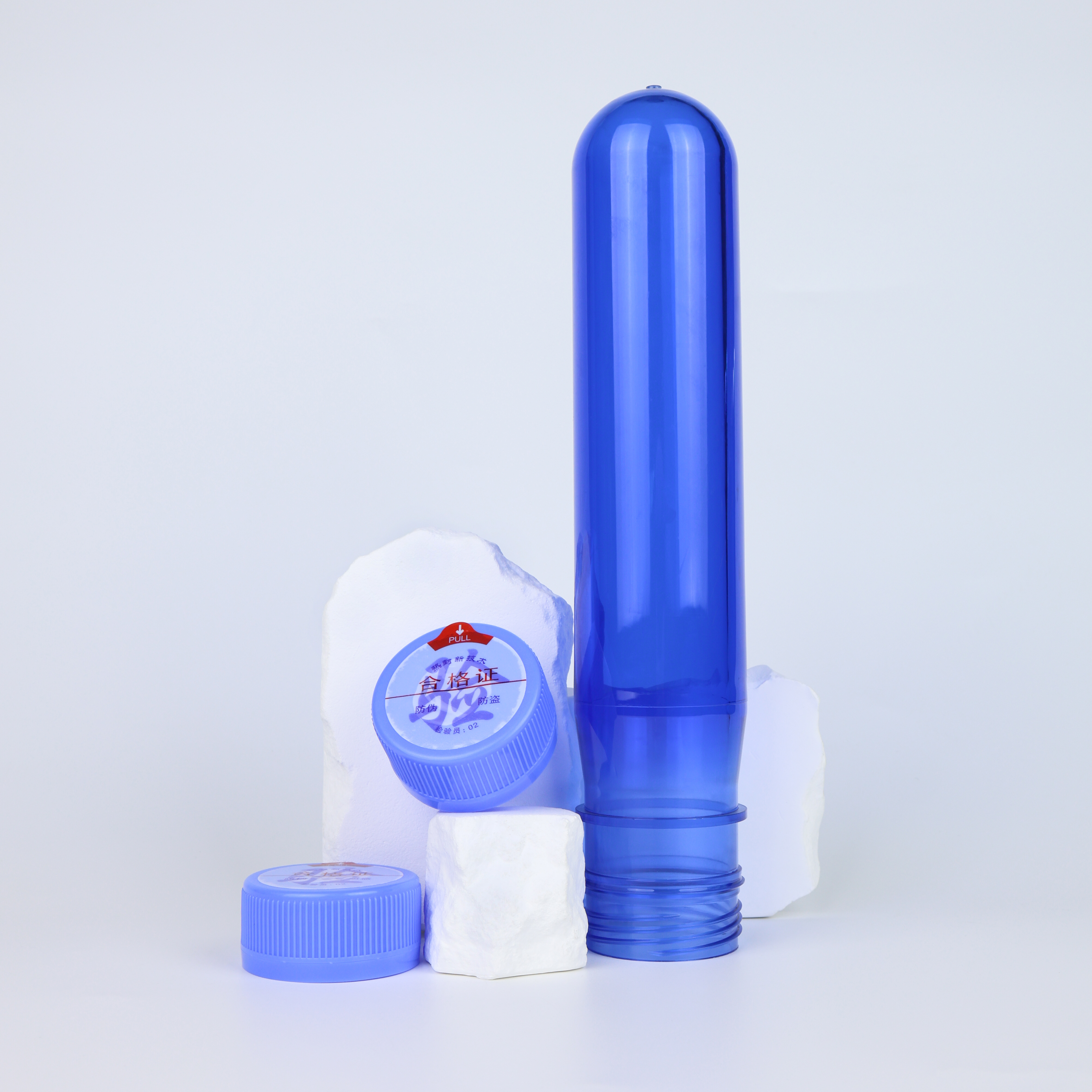
A preform for water bottle serves as the foundation for efficient and cost-effective beverage container manufacturing. In high-speed blow molding lines, the preform for water bottle undergoes rapid heating and expansion to create final bottle shapes with precision and consistency. Understanding how a preform for water bottle functions within modern production systems is essential for manufacturers seeking to optimize throughput, reduce waste, and maintain quality standards across large-volume operations.
The design and material composition of a preform for water bottle directly impact machine performance, cycle time, and the final container's barrier properties. Modern beverage manufacturers rely on precisely engineered preforms to meet strict industry specifications while maintaining competitive production costs. This guide explores the critical role of preforms in high-speed blow molding, key performance variables, and practical strategies for optimizing your production line.
Understanding Preform Specifications for High-Speed Production
Core Design Elements of a Preform for Water Bottle
A preform for water bottle is an intermediate semi-finished product manufactured through injection molding before the final blow molding stage. The preform for water bottle typically features a narrow neck design, cylindrical body, and a base structure engineered to withstand heating and pressurized air expansion. Dimensional accuracy in a preform for water bottle is critical because even minor deviations in wall thickness, neck diameter, or weight distribution directly affect machine cycle times and finished bottle quality.
The molecular structure and crystallinity level of a preform for water bottle influence how quickly it can be reheated and blown. High-speed blow molding lines demand preforms with consistent thermal properties to ensure uniform expansion and prevent defects such as thin spots, finish irregularities, or shape distortions. A properly designed preform for water bottle maintains optimal bottle weight while maximizing production speed.
Material Selection and Barrier Properties
PET remains the dominant material for a preform for water bottle due to its strength, transparency, and compatibility with carbonated beverages. The resin grade selected for your preform for water bottle affects processing characteristics, shelf life performance, and cost. Virgin PET delivers superior barrier properties compared to recycled material, making it the preferred choice when a preform for water bottle must protect product integrity over extended storage periods.
Barrier-enhanced formulations such as EVOH or oxygen-scavenging additives can be incorporated into a preform for water bottle to extend shelf life and reduce product degradation. Manufacturers choosing this path must ensure their blow molding equipment can accommodate the slightly different thermal profiles required. The selection of material composition for a preform for water bottle represents a strategic trade-off between performance requirements, production speed, and material costs.
Optimizing Production Flow in High-Speed Blow Molding Lines
Heating and Thermal Management
High-speed blow molding lines reheating a preform for water bottle must achieve precise temperature distribution across the entire surface. Infrared heaters positioned strategically around the preform for water bottle create the necessary thermal profile to make the material pliable without degrading polymer chains. Temperature zones typically range from cooler regions near the finish to hotter zones along the body to ensure uniform expansion during blow molding.
The residence time for a preform for water bottle in the heating zone directly influences both final bottle quality and machine throughput. Too brief a heating period leaves the preform for water bottle too stiff, resulting in incomplete fill-out and dimensional inconsistencies. Excessive heating risks polymer degradation and crystallization, compromising a preform for water bottle's transparency and strength. Successful operators adjust heating duration based on preform for water bottle weight, wall thickness, and target production speed.
Blowing Mechanics and Pressure Control
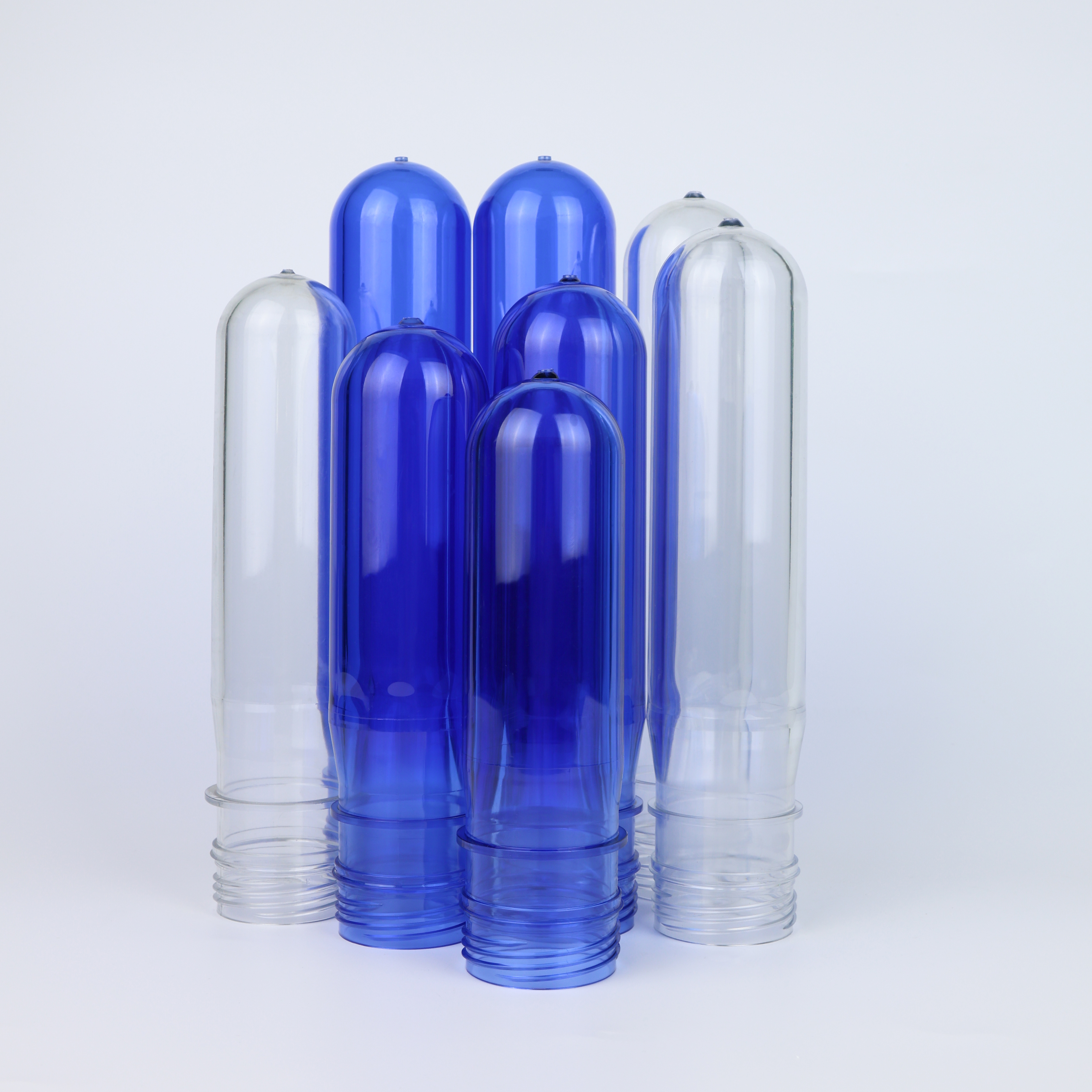
Once a preform for water bottle reaches optimal temperature, precisely controlled air pressure expands it into the mold cavity. High-speed blow molding lines typically employ two-stage pressure sequences where initial air at moderate pressure stretches a preform for water bottle, followed by higher-pressure finishing air that completes mold fill and sets the final shape. The pressure profile applied to a preform for water bottle must be calibrated to prevent premature wall rupture while ensuring complete cavity fill.
Synchronization between heating time, mold motion, and blow pressure is essential for consistent results with a preform for water bottle. Modern high-speed lines equipped with sensors continuously monitor a preform for water bottle temperature before blowing and adjust pressure accordingly. This closed-loop control ensures that each preform for water bottle, regardless of minor variations in injection molding, produces a finished bottle meeting dimensional and wall-thickness specifications.
Quality Assurance and Performance Monitoring
Inspection Protocols for Preform for Water Bottle Manufacturing
Quality control begins at the injection molding stage where a preform for water bottle is produced to exacting tolerances. Weight checks, dimensional measurements, and visual inspections of a preform for water bottle catch defects before they reach the blow molding station, reducing downtime and scrap rates. High-volume manufacturers typically employ automated sorting systems that verify each preform for water bottle meets weight and dimensional windows within seconds.
Post-blowing inspections verify that each finished bottle produced from a preform for water bottle exhibits uniform wall thickness, correct finish dimensions, and absence of defects. Advanced vision systems detect leaks, thickness variations, and visual imperfections that compromise the preform for water bottle to final bottle transformation. Traceability systems tie finished bottles back to their source preform for water bottle batch, enabling rapid response to quality issues.
Common Defects and Root Cause Analysis
Thin or uneven walls in finished bottles often trace back to improper preform for water bottle heating or misaligned mold cavities. Finish wrinkles or distortions suggest the preform for water bottle was insufficiently heated or the blow pressure sequence was suboptimal. Crystallization visible in the finished container indicates the preform for water bottle spent too long in the heating zone or the material composition lacks sufficient thermal stability.
Systematic troubleshooting of defects requires understanding how variables affecting the preform for water bottle—injection parameters, storage conditions, material lot, and resin grade—cascade through the blow molding process. Root cause analysis often reveals that what appears to be a blow molding equipment issue actually stems from inconsistent preform for water bottle quality or improper preform for water bottle storage temperature.
Industry Best Practices and Optimization Strategies
Maximizing Throughput Without Sacrificing Quality
Leading manufacturers balance production speed with quality by optimizing the preform for water bottle specification itself. Lightweight preforms reduce material costs and can be processed faster when thermal profiles are calibrated correctly. A well-engineered preform for water bottle enables cycle times under 30 seconds while maintaining the wall-thickness uniformity and finish integrity required by beverage brands.
Reducing preform for water bottle weight must be carefully managed to avoid compromise in structural integrity, particularly for carbonated beverages that require thicker walls. Simulation software can model how different preform for water bottle designs behave under high-speed molding conditions, allowing manufacturers to identify optimal configurations before committing to production tooling.
Sustainability and Material Efficiency
Sustainable preform for water bottle design minimizes virgin material consumption while meeting performance requirements. Many manufacturers now evaluate recycled PET compositions for their preform for water bottle to reduce environmental impact, provided resin quality and barrier properties remain acceptable. The preform for water bottle represents an opportunity to reduce per-unit material cost and carbon footprint while supporting corporate sustainability goals.
Optimizing preform for water bottle wall distribution reduces scrap rates during production and minimizes finished bottle weight. Process improvements that eliminate defects directly lower material consumption. Manufacturers working closely with preform for water bottle suppliers can access design expertise and material innovations that support both efficiency and sustainability objectives.
FAQ
What is the typical weight range for a preform for water bottle used in high-speed production?
Preforms for water bottle typically weigh between 20 and 35 grams depending on final bottle volume, material grade, and performance requirements. The preform for water bottle weight is carefully controlled during injection molding to ensure consistency across production batches. Lighter preforms require more precise heating and blow control, while heavier preforms may achieve faster machine cycles but increase material costs per unit.
How does storage temperature affect preform for water bottle performance?
Preforms for water bottle should be stored at stable room temperature to prevent moisture absorption and crystallization that compromise blow molding results. Exposure to temperatures below 15°C or above 30°C can alter the preform for water bottle's thermal properties and processing characteristics. Proper storage conditions maintain the preform for water bottle in optimal condition until the heating and blowing process occurs.
Can a preform for water bottle be designed for both still and carbonated beverages?
Yes, a versatile preform for water bottle design can serve multiple applications by adjusting wall thickness and material formulation. Carbonated beverages require a thicker-walled preform for water bottle to withstand internal pressure, while still beverages allow lighter constructions. Manufacturers often produce several preform for water bottle variants to support diverse product portfolios while optimizing production economics.
