EN
EN

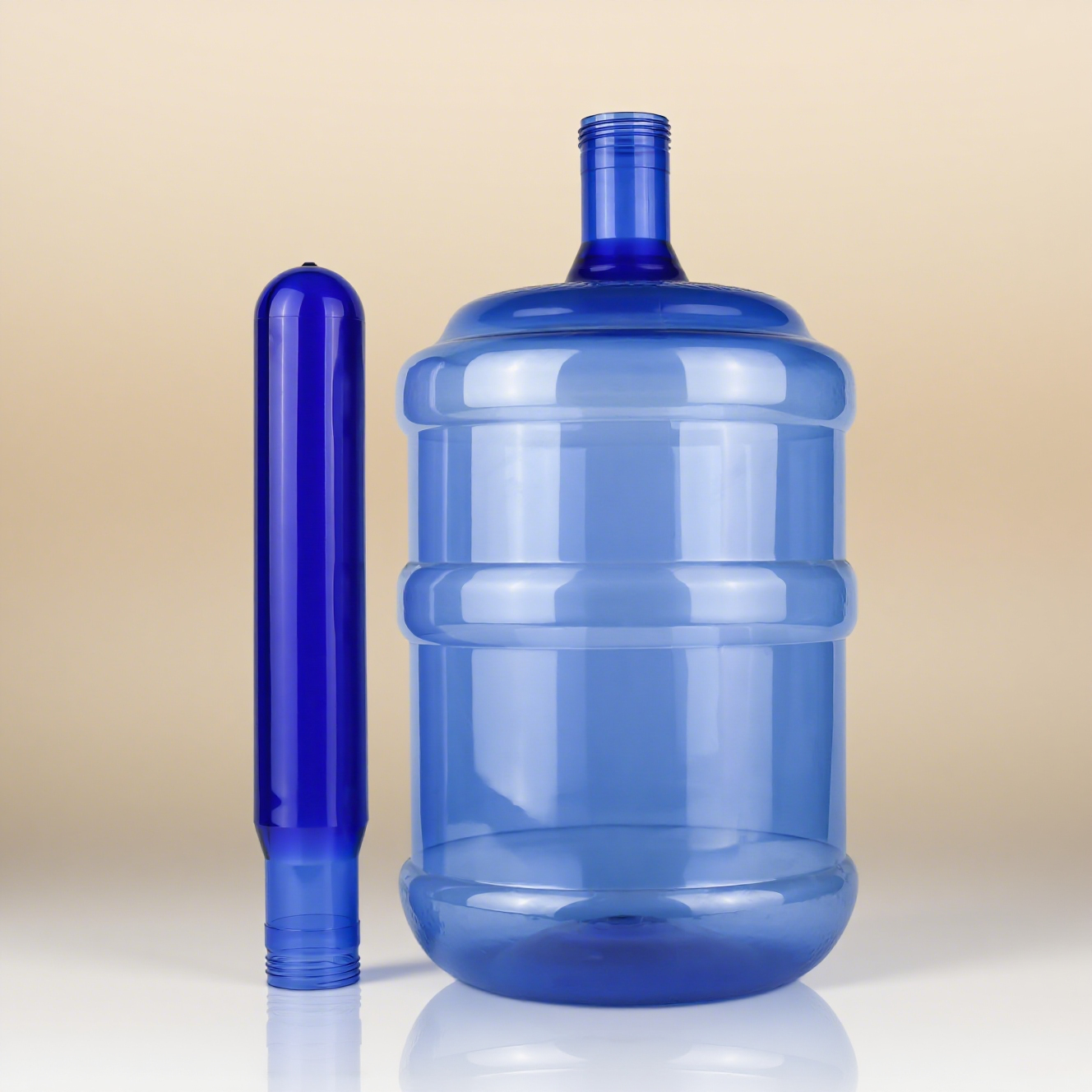
The durability of a finished 5 gallon water bottle begins long before the blow molding stage — it starts with how the 5 gallon preform is manufactured. Every structural decision made during the preform production process directly affects whether the final container can withstand repeated use, pressurized washing cycles, stacking loads, and consumer handling without failure. Understanding these manufacturing steps is essential for procurement managers, bottling plant operators, and packaging engineers who depend on consistent, long-lasting performance from their water containers.
A well-manufactured 5 gallon preform is the result of tightly controlled raw material selection, precise injection molding parameters, rigorous quality checkpoints, and deep knowledge of how molecular structure translates into mechanical strength. This article explores each phase of that manufacturing process and explains how each decision contributes to the final durability of the preform and the bottle it ultimately becomes.
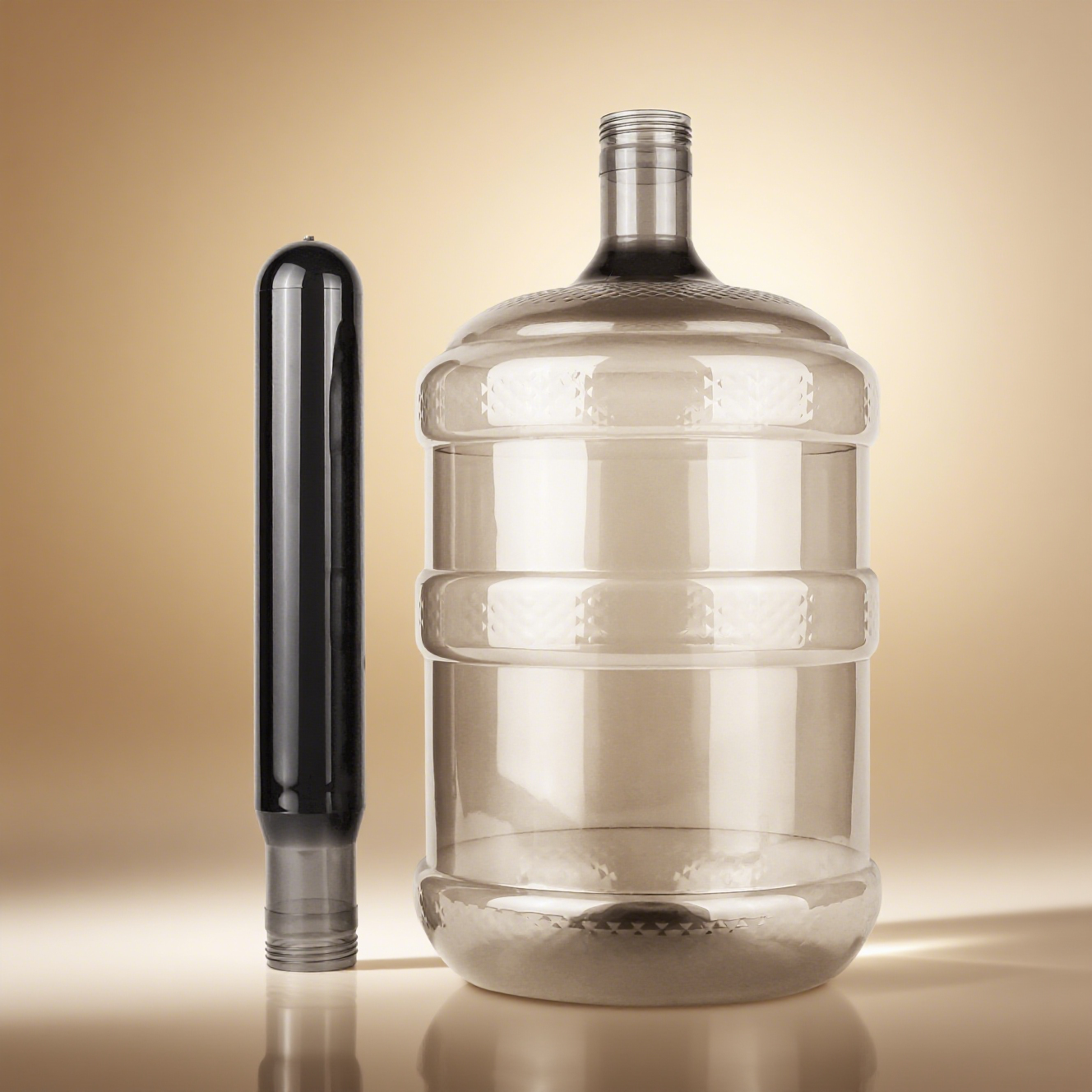
Raw Material Selection and Its Role in Preform Strength
Why PET Grade Matters for a 5 Gallon Preform
The foundation of any durable 5 gallon preform is the quality of the polyethylene terephthalate resin used in its production. Not all PET resins are equal — the intrinsic viscosity (IV) value of the resin plays a critical role in determining the molecular chain length, which directly influences the tensile strength and impact resistance of the finished preform. For large-format containers like the 5 gallon bottle, manufacturers typically specify high-IV food-grade PET resin to ensure adequate structural integrity.
Using virgin, FDA-approved raw material is not merely a regulatory requirement — it is a durability decision. Recycled or low-grade resin can introduce inconsistencies in molecular weight distribution that lead to stress concentration points during stretch blow molding. These weak points may not be visible during inspection but will manifest as cracking, deformation, or base failure under real-world usage conditions. Reputable manufacturers of the 5 gallon preform source their PET resin from certified suppliers with documented batch traceability.
The moisture content of the PET resin before processing is another critical variable. PET is hygroscopic, meaning it readily absorbs atmospheric moisture. If resin enters the injection molding machine without proper pre-drying, hydrolytic degradation occurs during melting, breaking down polymer chains and permanently reducing the material's strength. Industrial-grade desiccant dryers are used to bring resin moisture content below 50 ppm before it enters the barrel — a step that cannot be skipped without compromising the structural quality of every 5 gallon preform produced in that batch.
Additives and Stabilizers That Enhance Long-Term Performance
Beyond base resin quality, the use of carefully selected additives significantly influences the durability profile of a 5 gallon preform. UV stabilizers are incorporated to protect the preform and the finished bottle from photodegradation during outdoor storage or prolonged exposure to fluorescent lighting in retail environments. Without these stabilizers, the polymer matrix can become brittle over time, leading to unexpected fractures even under normal operational stresses.
Acetaldehyde scavengers are another class of functional additives used in food-contact 5 gallon preform production. While their primary purpose is to protect taste and odor neutrality of packaged water, they also reflect the overall discipline of the formulation process. Manufacturers who take additive selection seriously at this level demonstrate a systemic commitment to quality that extends throughout every step of the production chain. Thermal stabilizers are additionally blended to prevent resin degradation during high-temperature processing without sacrificing the clarity or mechanical properties of the 5 gallon preform.
Injection Molding Process Control for Structural Consistency
Temperature and Pressure Profiles During Preform Molding
The injection molding stage is where raw PET resin is transformed into a 5 gallon preform, and the precision of this process is what separates durable preforms from substandard ones. The melt temperature must be maintained within a narrow window — typically between 270°C and 285°C — to ensure that the polymer flows uniformly without degrading. Deviations above this range cause thermal degradation that permanently weakens the polymer chains, while temperatures below the threshold result in incomplete mold filling and internal stress buildup.
Injection pressure and holding pressure profiles must be calibrated specifically for the geometry of the 5 gallon preform. Because these preforms are significantly heavier and thicker-walled than standard beverage preforms, the mold filling dynamics are different. Insufficient packing pressure leads to sink marks and voids in the preform wall, creating localized thin sections that will fail during blow molding or under mechanical load in service. Experienced manufacturers use scientific molding methodologies to develop robust pressure profiles that remain stable across production runs.
Cooling time is the third critical parameter in this phase. The 5 gallon preform must be cooled to a precise ejection temperature that allows dimensional stability without creating residual thermal stresses. Molds engineered specifically for large preforms use advanced conformal cooling channels to extract heat uniformly from all sections of the preform. Non-uniform cooling results in differential crystallinity — meaning some zones become more crystalline than others — which creates stress concentration boundaries that compromise durability in the final bottle.
Mold Design and Its Direct Impact on Preform Quality
The mold itself is a fundamental determinant of 5 gallon preform durability. High-quality molds designed for this specific application use precision-machined cavity inserts with tight dimensional tolerances. The gate design — the entry point through which molten PET flows into the cavity — must be engineered to minimize shear stress on the polymer during injection. Excessive shear generates localized heat and molecular orientation anomalies that become weak points in the finished preform wall.
The neck finish geometry of the 5 gallon preform is particularly critical because it must mate precisely with the bottle cap system used in water dispensers. Molds that do not maintain tight tolerances on the neck finish produce preforms with inconsistent thread engagement, leading to seal failures, water leakage, and consumer complaints. Durable performance in the field starts with submillimeter accuracy at the mold level, and this requires both high-grade tooling steel and rigorous mold maintenance protocols.
Multi-cavity molds used for high-volume production of the 5 gallon preform introduce additional complexity because all cavities must produce identical preforms. Cavity-to-cavity weight variation, wall thickness variation, and dimensional inconsistency are common failure modes in poorly designed multi-cavity tooling. Leading manufacturers implement hot runner systems with individually controlled temperature zones per cavity to ensure that every preform coming off the tool meets the same durability standard.
Wall Thickness Distribution and Structural Geometry
Why Uniform Wall Thickness Is Non-Negotiable
One of the most technically demanding aspects of manufacturing a durable 5 gallon preform is achieving consistent wall thickness throughout the entire body. Because the preform will be stretch blow molded into a large container, any variation in wall thickness translates directly into variation in the blow-molded bottle wall. Thin sections in the preform become even thinner after stretching, creating localized weak zones that are susceptible to stress cracking, impact damage, and base failure.
The base of the 5 gallon preform requires special attention because this region experiences the highest stresses both during blow molding and during in-service use. The bottle base must support the weight of 18.9 liters of water, withstand the mechanical impact of placement on dispensers and hard surfaces, and endure repeated stacking during logistics. Manufacturers who engineer the preform base geometry with adequate material distribution — and who verify it with wall thickness measurement equipment — produce bottles with significantly longer service lives.
Modern optical measurement systems and ultrasonic thickness gauges allow manufacturers to inspect the wall thickness distribution of every 5 gallon preform produced, or to conduct statistically significant sampling at defined intervals. These measurements are compared against engineering tolerances established through finite element analysis and validated through accelerated life testing of blow-molded bottles. Consistent wall thickness is not just a quality metric — it is a direct predictor of in-service durability.
Gate and Base Geometry Considerations for Durability
The geometry around the injection gate at the base of the 5 gallon preform is an area where manufacturing decisions have an outsized impact on durability. The gate vestige — the small remnant of material left at the injection point — must be flush and stress-free to prevent crack initiation during blow molding or bottle use. Gate design parameters including gate diameter, land length, and post-gate cooling conditions are all optimized by experienced mold engineers to minimize this risk.
The overall body geometry of the 5 gallon preform is also designed to facilitate optimal material distribution during stretch blow molding. The taper profile along the preform body length influences how the axial and hoop stretching forces distribute material as the preform expands into the bottle cavity. Manufacturers who work closely with blow molding equipment suppliers to align preform geometry with machine parameters achieve superior material distribution, which translates directly into more uniform bottle wall thickness and better durability outcomes.
Quality Inspection Systems and Process Validation
In-Line Quality Control During Preform Production
Durable 5 gallon preform production requires more than good process engineering — it requires continuous verification that the process is performing within specification. Leading manufacturers deploy in-line quality control systems that monitor critical parameters in real time. Automated vision systems inspect each preform for cosmetic defects including surface contamination, black specks, bubbles, and gate irregularities. While some of these defects are primarily aesthetic, others — particularly bubbles and voids — are direct structural weaknesses that will compromise durability.
Weight control is another high-frequency in-line check for the 5 gallon preform. Because preform weight is directly proportional to material volume, consistent weight across a production run indicates consistent material distribution and process stability. Statistical process control charts track preform weight over time, and any drift outside control limits triggers immediate investigation and process correction. This level of process discipline is what separates manufacturers who consistently produce durable preforms from those who rely on end-of-line inspection alone.
Crystallinity and acetaldehyde content checks are performed on a sampled basis during production of the 5 gallon preform. Elevated crystallinity in the preform body — caused by excessive cooling or improper process temperatures — inhibits uniform stretching during blow molding and can cause haze, stress whitening, and mechanical weakness in the bottle. Acetaldehyde content, while primarily a taste and odor concern for food contact applications, also serves as a sensitive indicator of resin degradation during processing.
Final Dimensional and Functional Validation
Before any batch of 5 gallon preform products leaves the manufacturing facility, dimensional validation ensures that the neck finish, body diameter, length, and base geometry all conform to engineering specifications. Neck finish dimensions are particularly critical because out-of-tolerance neck threads will either fail to seal properly or will exert excessive stress on cap systems, both of which lead to field failures that damage the reputation of the water brand using the bottle.
Functional validation takes the quality assurance process one step further by testing actual blow-molded bottles produced from production-representative preforms. Drop tests, top load tests, and fill-and-cap leak tests all provide empirical data on the real-world durability performance of the 5 gallon preform and the bottle it produces. Manufacturers who integrate this validation loop into their standard production workflow build a continuously improving knowledge base that helps them refine the process over successive production generations.
Traceability systems that link each batch of 5 gallon preform production to specific raw material lot numbers, machine settings, and inspection results provide the documentary foundation for quality accountability. In the event of a field complaint or customer return, traceable production records allow manufacturers to isolate the cause quickly and implement corrective actions with precision rather than guesswork.
Post-Molding Handling and Storage Practices That Protect Preform Integrity
Cooling, Conveying, and Packaging After Ejection
Even a perfectly manufactured 5 gallon preform can be compromised by poor handling between the molding machine and the blow molding facility. Immediately after ejection from the mold, preforms enter a post-cooling phase where residual heat continues to dissipate. If preforms are packed too densely during this phase, contact between adjacent surfaces can cause deformation of the body or neck finish — defects that are often not visible until the preform fails during blow molding or causes a bottle sealing problem.
Dedicated conveying systems designed specifically for the 5 gallon preform use gentle handling mechanisms that prevent mechanical abrasion of the preform surface. Surface scratches, while minor in appearance, can act as crack initiation sites when the preform is subjected to biaxial stretching during blow molding. Manufacturers who invest in purpose-built post-mold handling automation protect the structural integrity of preforms throughout the transition from molding to packaging.
Storage Conditions and Shelf Life Management
Proper storage of the 5 gallon preform between manufacturing and end-use is essential for preserving the durability properties built into the product during molding. PET preforms must be stored away from UV light sources, which degrade the polymer surface and introduce brittleness over time. Temperature-controlled storage environments prevent thermal cycling that can induce dimensional changes in the neck finish and body, particularly in regions with extreme seasonal temperature variations.
Shelf life management practices ensure that 5 gallon preform inventory is rotated on a first-in, first-out basis, preventing older stock from being used beyond the recommended storage window. Manufacturers who clearly label production dates and provide storage guidance to customers enable the entire supply chain to protect preform quality through to the point of blow molding. This level of end-to-end quality thinking is what defines a manufacturing process genuinely oriented toward durability rather than mere production output.
FAQ
What makes a 5 gallon preform more durable than standard beverage preforms?
The 5 gallon preform is designed with significantly greater wall thickness, higher material weight, and a more robust base geometry compared to standard beverage preforms. These design differences are necessary because the finished 5 gallon bottle must support the weight of nearly 19 liters of water, endure repeated wash-and-refill cycles, withstand stacking and transportation stresses, and maintain leak-free performance over many months of active use. The manufacturing process uses higher-IV PET resin, more precise cooling control, and more rigorous quality inspection to ensure that these durability requirements are consistently met.
How does raw material quality affect the long-term performance of a 5 gallon preform?
Raw material quality is one of the most significant determinants of long-term performance for a 5 gallon preform. High intrinsic viscosity PET resin provides longer molecular chains that translate into superior tensile strength and impact resistance. Properly dried resin prevents hydrolytic degradation during processing, which would otherwise permanently reduce molecular weight and weaken the preform structure. The use of virgin, food-grade material with certified additives ensures that the preform maintains its mechanical properties throughout its intended service life without premature embrittlement or stress cracking.
Why is cooling control so important during 5 gallon preform injection molding?
Cooling control directly determines the crystallinity distribution and residual stress state of the finished 5 gallon preform. Non-uniform cooling creates zones of differential crystallinity within the preform wall, establishing stress concentration boundaries that weaken the structure before it even reaches the blow molding stage. Uniform, controlled cooling using advanced mold cooling channel designs ensures that the preform exits the mold with a consistent, low-crystallinity, amorphous structure that is optimally prepared for the biaxial stretching that occurs during blow molding, resulting in a stronger and more transparent finished bottle.
What quality checks should buyers look for when sourcing a 5 gallon preform manufacturer?
Buyers evaluating manufacturers of the 5 gallon preform should look for documented use of virgin, FDA-approved PET resin with full batch traceability. Evidence of scientific molding practices, in-line automated vision inspection, statistical process control for weight monitoring, and dimensional validation of neck finish geometry are all indicators of a serious quality system. Additionally, manufacturers who provide blow molding validation data — including drop test, top load, and leak test results from actual bottles — demonstrate a commitment to the end-to-end durability performance that procurement and production teams depend on.
Table of Contents
- Raw Material Selection and Its Role in Preform Strength
- Injection Molding Process Control for Structural Consistency
- Wall Thickness Distribution and Structural Geometry
- Quality Inspection Systems and Process Validation
- Post-Molding Handling and Storage Practices That Protect Preform Integrity
-
FAQ
- What makes a 5 gallon preform more durable than standard beverage preforms?
- How does raw material quality affect the long-term performance of a 5 gallon preform?
- Why is cooling control so important during 5 gallon preform injection molding?
- What quality checks should buyers look for when sourcing a 5 gallon preform manufacturer?