EN
EN

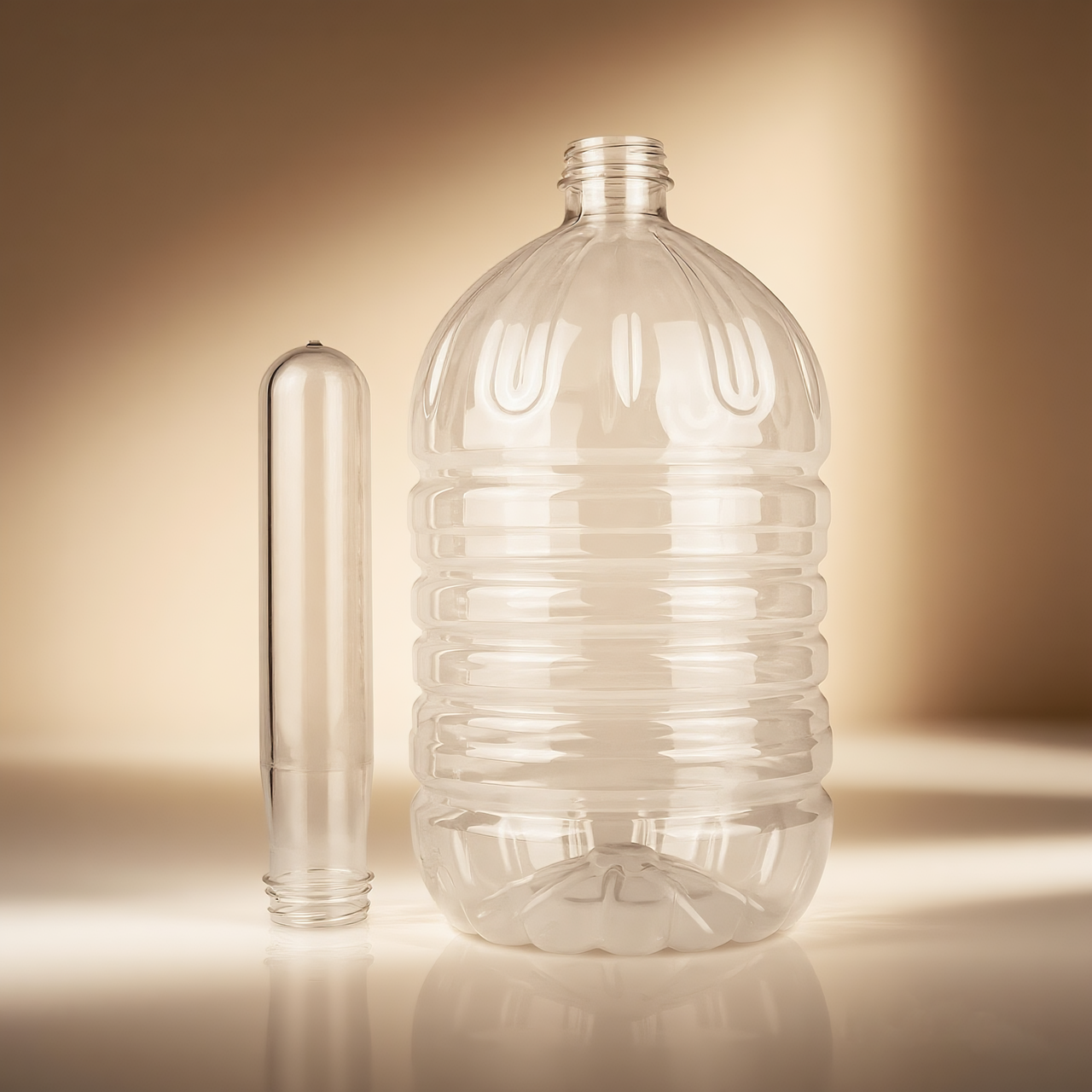
The global shift toward reusable water bottle systems has placed increasing pressure on packaging manufacturers to deliver components that are both durable and environmentally responsible. At the heart of this supply chain sits the 5 gallon preform, a precision-engineered intermediate product that directly determines the structural integrity, clarity, and long-term performance of large-format water bottles used in homes, offices, and industrial settings. Understanding how this single component supports the entire reusable dispensing ecosystem is critical for water companies, bottlers, and packaging procurement teams making strategic sourcing decisions.
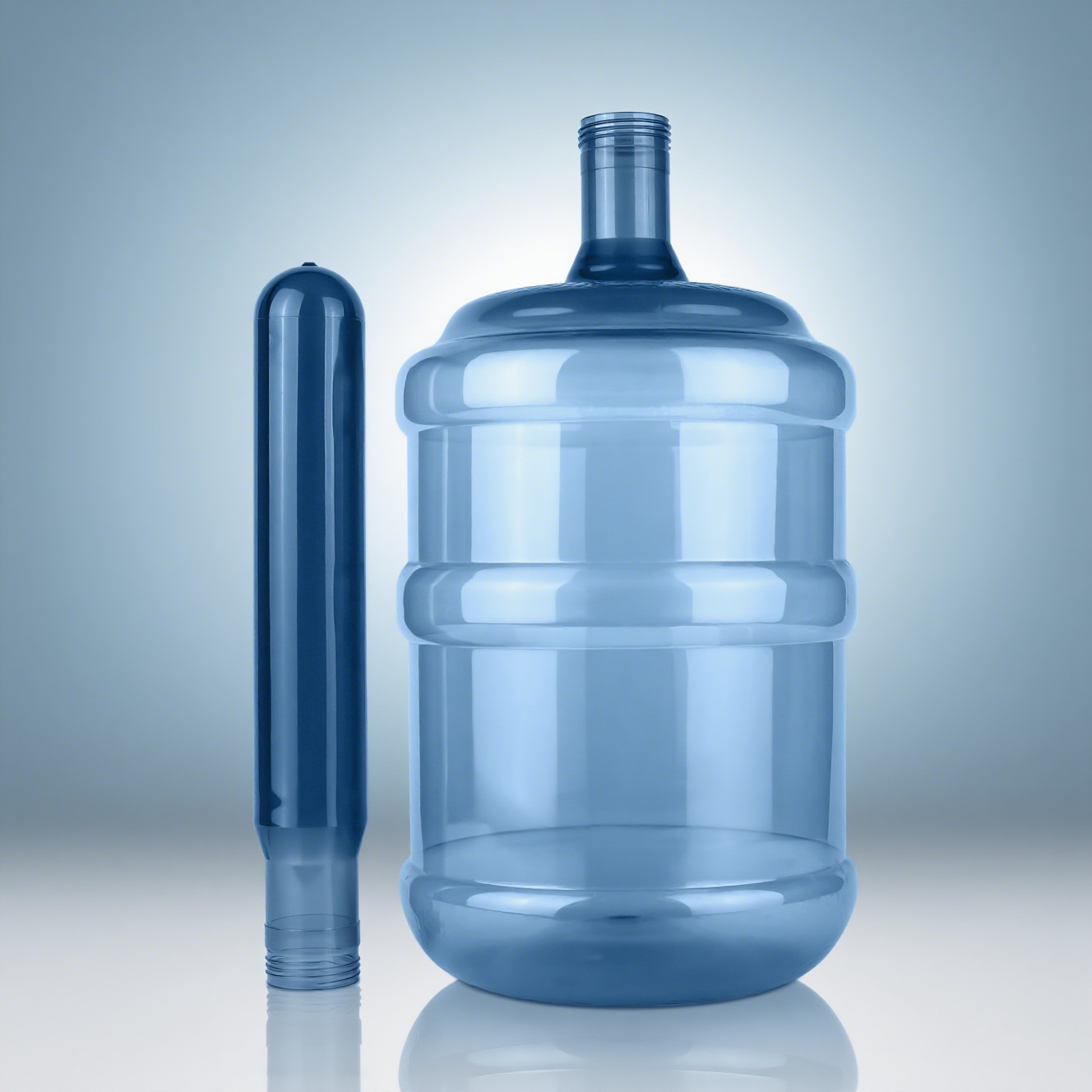
A 5 gallon preform is a thick-walled, injection-molded PET tube with a fully formed neck finish that is later stretch blow-molded into the familiar 18.9-liter water container seen on dispensers worldwide. Far from being a commodity item, the preform's wall thickness distribution, resin grade, neck geometry, and manufacturing precision all feed directly into whether the finished bottle can withstand repeated cleaning cycles, pressure variations, and the mechanical stress of being loaded and unloaded from dispensing equipment over many years. This article explores the specific mechanisms through which the 5 gallon preform enables and sustains the reusable water bottle model.
The Structural Role of the 5 Gallon Preform in Bottle Manufacturing
How Preform Geometry Translates into Bottle Performance
Every reusable water bottle begins its life as a 5 gallon preform, and the dimensional accuracy of that preform is what ultimately governs how evenly the PET material stretches during the blow-molding stage. When the preform wall thickness is consistent and the gate point is precisely centered, the resulting bottle has uniform sidewall thickness across its entire body. Uniform walls are critical in a reusable application because thinner zones become fatigue points that crack under repeated thermal cycling and physical handling.
The neck finish of the 5 gallon preform is perhaps the most mechanically demanding feature in the entire component. It must conform to standardized thread dimensions so that bottle caps, pump dispensers, and cooler necks all seal reliably without leakage. Because the neck is not stretched during blow molding, whatever precision is molded into the preform at the injection stage carries through unchanged to the finished bottle. This means that a poorly dimensioned neck on the 5 gallon preform directly produces a leaking or non-sealing finished container, regardless of how well the rest of the blowing process is managed.
Beyond the neck, the body length and overall weight of the 5 gallon preform determine whether enough material is present to produce the required wall thickness once stretched to full bottle volume. Under-weight preforms yield bottles with dangerously thin walls that deform when placed on dispensers or when pressure builds during transport. Over-weight preforms waste material and increase cost without improving durability. Getting this balance right is a key engineering discipline in reusable bottle supply chains.
Material Quality and Its Effect on Reusability
The resin used to manufacture a 5 gallon preform must meet food-grade standards and demonstrate high intrinsic viscosity to produce a bottle capable of multiple use cycles. PET with insufficient intrinsic viscosity produces bottles that stress-whiten quickly, crack under mechanical load, and degrade faster when exposed to hot-water sanitization. For reusable systems, where the same bottle may complete dozens or even hundreds of fill-clean-deliver cycles, starting with the right resin grade in the preform is non-negotiable.
FDA-approved new material is the industry benchmark for 5 gallon preform production destined for drinking water applications. New, virgin-grade PET provides consistent molecular weight, low acetaldehyde levels, and excellent transparency — all properties that consumers and water operators associate with quality. Recycled content, while valuable in certain sustainability contexts, requires careful quality control to ensure that contaminants or degraded polymer chains do not compromise the structural performance of a preform intended for extended reuse service.
Additives such as UV stabilizers and oxygen scavengers can be compounded into the resin before molding to extend the functional life of the bottle in real-world operating environments. These functional additives are incorporated at the 5 gallon preform manufacturing stage, not after blow molding, because they need to be homogeneously distributed throughout the material mass to be effective. This positions the preform manufacturer as a critical quality control point in the entire reusable bottle supply chain.
How the 5 Gallon Preform Enables System-Level Compatibility
Standardization Across the Dispensing Ecosystem
Reusable water bottle systems depend on a high degree of interoperability between bottles, caps, pumps, cooler necks, and washing equipment. The 5 gallon preform is the component that locks in the neck finish standard for the entire product lifecycle. The most common neck standard for 55mm BPB (Brim Full Bottle) and similar formats is defined at the preform level, meaning that manufacturers who adopt a consistent preform neck specification can feed their finished bottles into any compliant dispenser infrastructure worldwide.
This standardization has enormous logistical value for large water distributors operating multi-regional networks. When every 5 gallon preform in a procurement program shares the same neck geometry, the distributor can source finished bottles from multiple blow-molding partners without worrying about dispenser compatibility failures in the field. Caps and seals purchased in volume remain interchangeable, and the washing line equipment — often calibrated to specific bottle neck profiles for gripping and orientation — operates without modification.
For equipment rental companies and water cooler service businesses, preform-level standardization also simplifies inventory management. A single style of replacement cap or dispenser nozzle covers the entire bottle fleet, reducing spare parts complexity. The 5 gallon preform specification, agreed upstream between the preform supplier and the water company, thus creates downstream simplicity across the entire service operation.
Bottle-to-Dispenser Fit and Leak Prevention
One of the most common field complaints in reusable water bottle systems is dispenser leakage, and a disproportionate share of these incidents trace back to dimensional variation in the 5 gallon preform neck. If the thread pitch, thread depth, or ovality of the preform neck falls outside tolerance, the resulting bottle will produce inconsistent torque readings when caps are applied, leading to either over-tightened caps that crack the neck or under-tightened caps that allow air and water to bypass the seal.
Precision-molded 5 gallon preform components produced with well-maintained, high-cavitation tooling exhibit extremely tight dimensional consistency across production runs. This consistency means that automated capping equipment in bottling plants can be calibrated once and operate reliably at high throughput without constant re-adjustment for neck variation. The economic benefit extends beyond the factory floor: fewer leaking bottles in circulation means fewer customer service calls, fewer emergency deliveries, and a stronger brand reputation for the water company.
Modern quality assurance protocols for the 5 gallon preform include automated vision inspection systems that check neck diameter, thread profile, and gate quality at line speed. Preforms that fall outside specification are rejected before they ever reach the blow-molding stage, preventing defective bottles from entering the supply chain. This upstream quality gate is far more cost-effective than catching leaking bottles after they have been filled, labeled, and delivered to end users.
Sustainability Contributions of the 5 Gallon Preform
Enabling Extended Product Lifecycles
Reusable water bottle systems exist because they offer a dramatic reduction in single-use plastic consumption, but this environmental benefit only materializes if the bottles actually survive enough use cycles to offset the manufacturing footprint. The 5 gallon preform, as the foundational component, is where the decision to build for longevity is made. A preform manufactured to tight tolerances, using high-quality resin, and incorporating appropriate stabilizer packages will produce a bottle capable of completing fifty, one hundred, or more fill cycles before showing signs of fatigue.
Life cycle analysis models for reusable bottle programs consistently show that the break-even point versus single-use alternatives is reached after a relatively small number of reuse cycles — often as few as ten to twenty, depending on assumptions about transportation distance and cleaning energy. A 5 gallon preform that enables a bottle to complete sixty or more cycles delivers environmental benefits many times the break-even threshold. This amplification effect means that investment in higher-quality preform manufacturing has a multiplied positive impact on the sustainability credentials of the entire water distribution program.
Water companies increasingly report on sustainability metrics to corporate clients and regulatory bodies, and the average lifespan of their reusable bottle fleet is one of the most visible indicators. Sourcing 5 gallon preform components that are engineered for longevity rather than minimum cost is therefore both an environmental and a commercial strategic decision, not merely a technical specification choice.
Recyclability and End-of-Life Considerations
When a reusable bottle finally reaches the end of its service life, the fact that it was made from a 5 gallon preform produced with virgin-grade, food-approved PET means it enters the recycling stream as a high-quality, uncontaminated feedstock. PET is one of the most widely recycled plastics globally, and bottles produced from clean, high-IV preforms recycle efficiently into fiber, strapping, and sheet products. This end-of-life pathway completes the circular economy logic that reusable water systems are built upon.
Contrast this with bottles produced from lower-grade or contaminated preforms, which may exhibit layered structures, incompatible additives, or degraded polymer chains that reduce recyclate value and complicate sorting. The 5 gallon preform specification therefore has implications not just for the in-service performance of the bottle but for its value at end of life. Responsible procurement teams increasingly consider the full material lifecycle when qualifying preform suppliers, making resin quality documentation an important part of the supplier evaluation process.
Production and Procurement Considerations for Buyers
Evaluating Preform Suppliers for Reusable Bottle Programs
Buyers sourcing 5 gallon preform components for reusable water bottle production should prioritize suppliers who demonstrate verifiable process control, certified raw material sourcing, and documented dimensional capability studies. The combination of these three factors indicates a manufacturer that can produce consistent preforms at scale — the foundational requirement for running a high-volume reusable bottle program with minimal defect rates.
Process control in 5 gallon preform manufacturing encompasses mold temperature management, injection pressure profiles, cycle time consistency, and inline quality monitoring. Suppliers who rely on periodic manual sampling rather than continuous monitoring create windows where out-of-tolerance production can accumulate undetected. For buyers running blow-molding operations with expensive tooling and high-throughput lines, receiving a batch of non-conforming preforms can halt production and generate significant downstream costs.
Raw material certification is equally important. The supplier should provide traceability documentation confirming that the resin used in each 5 gallon preform production run meets the applicable food contact regulations in the target market, whether that is FDA 21 CFR, EU 10/2011, or equivalent national standards. This documentation protects the buyer's own compliance position and provides the evidence base needed for internal quality audits and third-party certification programs.
Logistics and Supply Chain Reliability
Because the 5 gallon preform is a high-volume, relatively low-value item relative to the finished bottle, logistics efficiency significantly affects total landed cost. Preforms are typically packed in bulk bins or octabins and shipped by full container load for international buyers. The weight and volume characteristics of preforms are more favorable than finished bottles, meaning that more units can be shipped per container, reducing per-unit freight cost considerably.
Reliable lead time performance from the 5 gallon preform supplier is essential for blow-molding operations that run on tight production schedules. Demand for five-gallon water bottles often spikes seasonally, particularly in markets with hot summers or large-scale corporate water delivery programs. Suppliers who maintain safety stock of standard preform SKUs, or who operate flexible production scheduling systems, offer better supply security than those with rigid minimum order quantities and fixed lead time windows.
For buyers operating in multiple geographic markets, the ability to source a consistent 5 gallon preform specification from a supplier with international shipping experience and documentation expertise is a meaningful operational advantage. Customs classification, food contact compliance declarations, and country-of-origin documentation are all areas where an experienced preform manufacturer adds value beyond the product itself.
FAQ
What is the standard weight of a 5 gallon preform used in reusable bottle systems?
The weight of a 5 gallon preform for standard 18.9-liter reusable water bottles typically falls in the range of 700 to 800 grams, though the precise specification varies by wall thickness design and the target bottle performance requirements. Heavier preforms generally yield thicker-walled, more durable finished bottles suited for intensive reuse cycles. Buyers should confirm the target weight with their blow-molding equipment specifications to ensure compatibility with machine clamping force and heating profiles.
How does the 5 gallon preform neck finish affect dispenser compatibility?
The neck finish of the 5 gallon preform defines the thread geometry that carries through unchanged to the finished bottle, since the neck is not stretched during blow molding. Industry-standard neck finishes such as the 55mm BPB format ensure compatibility with the vast majority of water coolers, dispensers, and capping equipment available globally. Buyers specifying a non-standard neck finish for proprietary reasons should verify compatibility with all downstream equipment before committing to a preform design.
Can a 5 gallon preform made from recycled PET be used in reusable water bottle systems?
Recycled PET can be incorporated into a 5 gallon preform for certain applications, but the resin must meet the same food-contact safety standards as virgin material, which requires food-grade rPET certified under applicable regulations. In reusable drinking water bottle applications, the additional consideration is mechanical durability over multiple cycles: recycled PET with lower or inconsistent intrinsic viscosity may not deliver the same service life as virgin-grade material. Most premium reusable bottle programs currently specify new-material preforms to ensure both compliance and longevity.
What quality tests should buyers request from a 5 gallon preform supplier?
Buyers qualifying a 5 gallon preform supplier should request dimensional inspection reports confirming neck finish tolerances, wall thickness distribution data from destructive section analysis, intrinsic viscosity test results for the resin lot, and acetaldehyde content measurements relevant to drinking water taste quality. Additional tests valuable for reusable bottle programs include top load strength of the blown bottle and drop impact performance at low temperatures, which simulate the physical stresses of real-world delivery and dispensing operations. These test protocols, agreed in the supplier qualification stage, provide the assurance framework needed to run a high-reliability reusable bottle program.
Table of Contents
- The Structural Role of the 5 Gallon Preform in Bottle Manufacturing
- How the 5 Gallon Preform Enables System-Level Compatibility
- Sustainability Contributions of the 5 Gallon Preform
- Production and Procurement Considerations for Buyers
-
FAQ
- What is the standard weight of a 5 gallon preform used in reusable bottle systems?
- How does the 5 gallon preform neck finish affect dispenser compatibility?
- Can a 5 gallon preform made from recycled PET be used in reusable water bottle systems?
- What quality tests should buyers request from a 5 gallon preform supplier?