
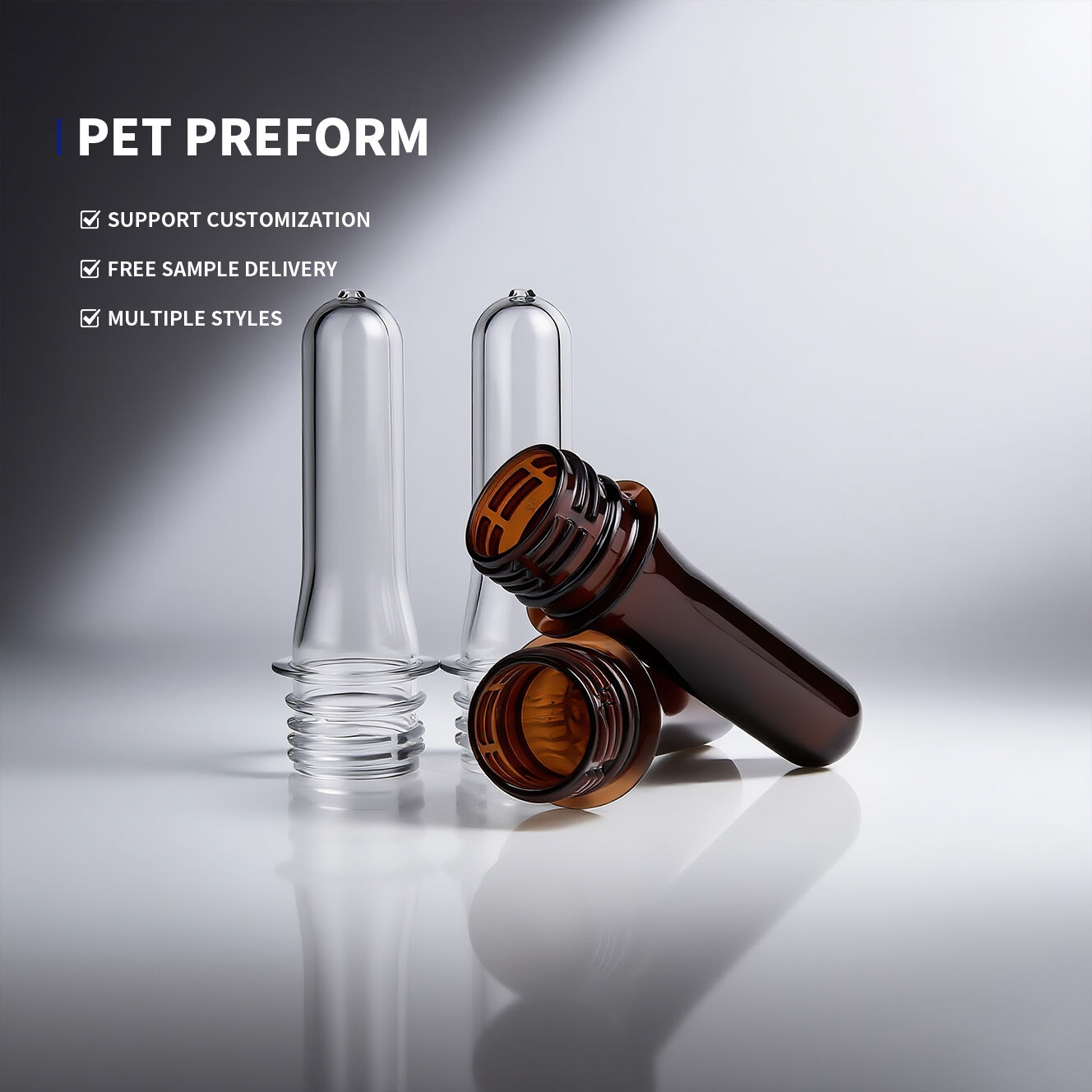
High-volume packaging projects face constant pressure to minimize costs while maintaining quality standards. Manufacturing efficiency becomes critical when producing thousands or millions of containers, where even small per-unit savings translate to substantial budget reductions. Preforms offer a strategic solution for achieving these cost objectives by streamlining production processes and reducing material waste in large-scale packaging operations.

The economic advantages of preforms extend beyond simple material costs to encompass reduced energy consumption, faster production cycles, and improved quality consistency. When packaging projects scale to high volumes, these cumulative benefits create significant cost reductions that directly impact project profitability and competitive positioning in the market.
Direct Material Cost Reduction Through Preform Utilization
Optimized Material Distribution
Preforms achieve material cost reduction by ensuring precise plastic distribution during the blow molding process. Unlike traditional manufacturing methods that may result in uneven wall thickness, preforms enable controlled material placement that eliminates excess plastic usage. This precision becomes increasingly valuable in high-volume projects where material waste can accumulate to substantial costs.
The standardized nature of preforms allows manufacturers to calculate exact material requirements for large production runs. This predictability enables better purchasing decisions and reduces the need for safety stock that typically adds 10-15% to material costs in conventional packaging projects. Manufacturing teams can order precise quantities based on preform specifications rather than estimating material needs.
Quality preforms also reduce the rejection rate during production, as their consistent dimensional properties minimize manufacturing defects. When producing millions of containers, even a 1% reduction in rejection rates translates to significant material savings and reduced rework costs.
Reduced Raw Material Processing
High-volume packaging projects benefit from the simplified raw material handling that preforms provide. Rather than managing multiple plastic pellet grades and additives, manufacturers can focus on preform quality control and inventory management. This streamlined approach reduces material handling costs and minimizes the risk of contamination or mixing errors that can compromise entire production batches.
The consistent material properties of preforms eliminate the need for extensive quality testing of incoming raw materials. Manufacturing facilities can reduce laboratory costs and quality control personnel requirements when using standardized preforms compared to processing raw plastic materials in-house.
Transportation costs also decrease when using preforms instead of raw materials, as preforms have higher density per unit volume and require less specialized handling equipment. This efficiency becomes particularly important for high-volume projects where material transportation represents a significant cost component.
Production Efficiency Gains in High-Volume Operations
Accelerated Manufacturing Cycles
Preforms significantly reduce production cycle times in high-volume packaging projects by eliminating the injection molding phase from the manufacturing facility. The blow molding process using preforms operates faster than combined injection and blow molding operations, allowing manufacturers to achieve higher throughput rates with existing equipment capacity.
The consistent heating characteristics of preforms enable more predictable production scheduling and reduced setup times between production runs. Manufacturing teams can maintain steady production rates without frequent adjustments for material variations that typically occur when processing raw materials directly.
Equipment utilization improves when using preforms because machines spend less time in transition states and more time in productive manufacturing modes. This efficiency gain becomes exponentially valuable in high-volume projects where equipment downtime directly impacts project timelines and costs.
Simplified Quality Control Processes
High-volume packaging operations using preforms benefit from streamlined quality control procedures that reduce labor costs and inspection time. Preforms arrive with predetermined specifications, allowing quality teams to focus on final product inspection rather than monitoring raw material processing variables throughout the manufacturing cycle.
The standardized dimensions and properties of preforms reduce the number of quality checkpoints required during production. Manufacturing facilities can implement automated quality systems more easily when working with consistent preform inputs compared to variable raw material processing conditions.
Statistical process control becomes more effective with preforms because the reduced number of variables allows quality teams to identify and address issues more quickly. This responsiveness prevents quality problems from affecting large portions of high-volume production runs.
Energy and Operational Cost Savings
Reduced Energy Consumption
Manufacturing facilities using preforms in high-volume packaging projects experience significant energy cost reductions compared to full injection blow molding operations. Preforms require only reheating and blow molding, eliminating the energy-intensive injection molding phase from the production facility and reducing overall energy consumption per container produced.
The controlled heating requirements of preforms allow manufacturers to optimize energy usage patterns and reduce peak demand charges. High-volume operations can schedule preform heating cycles to take advantage of lower electricity rates and avoid demand penalties that significantly impact operational costs.
Cooling systems also operate more efficiently when processing preforms because the thermal cycles are shorter and more predictable. This efficiency reduces auxiliary equipment energy consumption and extends equipment life, further contributing to cost savings in high-volume operations.
Lower Equipment Investment Requirements
High-volume packaging projects using preforms require less capital investment in manufacturing equipment compared to integrated injection blow molding systems. Facilities can focus their equipment budget on high-efficiency blow molding machines rather than investing in both injection molding and blow molding capabilities.
Maintenance costs decrease when using preforms because blow molding equipment has fewer complex components compared to injection molding systems. The reduced mechanical complexity translates to lower spare parts inventory requirements and decreased maintenance labor costs over the life of high-volume projects.
Equipment flexibility improves with preform-based systems, allowing manufacturers to adjust production capacity more easily by sourcing different preform quantities rather than investing in additional injection molding equipment. This flexibility provides cost advantages when project volumes fluctuate or when serving multiple high-volume packaging contracts simultaneously.
Inventory and Storage Cost Optimization
Efficient Storage Utilization
Preforms offer superior storage efficiency compared to finished containers, allowing high-volume packaging projects to minimize warehouse costs and improve inventory management. The compact size of preforms means manufacturing facilities can store significantly more units per square foot of warehouse space, reducing facility rental costs and storage handling expenses.
The stackable design of preforms enables more efficient use of vertical storage space and reduces the need for specialized storage equipment. High-volume operations can maintain larger inventory buffers without proportional increases in storage costs, providing greater flexibility in production scheduling and customer delivery commitments.
Transportation efficiency improves when storing and moving preforms because their higher density reduces shipping costs per unit. Manufacturing facilities can optimize logistics costs by coordinating preform deliveries with production schedules, minimizing both storage requirements and transportation expenses.
Reduced Inventory Carrying Costs
High-volume packaging projects benefit from lower inventory carrying costs when using preforms because the standardized products have longer shelf life and more stable pricing compared to finished containers. This stability allows manufacturers to take advantage of volume purchasing discounts without risking inventory obsolescence or price volatility.
The fungible nature of preforms across different container designs reduces the risk of excess inventory when project specifications change. Manufacturing facilities can maintain strategic inventory levels without the concern of product-specific obsolescence that typically affects finished container inventory.
Working capital requirements decrease when using preforms because manufacturers can maintain lower total inventory values while supporting equivalent production capacity. This capital efficiency becomes particularly valuable for high-volume projects that require significant upfront inventory investments.
Quality Consistency and Waste Reduction
Predictable Manufacturing Outcomes
Preforms enable consistent quality outcomes in high-volume packaging projects by providing standardized starting materials that reduce manufacturing variability. The controlled production conditions used to create preforms translate to more predictable container properties, reducing quality-related waste and rework costs that can significantly impact project economics.
The dimensional stability of preforms allows manufacturing teams to optimize blow molding parameters for maximum efficiency and minimum waste. High-volume operations can achieve lower scrap rates and higher first-pass yield rates when working with consistent preform inputs compared to variable raw material processing conditions.
Quality traceability improves with preforms because each batch has documented properties and performance characteristics. This traceability enables faster problem resolution and reduces the scope of quality issues when they occur in high-volume production runs.
Minimized Production Waste
Manufacturing waste reduction represents a significant cost advantage when using preforms in high-volume packaging projects. The precise material control inherent in preform production minimizes trim waste and reduces the generation of recyclable materials that require handling and processing.
Startup waste decreases when using preforms because the consistent material properties enable faster machine stabilization and reduced purging requirements between production runs. High-volume operations can minimize the material losses typically associated with production changeovers and equipment startup procedures.
End-of-run waste also reduces with preforms because manufacturers can better predict material consumption and avoid overproduction. The ability to accurately calculate preform requirements for specific production volumes eliminates the excess inventory that often results from raw material processing uncertainties.
FAQ
What is the typical cost savings percentage when using preforms in high-volume packaging?
High-volume packaging projects typically achieve 15-25% cost savings when using preforms compared to integrated injection blow molding operations. The savings come from reduced material waste, lower energy consumption, decreased labor requirements, and improved production efficiency. Actual savings depend on project scale, container specifications, and existing manufacturing capabilities.
How do preforms reduce energy costs in manufacturing operations?
Preforms reduce energy costs by eliminating the injection molding phase from manufacturing facilities, which typically accounts for 40-50% of total energy consumption in container production. Facilities only need to reheat and blow mold preforms, resulting in lower overall energy usage, reduced peak demand charges, and more efficient equipment utilization cycles.
Can preforms maintain quality standards in high-volume production runs?
Yes, preforms actually improve quality consistency in high-volume production because they provide standardized starting materials with controlled properties. The consistent dimensional characteristics and material distribution of preforms result in more predictable manufacturing outcomes, reduced rejection rates, and better statistical process control compared to processing raw materials directly.
What storage advantages do preforms offer for large packaging projects?
Preforms provide significant storage advantages through their compact size and stackable design, allowing facilities to store 5-8 times more units per square foot compared to finished containers. This efficiency reduces warehouse costs, improves inventory management flexibility, and enables higher inventory buffers without proportional increases in storage expenses or handling requirements.