EN
EN

The water bottling industry has witnessed unprecedented growth, with demand for reliable, high-capacity containers reaching new heights. Among the most critical components in this supply chain are 5-gallon pet water bottle preforms, which serve as the foundation for producing durable water containers used in offices, homes, and commercial establishments worldwide. These specialized preforms represent the intersection of advanced polymer science, precision manufacturing, and stringent quality control, making them essential for businesses seeking to deliver premium water storage solutions.
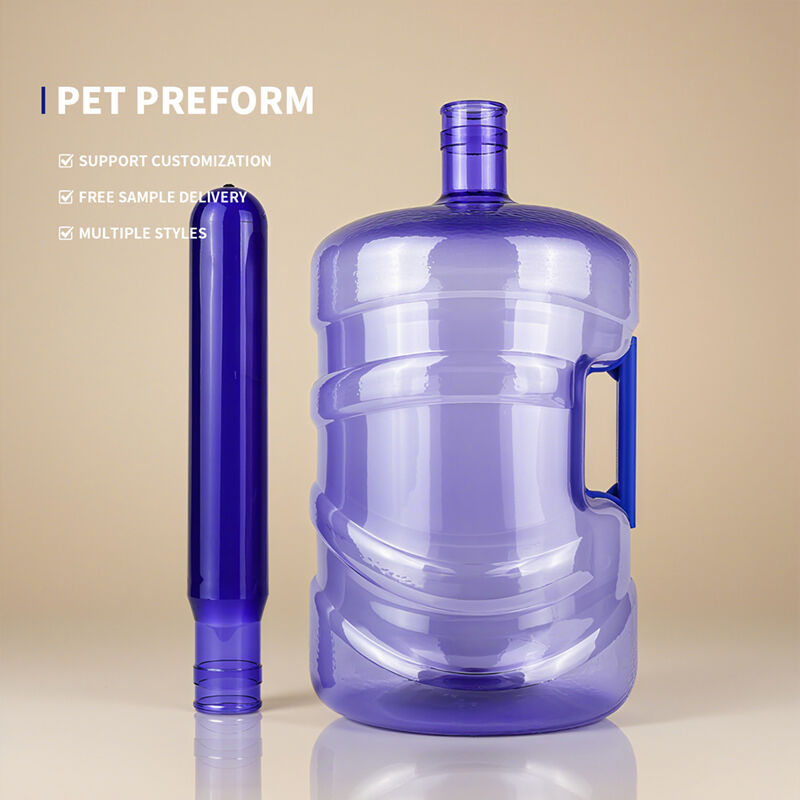
Manufacturing excellence in preform production requires sophisticated understanding of polyethylene terephthalate properties and their behavior under various processing conditions. The complexity increases exponentially when dealing with large-capacity containers, as structural integrity becomes paramount for consumer safety and product reliability. Heavy-duty preforms must withstand significant stress during blow molding processes while maintaining dimensional accuracy and optical clarity that consumers expect from premium water bottles.
Advanced Manufacturing Processes for Large-Capacity Preforms
Injection Molding Precision and Control
The production of 5-gallon pet water bottle preforms demands exceptional precision in injection molding parameters, where temperature control, pressure distribution, and cooling rates must be meticulously managed. Advanced manufacturing facilities utilize multi-cavity molds equipped with hot runner systems that ensure uniform material flow and consistent wall thickness distribution. This level of control is crucial because even minor variations in preform dimensions can lead to significant issues during the blow molding process, potentially compromising bottle integrity or causing production failures.
Modern injection molding systems incorporate real-time monitoring technologies that track critical parameters throughout each production cycle. These systems enable immediate adjustments to maintain optimal processing conditions, ensuring that every preform meets exact specifications. The sophisticated control systems monitor cavity pressure, melt temperature, and injection velocity, providing manufacturers with comprehensive data to optimize production efficiency while maintaining consistent quality standards that are essential for heavy-duty applications.
Material Selection and Quality Assurance
Selecting appropriate raw materials for heavy-duty preform production involves careful consideration of polymer grade, intrinsic viscosity, and additive packages that enhance performance characteristics. Premium-grade PET resins with high molecular weight and excellent thermal stability are essential for producing 5-gallon pet water bottle preform that can withstand the stresses associated with large-volume containers. These materials must also comply with stringent food-grade regulations, ensuring complete safety for potable water storage applications.
Quality assurance protocols extend throughout the entire production chain, from raw material inspection to final product validation. Comprehensive testing procedures evaluate mechanical properties, thermal characteristics, and chemical compatibility to ensure that each preform batch meets or exceeds industry standards. Advanced analytical techniques, including differential scanning calorimetry and mechanical testing, provide detailed insights into material behavior under various stress conditions, enabling manufacturers to predict long-term performance and reliability.
Structural Engineering for Heavy-Duty Applications
Wall Thickness Optimization and Stress Distribution
Engineering robust 5-gallon pet water bottle preforms requires sophisticated analysis of stress distribution patterns and wall thickness optimization throughout the preform geometry. Finite element analysis techniques enable designers to predict how material will flow during blow molding and identify potential stress concentration points that could lead to failure. This analytical approach ensures that wall thickness distribution is optimized to provide maximum strength while minimizing material usage and production costs.
Critical stress areas, particularly around the neck finish and body transition zones, receive special attention during the design phase. These regions experience the highest mechanical loads during handling, filling, and transportation, making proper reinforcement essential for long-term performance. Advanced preform designs incorporate gradual thickness transitions and strategic material distribution to ensure uniform stress distribution and prevent premature failure under normal operating conditions.
Thermal Performance and Processing Characteristics
Heavy-duty preforms must exhibit excellent thermal performance during blow molding processes, maintaining consistent temperature distribution to achieve uniform bottle wall thickness. The thermal characteristics of 5-gallon pet water bottle preforms directly impact the efficiency of downstream processing operations and the quality of finished bottles. Proper thermal design ensures rapid and uniform heating during preform conditioning, enabling precise control over material flow during bottle formation.
Processing characteristics extend beyond simple thermal behavior to include considerations of material memory, stress relaxation, and orientation development during forming operations. These factors influence the final mechanical properties of blown bottles and their resistance to environmental stress cracking. Manufacturers must carefully balance thermal processing parameters with material properties to achieve optimal bottle performance while maintaining efficient production rates and minimizing energy consumption.
Quality Control and Testing Protocols
Dimensional Accuracy and Consistency
Maintaining precise dimensional accuracy across large production volumes of 5-gallon pet water bottle preforms requires sophisticated measurement and control systems. Automated inspection equipment utilizes advanced optical systems and coordinate measuring machines to verify critical dimensions, including neck finish specifications, wall thickness distribution, and overall geometry. These measurements must fall within extremely tight tolerances to ensure compatibility with blow molding equipment and consistent bottle performance.
Statistical process control methodologies enable manufacturers to monitor dimensional consistency over time and identify potential process variations before they impact product quality. Real-time data collection and analysis provide immediate feedback on production performance, allowing for rapid adjustments to maintain optimal manufacturing conditions. This proactive approach to quality control minimizes waste and ensures that every preform meets the exacting standards required for heavy-duty applications.
Performance Testing and Validation
Comprehensive performance testing protocols evaluate multiple aspects of preform quality, including mechanical strength, thermal stability, and chemical resistance. Standard test methods assess burst strength, top load resistance, and environmental stress crack resistance under accelerated aging conditions. These tests provide critical data on long-term performance expectations and help validate design choices for specific applications and market requirements.
Advanced testing methodologies extend beyond basic performance parameters to include specialized evaluations of blow molding characteristics, bottle wall distribution, and final container properties. This comprehensive approach ensures that 5-gallon pet water bottle preforms perform consistently across diverse processing conditions and equipment configurations. Validation testing also includes compatibility assessments with various water types and storage conditions to ensure optimal performance throughout the product lifecycle.
Market Applications and Industry Trends
Commercial and Industrial Usage Patterns
The commercial water delivery industry represents the largest market segment for 5-gallon pet water bottle preforms, with applications spanning office buildings, manufacturing facilities, and retail establishments. These environments demand containers that can withstand repeated handling, transportation stress, and extended storage periods without compromising water quality or container integrity. The reliability requirements in these applications drive continuous improvements in preform design and manufacturing processes.
Industrial applications often involve specialized requirements such as enhanced chemical resistance, temperature tolerance, or unique neck finish configurations. Manufacturers must adapt their preform designs to accommodate these diverse needs while maintaining cost-effectiveness and production efficiency. The growing emphasis on sustainability has also created demand for preforms that can be efficiently recycled and reprocessed, adding another dimension to design considerations and material selection.
Sustainability and Environmental Considerations
Environmental sustainability has become a critical factor in preform design and production, with manufacturers investing heavily in recycling technologies and material efficiency improvements. Modern 5-gallon pet water bottle preforms incorporate recycled content while maintaining performance standards, contributing to circular economy principles and reducing environmental impact. Advanced sorting and cleaning technologies enable high-quality recycled PET to be incorporated into new preforms without compromising safety or performance.
Lightweighting initiatives focus on reducing material usage while maintaining structural integrity, resulting in significant environmental benefits through reduced transportation costs and lower carbon footprint. These efforts require sophisticated engineering analysis to identify optimization opportunities without compromising bottle performance or consumer safety. Manufacturers continue to develop innovative approaches to material efficiency that balance environmental responsibility with practical performance requirements.
FAQ
What makes heavy-duty preforms different from standard preforms
Heavy-duty preforms feature enhanced wall thickness distribution, superior material grades, and specialized design elements that enable them to withstand the increased stresses associated with large-volume containers. These preforms undergo more rigorous quality control processes and utilize premium PET resins with higher molecular weight and improved mechanical properties. The manufacturing processes are optimized for dimensional accuracy and consistent performance under demanding applications.
How do you ensure consistent quality across large production volumes
Quality consistency is maintained through advanced process control systems that monitor critical parameters in real-time, automated inspection equipment that verifies dimensional accuracy, and comprehensive statistical process control methodologies. Regular calibration of measuring equipment, standardized operating procedures, and continuous operator training ensure that quality standards are maintained throughout production runs. Batch testing and validation protocols provide additional assurance of product consistency.
What testing standards apply to 5-gallon water bottle preforms
Testing standards for 5-gallon pet water bottle preforms include FDA regulations for food contact materials, ASTM standards for mechanical properties, and industry-specific requirements for burst strength and environmental stress crack resistance. International standards such as ISO guidelines for plastic materials and European food contact regulations may also apply depending on market requirements. Manufacturers typically exceed minimum requirements to ensure product reliability and customer satisfaction.
How do material choices impact final bottle performance
Material selection directly influences bottle clarity, strength, barrier properties, and processing characteristics during blow molding. Higher-grade PET resins provide improved mechanical properties and better resistance to environmental stress cracking, while specialized additives can enhance UV resistance or provide antimicrobial properties. The intrinsic viscosity of the resin affects processing behavior and final bottle wall distribution, making material selection critical for achieving optimal performance in heavy-duty applications.