 EN
EN

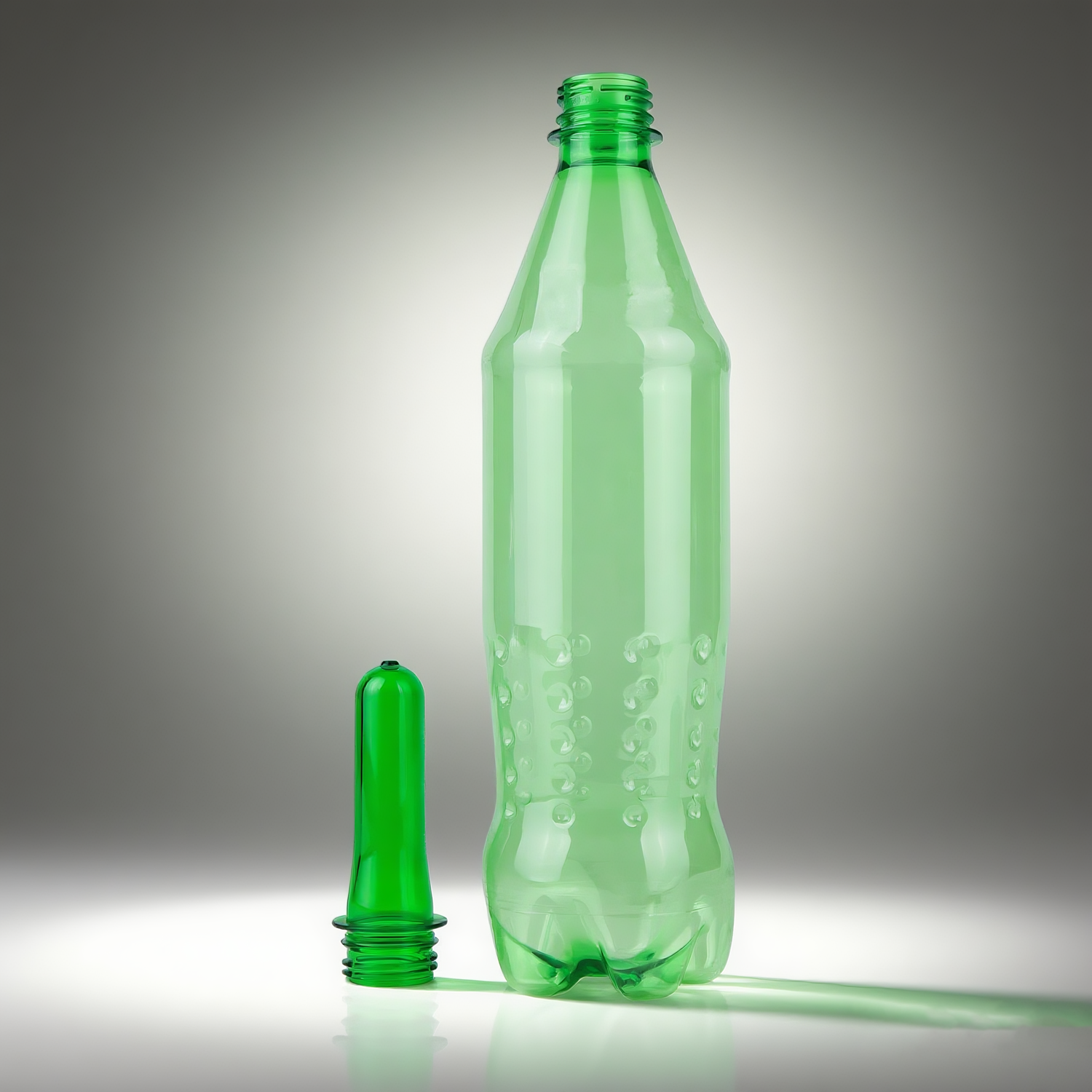
When a bottle arrives on a store shelf filled with mineral water or a carbonated beverage, the first thing a consumer notices is clarity. That brilliant, glass-like transparency is not simply a property of the finished bottle — it begins long before the blowing stage. It begins with the plastic preform. The quality of each plastic preform directly determines whether the final blown bottle will achieve that pristine optical clarity that buyers expect, or whether it will carry haze, streaks, and visual defects that undermine brand perception.
For packaging engineers, procurement managers, and beverage brand owners, understanding the connection between plastic preform quality and bottle transparency is essential decision-making knowledge. A substandard plastic preform does not simply produce an ugly bottle — it creates downstream production waste, elevated rejection rates, and reputational risk at point of sale. This article examines the specific quality factors within the plastic preform manufacturing process that govern the optical performance of the final bottle, and explains how to evaluate and secure the transparency standards your product line demands.
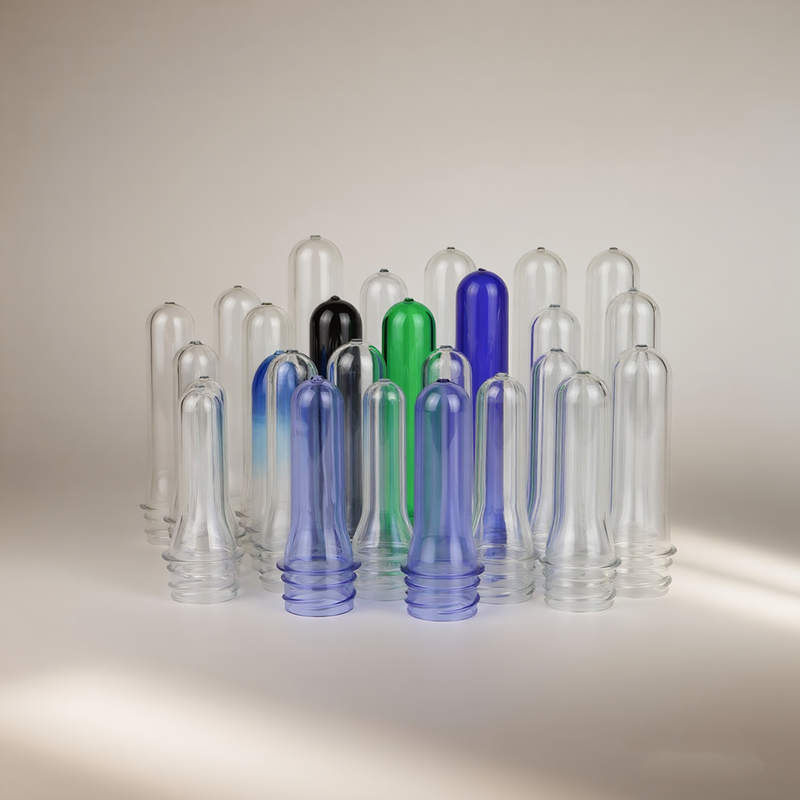
The Material Foundation of Transparency
Why PET Resin Grade Matters
The most fundamental factor governing bottle transparency is the quality of the PET resin used to manufacture the plastic preform. PET — polyethylene terephthalate — naturally produces a highly transparent amorphous structure when processed correctly. However, not all PET resin is equal. Virgin food-grade PET resin contains a consistent molecular weight distribution and minimal contamination, which allows light to pass through the finished bottle without scattering.
When a plastic preform is produced using recycled or mixed-grade resin, the molecular chain lengths become irregular. These irregularities create microscopic crystalline zones within the wall of the preform, and those zones translate directly into haze in the final blown bottle. For beverage packaging where consumer perception of purity is a critical marketing asset, using 100% virgin food-grade PET resin in each plastic preform is not a luxury — it is a baseline requirement.
The intrinsic viscosity (IV) of the resin is another material property that affects transparency. A plastic preform produced from resin with IV outside the optimal range for blow molding will either crystallize prematurely during reheat or fail to orient properly during stretching, both of which produce visible whitening or cloudiness in the bottle wall. Consistent IV control at the resin selection stage is therefore a direct investment in optical quality.
Moisture Control and Its Effect on Clarity
PET resin is hygroscopic, meaning it absorbs atmospheric moisture readily. When moisture-contaminated resin is fed into the injection molding machine during plastic preform production, hydrolytic degradation occurs. This process breaks down the polymer chains and produces acetaldehyde as a byproduct, while simultaneously creating micro-voids and haze-generating defects in the preform wall.
Proper pre-drying of PET resin to a residual moisture content of 0.005% or below before processing is a non-negotiable quality step. A plastic preform manufacturer that skips or shortens the drying stage to increase throughput is directly sacrificing the optical clarity of every preform in that production run. The resulting haze is permanent — no amount of optimization at the blow molding stage can recover the transparency that was lost during injection.
Injection Molding Process Parameters and Optical Outcomes
Temperature Profile and Crystallinity Control
The injection molding process that shapes each plastic preform involves a precise sequence of melt temperatures, injection speeds, and cooling times. When melt temperature is too high, thermal degradation occurs, producing yellowing and reduced clarity. When melt temperature is too low, incomplete plasticization leaves unmelted particles that scatter light inside the preform wall, creating a visibly hazy appearance.
Crystallinity is the core optical enemy of a transparent PET bottle. PET is naturally clear in its amorphous state and turns opaque white when it crystallizes. The plastic preform must be cooled rapidly enough after injection to lock the material in an amorphous state. Insufficient cooling time, inadequate mold cooling channel design, or inconsistent water temperature in the mold will allow partial crystallization to occur before the preform is ejected, creating an opaque or milky zone that no downstream process can reverse.
For a plastic preform destined for mineral water or carbonated beverage bottles, the gate area at the base of the preform is particularly vulnerable to thermal stress and crystallinity. This is the thickest section and the last area to cool. Skilled mold designers and process engineers manage gate crystallinity carefully, as this is a common source of visible haze in finished bottles.
Wall Thickness Uniformity Across the Preform
Optical clarity in the final blown bottle is not only a function of material quality — it is also deeply influenced by the dimensional uniformity of the plastic preform. If the wall thickness of a plastic preform is uneven due to core shift, worn tooling, or imbalanced injection flow, the stretch blow molding process will amplify those variations. Thin zones stretch excessively and can stress-whiten, while thick zones fail to orient properly and remain hazy.
A well-manufactured plastic preform maintains tight dimensional tolerances across its wall, neck finish, and gate area. Manufacturers who invest in precision tooling, regular mold maintenance, and in-line dimensional inspection produce plastic preforms whose thickness consistency directly translates to uniform sidewall clarity in the blown bottle. Inconsistent wall thickness is a common root cause of patchy transparency or striping visible in the final package.
Contamination, Colorants, and Visual Defects
The Impact of Contamination on Transparency
Even a plastic preform produced from high-quality virgin PET resin can fail transparency standards if contamination is introduced during handling, storage, or processing. Black specks, gels, and foreign inclusions are all forms of contamination that scatter or block light transmission in the bottle wall. These defects are almost always traceable back to the plastic preform stage — they do not originate in the blow molding machine.
Contamination can enter the process through degraded resin from purging remnants, dirty feed hoppers, contaminated recycled masterbatch, or inadequate cleanroom discipline in the molding facility. A responsible plastic preform manufacturer implements strict housekeeping, dedicated material storage, and visual inspection protocols to prevent these defects. Buyers who prioritize transparency as a quality criterion should audit supplier contamination control practices as part of qualification.
Colorants, Additives, and UV Absorbers
Many beverage bottles are required to incorporate UV-protective additives or tinting to preserve product quality. However, the formulation and dispersion quality of these additives within the plastic preform directly affect whether the bottle appears crystal clear or slightly hazy. Poorly dispersed additive particles create micro-inclusions visible as haze under store lighting.
When a plastic preform is specified for a clear bottle application, the absence of poorly dispersed colorants or additive concentrates is just as important as the base resin quality. Additive masterbatches must be fully compatible with the PET matrix and blended at the correct letdown ratios to ensure complete dissolution. A plastic preform where the additive has not homogenized into the melt will show visible streaks or cloudiness in the final bottle — a defect that consumers immediately associate with poor product quality or contamination.
Preform Storage, Handling, and Its Downstream Effect on Clarity
How Storage Conditions Compromise Transparency
A plastic preform that leaves the injection molding machine with excellent optical properties can still arrive at the blow molding stage degraded if it is stored or handled poorly. PET is sensitive to UV exposure, and prolonged storage under fluorescent or direct sunlight can initiate photo-oxidation that yellows the material and introduces haze. Proper plastic preform storage requires protection from UV exposure, temperature extremes, and high humidity.
Physical damage during storage is another transparency risk. Scratches, scuffs, or surface abrasion on the outside of a plastic preform will not heal during the blow molding process. These surface defects scatter light and reduce the perceived clarity of the finished bottle. Bulk packaging of plastic preforms in octabins or bags with appropriate inner liners, combined with careful handling protocols, preserves the surface integrity needed for maximum optical performance downstream.
Reheat Uniformity During Blow Molding
Even when a plastic preform is manufactured to the highest quality standards, the blow molding stage introduces one more variable that affects transparency: reheat uniformity. If a plastic preform is reheated unevenly — due to inconsistent lamp spacing, contaminated lamp surfaces, or incorrect preform pitch — localized overheating can induce crystallization in specific zones before the blowing air stretches those areas.
This means that the plastic preform must not only be produced with consistent wall thickness and material homogeneity, but also with consistent neck-finish dimensions and body geometry, so that each piece travels through the reheat oven with the same thermal profile. Quality consistency across every plastic preform in a production run — not just average quality — is what guarantees bottle-to-bottle transparency consistency on the filling line.
FAQ
What causes haze in PET bottles even when the resin looks clear?
Haze in PET bottles most commonly results from partial crystallization within the plastic preform wall during injection molding, caused by insufficient cooling or excessive melt temperature. It can also result from moisture in the resin before processing, poorly dispersed additives, or contamination introduced during material handling. Because these defects originate in the plastic preform, they cannot be corrected at the blow molding stage.
Does using recycled PET affect bottle transparency?
Recycled PET resin typically has greater variability in molecular weight, residual contamination, and color than virgin food-grade PET. When used in a plastic preform intended for clear bottle applications, recycled content often introduces haze, specks, or a slight yellow tint that reduces optical clarity. For applications where maximum transparency is required — such as mineral water or premium beverage bottles — 100% virgin food-grade PET resin remains the industry standard for plastic preform production.
How can buyers evaluate plastic preform transparency quality before full production?
The most reliable evaluation method is to request sample plastic preforms from the supplier, blow them under standard conditions, and measure haze percentage using a hazemeter against an agreed specification. Visual inspection under controlled lighting reveals surface defects, streaking, and gate crystallinity. Buyers should also request material certifications confirming virgin food-grade resin and IV range, as these directly predict the optical potential of the plastic preform batch.
Can wall thickness variation in a plastic preform be corrected during blow molding?
Blow molding can redistribute material to a degree, but it cannot fully compensate for significant wall thickness variation in a plastic preform. Zones that are too thin will over-stretch and risk stress-whitening, while zones that are too thick will remain poorly oriented and hazy. The most effective solution is to address wall uniformity at the plastic preform production stage through precision tooling, process calibration, and dimensional inspection, rather than relying on the blow molding process to correct upstream defects.
