 EN
EN


Understanding the true cost structure behind 5 gallon preform production is essential for any business operating in the bottled water, beverage, or liquid packaging industry. Whether you are sourcing preforms for the first time or reassessing your current supply chain, knowing which variables drive the final unit price empowers you to make smarter procurement decisions. The 5 gallon preform is not a commodity item where one-size pricing applies — it is a precision-engineered component whose cost is shaped by a complex set of interconnected factors.
From raw material selection to mold investment, processing energy, quality compliance, and order volume, each element contributes measurably to the total cost of manufacturing a 5 gallon preform. This article breaks down those cost drivers in detail, explaining how each factor works, how it interacts with other variables, and what it ultimately means for buyers, brand owners, and large-scale water dispensing operations seeking competitive yet reliable supply. A thorough grasp of these dynamics is the foundation of a sustainable sourcing strategy in this highly competitive market segment.
Raw Material Costs and Their Influence on 5 Gallon Preform Pricing
PET Resin Grade and Market Pricing
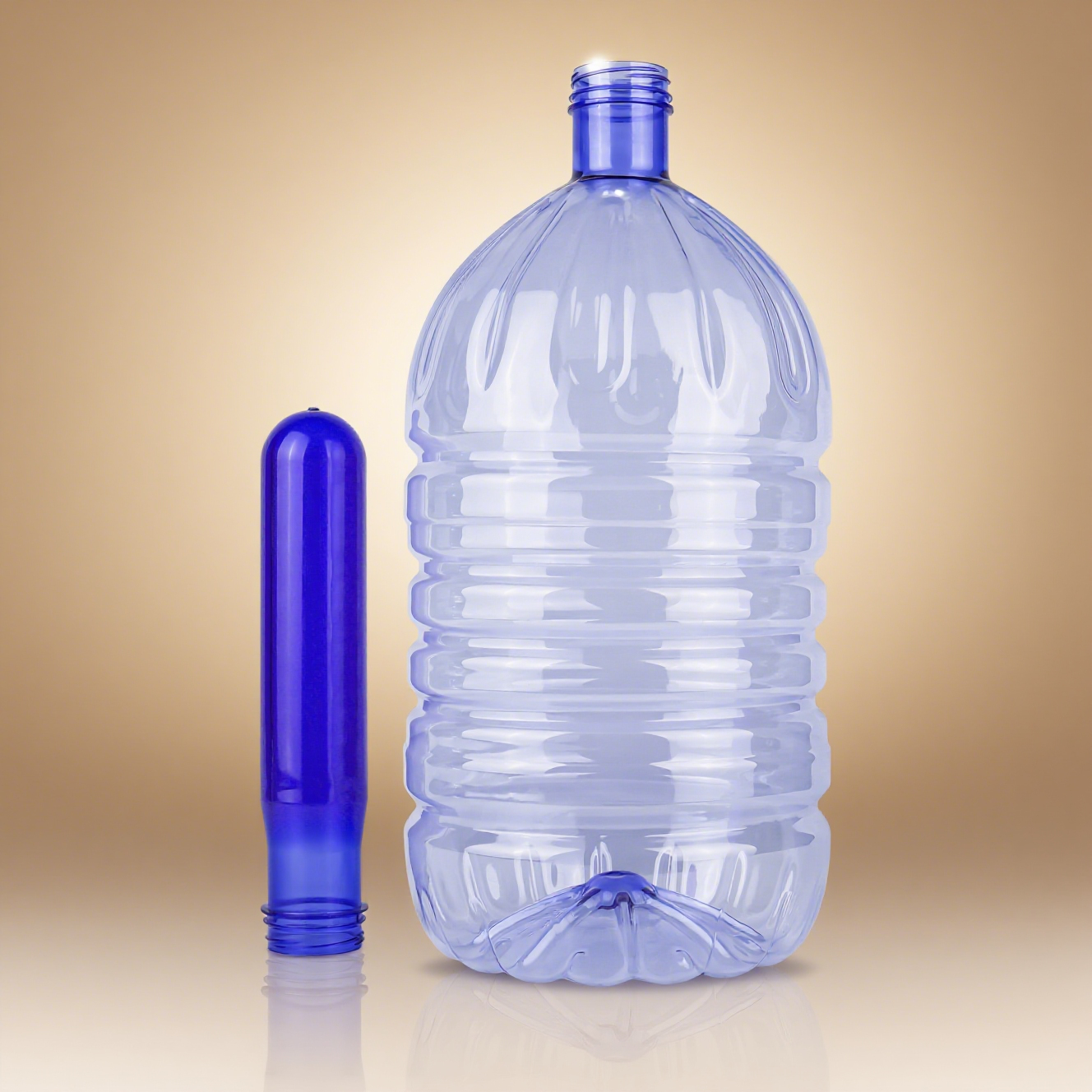
The single largest cost component in 5 gallon preform production is the raw material — specifically, polyethylene terephthalate, commonly known as PET resin. PET resin is a petrochemical derivative, and its price fluctuates in line with global crude oil markets, feedstock availability, and seasonal demand cycles. For a 5 gallon preform, which typically weighs between 620 and 750 grams depending on design specifications, even a modest shift in resin price per kilogram translates into a significant movement in unit cost.
Not all PET resin is equal. The 5 gallon preform is generally used in direct food and drinking water contact applications, which means food-grade or FDA-approved resin grades are required. These higher-specification resins carry a price premium compared to general-purpose grades. Manufacturers who source certified virgin resin from accredited suppliers must reflect this in their pricing, and buyers should view this premium as a quality assurance investment rather than unnecessary cost inflation.
Resin procurement strategy also matters. Large-volume manufacturers with long-term supply contracts often secure better resin pricing than smaller operations buying on the spot market. This is one reason why high-volume orders of the 5 gallon preform tend to have a more favorable unit economics profile — the manufacturer's raw material cost efficiency is passed downstream to the buyer.
New Material vs. Recycled Content in 5 Gallon Preform Production
A key material decision that directly affects cost is whether the 5 gallon preform is produced entirely from virgin (new) PET material or whether recycled PET content is incorporated. For potable water applications, most regulatory frameworks and brand safety standards require the use of 100% new, food-grade virgin material. This requirement exists because the traceability, consistency, and contamination risk of recycled content cannot always be guaranteed to the standard required for direct drinking water contact.
Using new material exclusively keeps quality consistent but means the manufacturer cannot benefit from lower-cost recycled feedstock. For buyers focused on compliance with FDA, NSF, or similar food safety standards, the use of virgin material in the 5 gallon preform is non-negotiable, and the cost structure reflects that commitment. Buyers should be wary of pricing that appears unusually low, as it may signal the use of substandard or mixed-content material that could compromise both product integrity and regulatory standing.
Mold Design, Tooling Investment, and Production Efficiency
Mold Complexity and Initial Tooling Cost
The mold used to produce the 5 gallon preform represents a significant capital investment that influences unit pricing in ways that are often misunderstood by buyers. High-precision injection molds for the 5 gallon preform are typically made from hardened steel, engineered to tight dimensional tolerances, and designed to run millions of production cycles before requiring refurbishment. The upfront tooling cost for such a mold can be substantial, and manufacturers amortize this investment across the total production volume over the mold's service life.
For buyers placing smaller initial orders, a larger share of the tooling amortization may be embedded in the unit price. As order volumes grow and the mold's cost is spread across more units, the contribution of tooling to unit cost decreases. This is one of the structural reasons why pricing for the 5 gallon preform scales favorably with volume — beyond just raw material savings, the tooling cost per unit drops meaningfully at higher production quantities.
Mold design complexity also plays a role. A standard 5 gallon preform with a conventional neck finish may require less tooling complexity than a design incorporating modified neck specifications, tamper-evidence features, or custom dimensional requirements. Custom tooling requests from buyers naturally add to the total project cost, even if the per-unit material and processing costs remain similar.
Cycle Time, Energy Consumption, and Production Throughput
The efficiency of the injection molding process itself is a cost driver that experienced manufacturers continuously optimize. The cycle time — meaning the duration required to inject, cool, and eject each 5 gallon preform — directly determines how many units can be produced per machine hour. Shorter cycle times mean higher throughput, lower machine-hour costs per unit, and lower energy consumption per preform.
Energy costs in injection molding are not trivial. Large-tonnage injection molding machines used for the 5 gallon preform draw significant electrical power, particularly during the heating, injection, and clamping phases of the cycle. In regions with higher industrial electricity tariffs, energy costs can account for a meaningful portion of the production cost per unit. Manufacturers operating in areas with favorable energy pricing, or those who have invested in energy-efficient equipment, can offer more competitive unit pricing as a result.
Scrap rate is another efficiency factor. A well-maintained mold and properly calibrated injection molding process will yield a high proportion of acceptable preforms per production run. High scrap rates — caused by mold wear, process instability, or material inconsistency — inflate the effective cost of each acceptable 5 gallon preform, since the wasted material and machine time must still be absorbed somewhere in the cost structure.
Quality Standards, Testing, and Compliance Costs
Food Safety Certification and Material Traceability
Producing a 5 gallon preform that meets food contact safety standards is not simply a matter of using the right resin. It requires documented material traceability, process controls, laboratory testing, and third-party certification in many markets. Manufacturers pursuing FDA approval, NSF certification, or equivalent regional food safety accreditations must invest in quality management systems, testing protocols, and ongoing compliance audits. These costs are real and are appropriately reflected in the pricing offered by certified manufacturers.
For buyers in regulated markets — including North America, Europe, and increasingly Southeast Asia and the Middle East — sourcing a 5 gallon preform from a certified, compliant manufacturer is a business necessity, not a luxury. The cost premium associated with certified production protects buyers from regulatory liability, product recalls, and reputational damage that would far exceed any short-term savings from sourcing uncertified alternatives.
Material traceability documentation — including resin batch records, safety data sheets, and third-party test reports — adds administrative cost to the production process. Reputable manufacturers of the 5 gallon preform maintain these records as a standard part of their quality infrastructure, enabling buyers to meet their own compliance obligations with confidence.
Dimensional Consistency and Performance Testing
The 5 gallon preform must perform reliably through the blow molding process and in the field as a finished water bottle or container. This means that dimensional consistency — particularly in the neck finish, wall thickness distribution, and preform weight — must be tightly controlled. Manufacturers who invest in inline measurement systems, statistical process control, and regular performance testing carry higher quality assurance costs, but deliver a preform with far lower variability and downstream rejection rates.
Blow molding compatibility is a practical quality dimension that affects total system cost for the buyer. A 5 gallon preform that is inconsistently produced can cause issues in the buyer's blow molding operation — increased downtime, higher bottle rejection rates, and machine adjustment costs. When evaluating preform pricing, buyers should factor in the downstream quality implications of different supply options, not just the purchase price per unit.
Order Volume, Logistics, and Supply Chain Cost Dynamics
Volume Tiering and Unit Economics
Order volume is one of the most direct and predictable cost levers in 5 gallon preform procurement. Virtually every structural cost element — resin procurement, tooling amortization, machine utilization, labor efficiency, and packaging — improves on a per-unit basis as order quantities increase. Manufacturers design their pricing structures to reflect these volume economics, offering tiered pricing that meaningfully rewards larger commitments.
For buyers in the early stages of a new product launch or market entry, smaller initial orders of the 5 gallon preform may carry a higher unit cost. As operations scale and order volumes grow, renegotiating pricing based on demonstrated volume is a natural and expected part of the supplier relationship. Buyers who can commit to consistent, predictable order patterns — even at moderate volumes — often receive better pricing than those placing irregular spot orders, because production planning efficiency benefits both parties.
Minimum order quantity requirements set by manufacturers also reflect their own production economics. Running a 5 gallon preform production batch below a certain size is inefficient from a machine setup, material preparation, and quality control standpoint. Understanding these minimums and planning orders accordingly helps buyers avoid paying the implicit cost premium associated with undersized production runs.
Freight, Packaging, and Delivery Cost Considerations
The physical characteristics of the 5 gallon preform — large, heavyweight, and somewhat fragile in bulk stacking — create specific logistics cost considerations that should be factored into total landed cost analysis. Shipping costs for bulk preform orders vary significantly based on origin, destination, freight mode, and packaging configuration. Ocean freight for large international shipments offers the most favorable cost-per-unit freight rate, but requires advance planning for lead times and port logistics.
Packaging configuration affects both shipping cost and product protection. Manufacturers who use well-designed carton configurations, protective layering, and standardized pallet formats minimize damage in transit and maximize container utilization, which ultimately reduces the landed cost per 5 gallon preform for the buyer. Poorly packaged shipments may arrive with higher breakage rates, creating both direct replacement costs and production schedule disruptions.
Import duties, customs fees, and regulatory compliance costs at the destination market also contribute to the total acquisition cost of the 5 gallon preform for international buyers. These costs should be modeled carefully alongside the ex-factory unit price when comparing sourcing options, as a lower factory gate price may sometimes be offset by higher total landed costs depending on trade terms and destination market tariff structures.
Design Specifications and Customization Impact on Cost
Weight, Geometry, and Neck Finish Specifications
The specific design parameters of the 5 gallon preform — including its weight, wall geometry, preform length, and neck finish dimensions — have a direct bearing on production cost. Heavier preforms require more resin per unit, which directly increases material cost. Wall geometry influences both cycle time and the blow molding behavior of the finished container, with more complex profiles sometimes requiring longer conditioning times or more precise mold temperature control.
The neck finish of the 5 gallon preform is a particularly important specification, as it must be compatible with the blow molding tooling and capping systems used downstream in the buyer's operation. Standard neck finishes are less costly to produce because they can be run on widely available tooling without customization. Non-standard or proprietary neck specifications require dedicated tooling that adds to the initial project investment, though this cost is amortized over the production life of the mold.
Color and additive requirements also influence cost. While the vast majority of 5 gallon preforms for water applications are produced in transparent or light blue tones using standard colorants, custom color requirements or the addition of UV stabilizers, barrier additives, or other functional additives increase material cost and may affect processing parameters, requiring additional process optimization time and material testing.
Custom Branding and Secondary Processing Requirements
Some buyers require the 5 gallon preform to be supplied with specific marking, labeling, or secondary processing features that go beyond standard production. While the preform itself is typically labeled after blow molding as a finished bottle, any requirements for engraved mold identification, batch coding, or unique identification markings at the preform stage add process steps and quality verification costs.
Buyers should clearly communicate all specification requirements — including dimensional drawings, material certifications required, and any special handling or packaging instructions — at the inquiry stage. Ambiguous specifications often result in either conservative pricing that protects the manufacturer from unspecified requirements, or costly change orders later in the production cycle. Precise technical communication at the outset is one of the most practical ways buyers can contribute to an efficient and accurate pricing process for their 5 gallon preform sourcing projects.
FAQ
What is the typical weight of a 5 gallon preform and how does it affect cost?
A standard 5 gallon preform typically weighs between 620 and 750 grams, depending on design specifications and intended container wall thickness. Since PET resin is priced by weight, a heavier preform directly increases the material cost per unit. Optimizing the preform weight through design engineering — while maintaining the structural and performance requirements of the finished bottle — is one of the most effective ways to manage the raw material component of production cost.
Why does FDA-approved or food-grade material increase the cost of the 5 gallon preform?
Food-grade or FDA-approved PET resin undergoes more rigorous quality controls, purity verification, and traceability documentation than general-purpose resin grades. Suppliers of certified food-contact resin maintain quality systems and testing protocols that add to the material's supply chain cost. For the 5 gallon preform used in drinking water applications, this certification is not optional — it is a regulatory and safety requirement that justifies the premium and protects both the manufacturer and the end consumer.
How does order volume affect the unit price of a 5 gallon preform?
Higher order volumes reduce the unit cost of the 5 gallon preform through multiple mechanisms simultaneously — better raw material procurement pricing, lower tooling amortization per unit, higher machine utilization efficiency, and reduced per-unit packaging and logistics costs. Buyers who can commit to larger, consistent order volumes typically access significantly more favorable unit pricing compared to those placing small or irregular orders.
Are custom specifications significantly more expensive for the 5 gallon preform?
Custom specifications — such as non-standard neck finishes, modified wall geometry, or special color and additive requirements — do add cost to the 5 gallon preform, primarily through additional tooling investment and process development time. However, once custom tooling is in place and amortized across sufficient production volume, the ongoing per-unit cost difference between custom and standard specifications tends to narrow considerably. Buyers should evaluate custom specification costs over the projected production lifetime, not just as an upfront investment.
Table of Contents
- Raw Material Costs and Their Influence on 5 Gallon Preform Pricing
- Mold Design, Tooling Investment, and Production Efficiency
- Quality Standards, Testing, and Compliance Costs
- Order Volume, Logistics, and Supply Chain Cost Dynamics
- Design Specifications and Customization Impact on Cost
-
FAQ
- What is the typical weight of a 5 gallon preform and how does it affect cost?
- Why does FDA-approved or food-grade material increase the cost of the 5 gallon preform?
- How does order volume affect the unit price of a 5 gallon preform?
- Are custom specifications significantly more expensive for the 5 gallon preform?
