 EN
EN

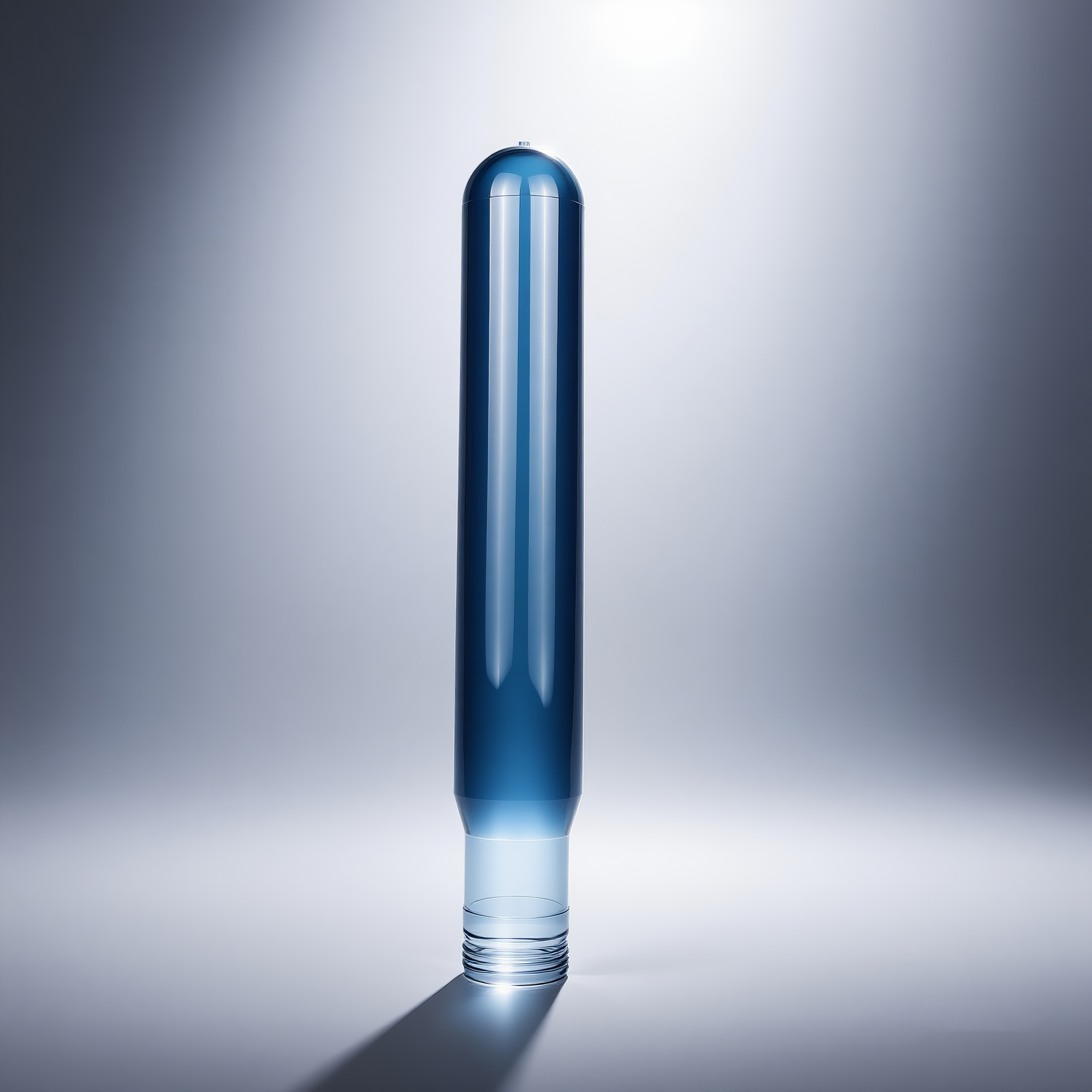
In high-volume PET container manufacturing, the quality of every finished bottle begins long before the blowing stage. The bottle preform is the foundational component that determines whether the final container will meet dimensional tolerances, hold pressure, resist deformation, and pass visual inspection. When defects emerge at the preform stage, they propagate through blow molding and result in costly scrap, line stoppages, and customer complaints that are far more expensive to address downstream than at the source.
Understanding the root causes behind common bottle preform defects is not simply a quality-control exercise — it is a strategic capability that separates efficient, high-yield factories from those plagued by waste and inconsistency. This article examines the most frequently encountered defects in bottle preform production, explains the mechanisms that cause them, and details the practical prevention strategies that disciplined manufacturers apply to keep quality levels consistently high across every production run.

Why Bottle Preform Defects Occur in the First Place
Material Variability and Resin Quality
The quality of a bottle preform is inseparable from the quality of the PET resin used to produce it. Variations in intrinsic viscosity, moisture content, and additive distribution within incoming resin batches create inconsistencies that manifest as surface defects, internal voids, or structural weaknesses in the finished preform. Resin that has not been dried to the correct moisture level — typically below 50 parts per million for PET — undergoes hydrolytic degradation during processing, reducing molecular weight and leading to brittleness or yellowing in the bottle preform wall.
Factories that do not perform incoming resin verification are essentially transferring the risk of supplier variability directly onto their production floor. Consistent bottle preform quality requires that every resin batch be tested for intrinsic viscosity and moisture content before it enters the drying and feeding system. Even small deviations in resin IV can shift the processing window enough to cause gate blushing, flow marks, or uneven wall distribution in the bottle preform body.
Recycled or regrind PET introduces additional complexity. The thermal history of regrind material differs from virgin resin, and blending without careful ratio control and testing increases the probability of producing a bottle preform that fails clarity, drop-impact, or burst-pressure standards. Responsible factories establish strict regrind percentage caps and track lot-by-lot performance data to detect drift before it becomes a systemic defect.
Process Parameter Instability
Even with consistent incoming resin, an unstable injection molding process will generate bottle preform defects with regularity. Barrel temperature profiles, injection speed, hold pressure, cooling time, and back pressure all interact in ways that are sensitive to ambient conditions, mold wear, and machine calibration. A process that runs cleanly during the morning shift may begin producing gate stringing or short shots by afternoon if cooling water temperature rises or a heater zone drifts out of tolerance.
The bottle preform is particularly sensitive to cooling uniformity. Because it is a thick-walled, cylindrical part that must be reheated precisely during stretch blow molding, any asymmetry in the cooling phase — caused by uneven water flow through the mold cores, clogged cooling channels, or inconsistent core rod contact — will produce a bottle preform with a non-uniform temperature profile at ejection. This feeds directly into blow molding defects such as uneven wall thickness, bottom thickening, or pearl-chain patterns in the final bottle.
The Most Common Bottle Preform Defects and Their Causes
Gate Blushing and Gate Sink
The gate area of a bottle preform is one of the most mechanically and thermally stressed zones in the entire part. Gate blushing — a whitish, hazy discoloration around the injection point — is caused by high shear stress at the gate during filling, combined with rapid cooling of resin that has not had sufficient time to relax its molecular orientation. It is often a signal that injection speed is too high relative to the gate diameter, or that the melt temperature is too low for smooth flow through the restriction.
Gate sink marks, by contrast, indicate insufficient hold pressure or premature gate freeze-off, leaving a volumetric void just beneath the gate surface of the bottle preform. This defect is particularly problematic for carbonated soft drink bottles because the gate zone is the base of the container and must withstand internal pressure without deformation. Factories address gate sink by extending hold pressure time, optimizing hold pressure profile, and verifying that gate land length is within design specification.
Crystallinity and Whitening
PET is an amorphous material when cooled rapidly from the melt, and maintaining that amorphous clarity is essential for a high-quality bottle preform. When any zone of the bottle preform cools too slowly — due to extended cycle times, insufficient chilled water flow, or a stuck or misaligned core — the PET can crystallize partially, producing a white, opaque region in what should be a transparent wall. This condition is commonly called 'preform whitening' or 'crystalline hazing.'
Crystallinity in a bottle preform is not merely a cosmetic issue. A crystallized zone in the preform wall has a different stretch behavior during blow molding — it resists biaxial orientation, creating thin spots or stress-whitened panels in the blown container. For critical applications like mineral water or CSD bottles, even small crystalline zones in the bottle preform can cause field failures. Preventing crystallinity requires maintaining consistent mold cooling, ensuring core alignment, and monitoring cycle time deviations in real time.
Black Specks and Contamination
Black specks are among the most visually obvious defects in a bottle preform and among the most difficult to eliminate once a contamination source is established in the processing system. They typically originate from thermally degraded PET that has accumulated in dead zones of the hot runner system, barrel, or screw flights, and then released as carbonized particles into the melt stream. A bottle preform with visible black specks is immediately rejected for food-contact applications, and the investigation required to trace the source consumes significant production time.
Other contamination sources include foreign material introduced through the resin handling system — dust, metal fines from feeders, moisture-induced degradation, and cross-contamination from previous material runs. Factories producing food-grade bottle preform products invest in magnetic separators, inline filtration, and rigorous purging protocols between material changes to minimize contamination risk. Hot runner system maintenance schedules are tightly enforced because degraded material in the manifold will continuously seed specks into every bottle preform until the system is cleaned.
Ovality and Dimensional Non-Conformance
A bottle preform is designed to very tight dimensional tolerances, particularly in the neck finish, wall thickness, and overall length. Ovality — where the circular cross-section of the preform body becomes slightly elliptical — occurs when ejection forces are uneven, when the mold is improperly aligned, or when cooling is asymmetric across the cavity set in a multi-cavity tool. Even a fraction of a millimeter of ovality in the neck finish can cause a bottle preform to fail thread engagement testing or result in capping failures on the filling line.
Wall thickness variation is equally critical. An off-center gate, a misaligned core, or uneven melt flow distribution across a hot runner system can produce a bottle preform where one side of the wall is measurably thicker than the opposite side. During blow molding, this asymmetry results in a bottle with panels of unequal thickness, reducing its structural performance and potentially compromising its top-load or burst-pressure ratings. Cavity-by-cavity dimensional audits, performed with coordinate measurement or optical gauging systems, help factories detect mold-related drift before it reaches significant quantities.
How Factories Systematically Prevent Bottle Preform Defects
Rigorous Process Validation and Statistical Control
Prevention of bottle preform defects at scale requires more than operator experience — it requires documented process validation that establishes the boundaries of acceptable process variation and the specific parameter values that consistently produce conforming parts. A properly validated bottle preform process will define upper and lower control limits for all critical parameters and use statistical process control charts to detect drift before it produces out-of-specification parts.
Initial process qualification should include a full Design of Experiments study that maps how each key process variable — melt temperature, injection speed, hold pressure, cooling time — affects the critical quality attributes of the bottle preform, including weight, dimensions, clarity, and crystallinity. Once the process window is defined, it is locked, documented, and enforced through machine programming rather than left to operator judgment. Any change to a qualified bottle preform process requires a formal change-control review.
Mold Maintenance and Cooling System Management
The injection mold is the most capital-intensive asset in bottle preform production, and its condition directly determines part quality. Worn cavity surfaces, damaged gate inserts, corroded cooling channels, and misaligned cores all generate defects that cannot be corrected by process adjustment alone. Leading factories follow preventive maintenance schedules that include regular inspection of gate inserts, polish cycles for cavity surfaces, flow testing of all cooling circuits, and dimensional verification of critical mold components.
Cooling channel management is particularly important for bottle preform tools with many cavities. Scaling, biofilm accumulation, and partial blockages in cooling water circuits reduce heat transfer efficiency and create cavity-to-cavity temperature variation that produces inconsistent bottle preform quality across the tool. Factories use conductivity monitoring of cooling water, regular descaling cycles, and temperature mapping of the mold surface to identify and resolve cooling anomalies before they generate sustained defect patterns.
Incoming Material Control and Resin Drying Protocols
A structured incoming quality control process for PET resin is the first line of defense against bottle preform defects. This includes certificate of analysis review for each incoming lot, periodic verification testing of intrinsic viscosity and acetaldehyde content, and moisture measurement of dried resin immediately before processing. Many factories use online moisture analyzers integrated with the drying hopper to provide continuous confirmation that resin is within specification before it reaches the injection unit.
Drying time and temperature must be matched to the resin grade and the throughput rate of the line. Under-drying produces a hydrolytically degraded bottle preform with reduced IV, while over-drying at excessive temperature can cause thermal oxidation that raises acetaldehyde levels — a critical concern for bottle preform products destined for mineral water or sensitive beverage applications where taste and odor standards are strictly regulated.
Inline Inspection and Automated Rejection Systems
Manual visual inspection is insufficient for detecting the full range of bottle preform defects at modern production rates. Automated vision inspection systems, positioned at the press exit or on a transfer conveyor, use high-resolution cameras and image processing algorithms to detect surface defects, color deviations, gate anomalies, black specks, and dimensional non-conformances in every bottle preform produced. A well-configured vision system can inspect hundreds of preforms per minute and reject non-conforming parts before they enter downstream packaging or blow molding operations.
The data generated by inline inspection systems also serves a process improvement function. Trend analysis of defect frequency by cavity, shift, or time of day reveals patterns that point to specific root causes — a particular cavity with recurring gate blushing, a cooling circuit that degrades after two hours of operation, or a shift where setup practices differ from the validated standard. Factories that use inspection data analytically rather than just as a pass-fail gate develop a cumulative understanding of their bottle preform process that enables proactive quality improvement over time.
Building a Quality Culture Around Bottle Preform Production
Operator Training and Standard Work Documentation
Technical systems and validated processes are only as reliable as the people operating them. A factory that produces consistent, defect-free bottle preform output invests heavily in structured operator training that covers not just machine operation but the relationship between process parameters and part quality. An operator who understands why hold pressure affects gate sink in the bottle preform is far more likely to escalate anomalies early than one who only knows which buttons to press.
Standard work documentation — including setup procedures, purging protocols, inspection routines, and abnormal-condition responses — reduces variability introduced by individual operator practices. When the same bottle preform product is set up by different operators on different shifts and still produces consistent quality output, the process is truly under control. Deviation from standard work should require documented justification and supervisory approval, reinforcing the discipline that separates high-performing bottle preform operations from those that tolerate informal workarounds.
Continuous Improvement and Root Cause Analysis Discipline
Every bottle preform defect event, whether it results in a few hundred rejected parts or a full production hold, contains information that can be used to improve the process permanently. Factories that treat defects as learning opportunities rather than firefighting events build structured root cause analysis into their quality management system. Using tools such as fishbone diagrams, five-why analysis, and comparative process data review, quality teams systematically trace each bottle preform defect back to its actual source — not just the most obvious proximate cause.
Corrective actions derived from proper root cause analysis address the system, not just the symptom. A factory that responds to a black speck event by increasing inspection frequency without fixing the hot runner degradation source will continue producing contaminated bottle preform output indefinitely. Effective corrective actions change the process, the material handling system, the maintenance schedule, or the standard work in a way that makes recurrence unlikely. Tracking corrective action effectiveness over time is what transforms a reactive quality program into a genuinely preventive one.
FAQ
What causes the most common bottle preform defects in high-volume production?
The most common bottle preform defects — including gate blushing, crystalline whitening, black specks, and dimensional variation — are caused by a combination of material variability, process parameter instability, mold condition issues, and cooling system performance. No single factor dominates in every case; rigorous diagnosis is required to identify the specific root cause in each situation.
How does resin moisture content affect bottle preform quality?
Excess moisture in PET resin causes hydrolytic degradation during injection molding, reducing molecular weight and producing a bottle preform with reduced mechanical strength, increased brittleness, and potential yellowing. Proper drying to below 50 parts per million moisture, verified immediately before processing, is essential for producing a bottle preform that meets clarity, strength, and food-contact requirements.
Can automated vision systems detect all types of bottle preform defects?
Modern inline vision inspection systems are highly capable of detecting surface defects, color anomalies, gate irregularities, contamination, and dimensional non-conformances in bottle preform production at high speed. However, internal structural defects such as sub-surface voids or micro-crystallinity may require complementary methods such as polarized light inspection or periodic destructive sampling for reliable detection.
How frequently should molds used for bottle preform production be maintained?
Maintenance frequency for bottle preform molds depends on production volume, material processed, and cooling water quality, but most high-volume operations schedule preventive maintenance every 500,000 to 1,000,000 cycles as a baseline. Cooling circuit descaling, gate insert inspection, cavity surface polishing, and core alignment verification are the most impactful maintenance activities for sustaining consistent bottle preform quality over the life of the tool.
