EN
EN

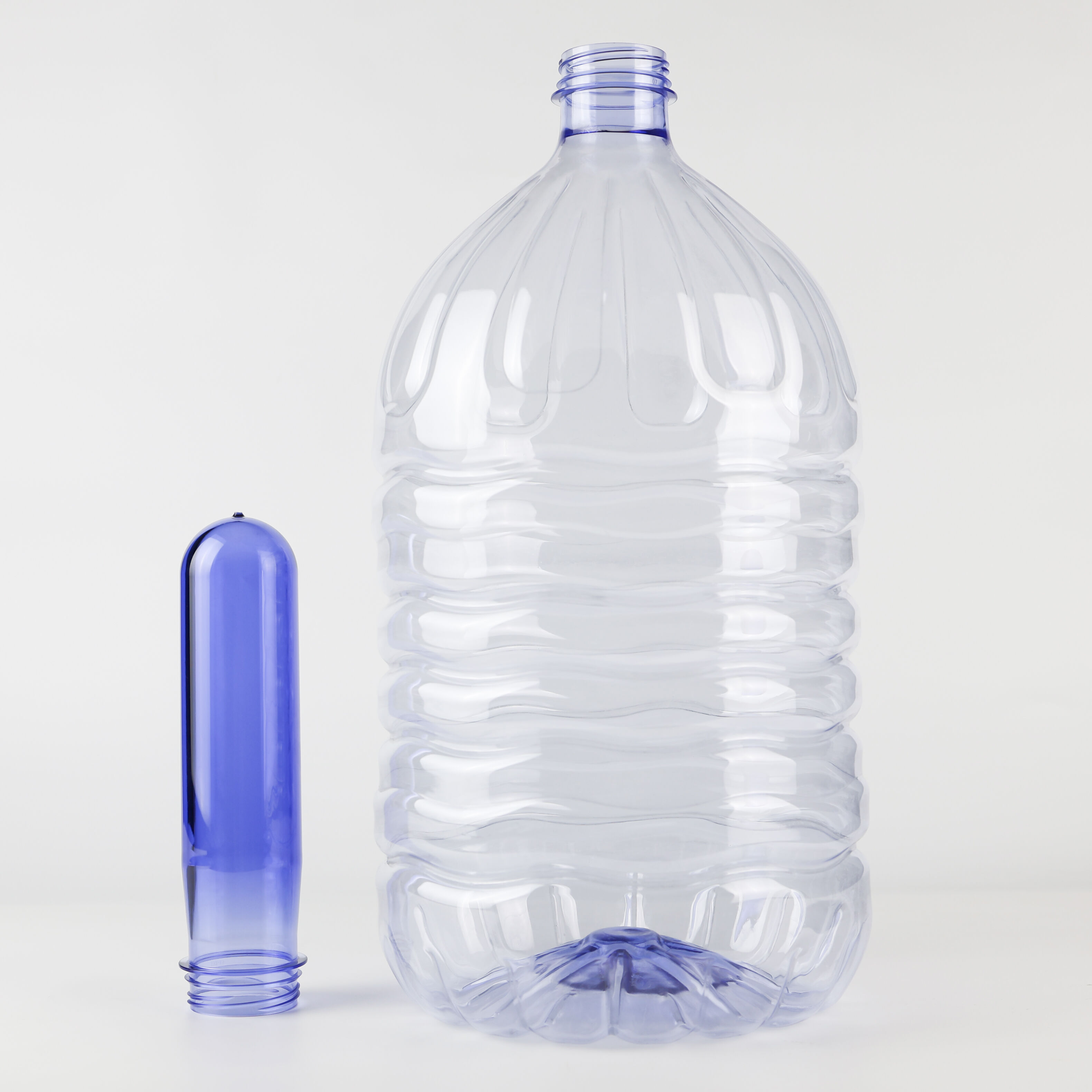
The water bottle manufacturing industry relies heavily on precision-engineered components, with 5 gallon PET preforms serving as the critical foundation for large-capacity water containers. These specialized preforms undergo sophisticated blow molding processes to create the sturdy, reliable bottles that supply clean drinking water to homes, offices, and commercial establishments worldwide. Understanding the intricacies of 5 gallon PET preforms provides valuable insight into modern packaging technology and quality assurance standards that ensure consumer safety and product integrity.
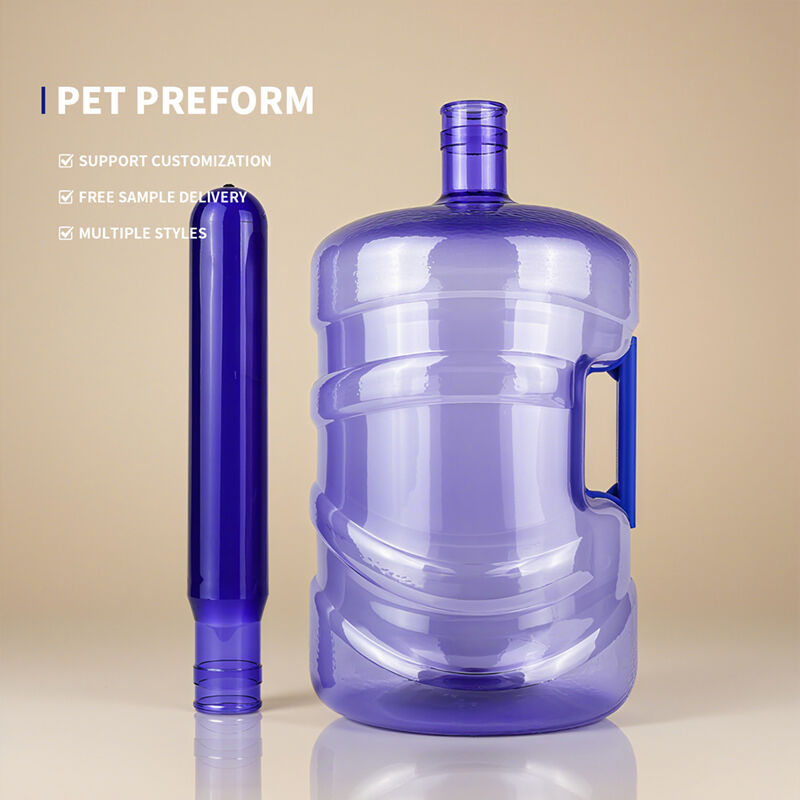
Manufacturing Excellence in Large Capacity Preforms
Advanced Injection Molding Technology
Modern production facilities utilize state-of-the-art injection molding systems specifically designed for creating 5 gallon PET preforms with exceptional consistency and quality. These sophisticated machines operate under precise temperature and pressure controls, ensuring that each preform meets stringent dimensional tolerances required for successful bottle formation. The injection molding process involves heating virgin PET resin to optimal temperatures, injecting the molten material into precision-engineered molds, and maintaining controlled cooling cycles that preserve material integrity throughout the manufacturing sequence.
Quality control measures during the injection molding phase include real-time monitoring of material flow rates, cavity pressure distribution, and cooling uniformity across multiple mold stations. Advanced sensor technology enables manufacturers to detect microscopic variations in wall thickness, ensuring that every 5 gallon PET preform maintains structural consistency necessary for reliable bottle performance. These technological innovations have revolutionized large-capacity preform production, delivering enhanced quality standards that meet increasingly demanding market requirements.
Material Selection and FDA Compliance
The selection of appropriate PET resin grades represents a crucial factor in producing high-quality 5 gallon PET preforms that comply with international food safety regulations. Manufacturers prioritize virgin PET materials that have received FDA approval for direct food contact applications, ensuring complete safety for potable water storage and distribution. These premium-grade resins undergo rigorous testing protocols to verify their chemical stability, migration resistance, and long-term durability under various storage conditions.
Material traceability systems enable manufacturers to document the complete supply chain for each batch of 5 gallon PET preforms, from raw resin procurement through final product inspection. This comprehensive tracking ensures that quality standards remain consistent throughout production cycles while providing accountability measures that support regulatory compliance requirements. Advanced material handling systems prevent contamination during processing stages, maintaining the purity standards essential for food-grade applications.
Technical Specifications and Performance Standards
Dimensional Accuracy and Wall Thickness Control
Precision engineering defines the manufacturing approach for 5 gallon PET preforms, with dimensional accuracy requirements typically maintained within tolerances of ±0.1mm across critical measurement points. Wall thickness distribution follows carefully calculated profiles that ensure optimal material utilization while providing adequate structural strength throughout the blown bottle. These specifications require sophisticated measurement systems capable of detecting microscopic variations that could affect final bottle performance or aesthetic appearance.
Advanced quality control protocols include automated inspection systems that evaluate every 5 gallon PET preform for dimensional compliance, surface defects, and structural integrity. High-resolution optical scanning technology enables detection of potential issues such as material flow lines, gate marks, or localized thickness variations that could compromise bottle quality. Statistical process control methodologies ensure that manufacturing parameters remain within established limits, delivering consistent preform quality that translates into reliable bottle performance.
Thermal Properties and Processing Windows
The thermal characteristics of 5 gallon PET preforms play a critical role in determining optimal blow molding conditions and final bottle properties. These preforms require specific reheating profiles that achieve uniform temperature distribution throughout the preform wall, enabling consistent stretch ratios during the blowing process. Temperature control systems must maintain precise thermal gradients that promote optimal molecular orientation while preventing degradation of material properties.
Processing window optimization involves careful analysis of thermal expansion coefficients, glass transition temperatures, and crystallization rates that influence preform behavior during bottle formation. Manufacturers utilize thermal imaging systems to monitor temperature uniformity across preform surfaces, ensuring that reheating processes deliver the consistent thermal profiles necessary for successful bottle production. These thermal management strategies directly impact the mechanical properties and clarity of finished bottles produced from 5 gallon PET preforms.
Quality Assurance and Testing Protocols
Mechanical Testing and Stress Analysis
Comprehensive mechanical testing programs evaluate the structural performance of 5 gallon PET preforms under various loading conditions that simulate real-world applications. These testing protocols include tensile strength measurements, impact resistance evaluations, and fatigue testing that assesses long-term durability under repeated stress cycles. Advanced testing equipment provides detailed analysis of material behavior, identifying potential failure modes and establishing safety margins that ensure reliable bottle performance.
Stress analysis methodologies utilize finite element modeling to predict preform behavior during blow molding operations and subsequent bottle applications. These computational tools enable optimization of preform design parameters, wall thickness distribution, and material selection criteria that enhance overall product performance. Testing data supports continuous improvement initiatives that drive innovation in 5 gallon PET preforms manufacturing technology and quality standards.
Chemical Compatibility and Migration Testing
Chemical compatibility testing ensures that 5 gallon PET preforms maintain their integrity when exposed to various substances commonly found in water treatment and storage applications. Migration testing protocols evaluate the potential for chemical compounds to transfer from preform materials into stored water, verifying compliance with international food safety regulations. These comprehensive evaluations include accelerated aging studies that simulate extended storage periods under elevated temperature and humidity conditions.
Analytical testing methods utilize sophisticated instrumentation such as gas chromatography-mass spectrometry and liquid chromatography systems to detect trace levels of potential migrants. These sensitive analytical techniques enable manufacturers to demonstrate that 5 gallon PET preforms meet stringent purity requirements for potable water applications. Regular testing schedules ensure ongoing compliance with evolving regulatory standards and maintain consumer confidence in product safety.
Applications and Market Advantages
Commercial Water Distribution Systems
Commercial water distribution networks rely extensively on bottles produced from 5 gallon PET preforms to deliver clean, safe drinking water to businesses, institutions, and residential customers. These large-capacity containers offer significant advantages in terms of handling efficiency, storage optimization, and cost-effectiveness compared to smaller bottle formats. The robust construction enabled by precision preform manufacturing ensures reliable performance in demanding commercial applications where bottle integrity is paramount.
Distribution efficiency benefits from the standardized dimensions and consistent quality of bottles made from 5 gallon PET preforms, enabling automated handling systems and streamlined logistics operations. The lightweight nature of PET materials reduces transportation costs while maintaining the structural strength necessary for safe handling and storage. These operational advantages contribute to the widespread adoption of 5 gallon formats in commercial water distribution markets worldwide.
Environmental Sustainability Considerations
Environmental responsibility drives continuous improvements in 5 gallon PET preforms manufacturing processes, with focus on material efficiency, energy conservation, and recyclability enhancement. Modern preform designs optimize material distribution to minimize waste while maintaining structural performance requirements. Lightweighting initiatives reduce overall material consumption without compromising bottle integrity or consumer safety standards.
Recycling programs specifically designed for large PET bottles support circular economy principles by enabling recovery and reprocessing of used containers into new products. The chemical compatibility of PET materials with recycling processes ensures that recovered materials maintain quality standards suitable for food-grade applications. These sustainability initiatives position 5 gallon PET preforms as environmentally responsible packaging solutions that support corporate sustainability goals while delivering reliable performance.
FAQ
What makes 5 gallon PET preforms suitable for large water bottles
The suitability of 5 gallon PET preforms for large water bottles stems from their engineered design that provides optimal wall thickness distribution, superior material properties, and precise dimensional control. These preforms utilize FDA-approved PET resin that ensures food safety compliance while delivering the mechanical strength necessary to withstand the stresses associated with large-capacity bottle applications. The injection molding process creates preforms with consistent quality characteristics that enable reliable blow molding into bottles with excellent clarity, durability, and barrier properties.
How do quality control measures ensure preform consistency
Quality control measures for 5 gallon PET preforms incorporate multiple inspection points throughout the manufacturing process, including real-time monitoring of injection molding parameters, automated dimensional verification, and comprehensive material testing protocols. Advanced optical inspection systems detect surface defects, wall thickness variations, and dimensional deviations that could affect bottle performance. Statistical process control methodologies track manufacturing trends and ensure that all preforms meet established quality specifications before proceeding to blow molding operations.
What are the key advantages of using PET material for large preforms
PET material offers numerous advantages for large preform applications, including excellent clarity, chemical resistance, and mechanical properties that support reliable bottle performance. The lightweight nature of PET reduces transportation costs while maintaining structural integrity necessary for 5 gallon applications. PET's excellent barrier properties help preserve water quality during storage and distribution, while its recyclability supports environmental sustainability initiatives. The material's processing characteristics enable precise control during injection molding and blow molding operations, resulting in consistent bottle quality.
How do thermal properties affect preform processing and bottle quality
The thermal properties of 5 gallon PET preforms directly influence reheating requirements, blow molding processing windows, and final bottle characteristics. Proper thermal management during preform reheating ensures uniform temperature distribution that promotes consistent stretch ratios and molecular orientation during bottle formation. These thermal considerations affect bottle clarity, mechanical properties, and dimensional stability. Manufacturers utilize sophisticated temperature control systems to optimize thermal profiles and ensure that processing conditions deliver the desired bottle performance characteristics while maintaining material integrity throughout the manufacturing sequence.